
Why Does My Jaw Hurt? Tooth, Muscle, Joint or Something Else
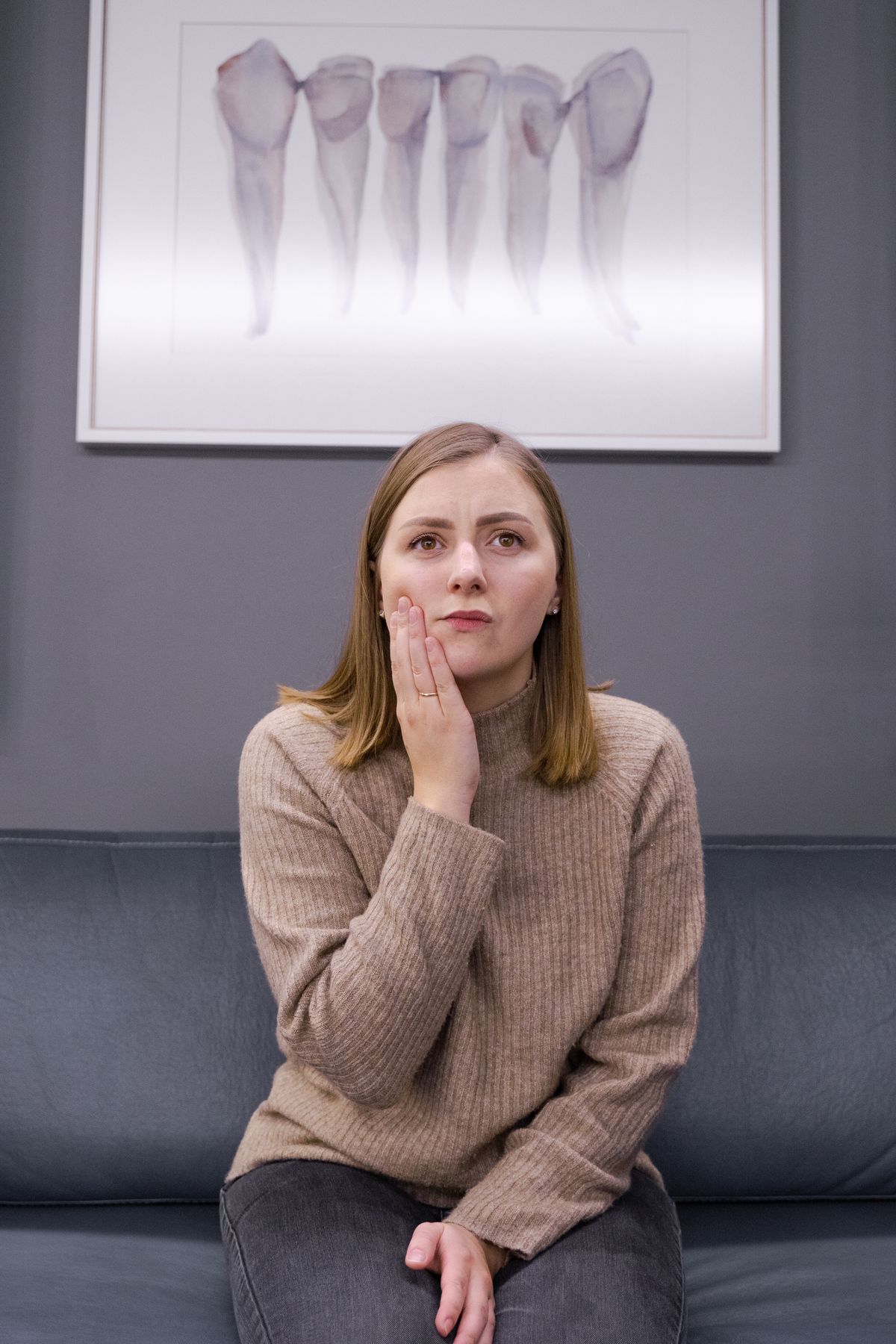
Photo by Pavel Danilyuk via Pexels
Three Places Jaw Pain Comes From
The jaw is a bone, a joint, a set of strong muscles and the roots of every lower tooth, all within a few centimetres. Pain from any of them feels like "my jaw hurts", so the label tells you very little. The pattern does.
- A tooth: usually one-sided, often deep, often worse with hot, cold or biting.
- The chewing muscles: a dull, tight ache, usually on both sides, worse after clenching or a long day.
- The jaw joint: felt right in front of the ear, sometimes with clicking, popping or a jaw that catches when you open.
Less often it is a swollen gland, a sinus problem or a nerve, and very occasionally it is the heart. That last one is covered below.
What the Pattern Tells You
Three questions narrow it down faster than any diagram.
- One side or both? One side points to a tooth or a wisdom tooth on that side. Both sides points to clenching or grinding.
- When is it worst? On waking suggests night grinding, see why the jaw hurts on waking. While chewing suggests the joint or a cracked tooth. At night, lying down, suggests a tooth, because the throbbing gets louder when nothing else is going on.
- What comes with it? Fever, a bad taste or a swollen cheek point to infection. Clicking or locking points to the joint. A headache at the temples points to the muscles.
For a closer look at one common version, our post on pain along the jawline goes through where on the bone it sits.
When the Jaw Is Really a Tooth
A lower molar with an infected nerve can ache in the jaw for days before the tooth itself feels bad. A partly erupted wisdom tooth with inflamed gum around it does the same, and can make it hard to open wide. Pain also travels up toward the ear, which is why people with a bad lower tooth sometimes think they have an earache. The posts on jaw pain from a tooth, ear pain from a tooth and wisdom tooth pain cover each version.
If a tooth is the cause, the jaw will not settle by itself. An X-ray shows it quickly, and the fix is aimed at the tooth, not the jaw. The American Association of Endodontists patient pages explain how an infected nerve causes pain that spreads.
When It Is the Muscle or the Joint
Clenching and grinding are common and most people do them asleep. The muscles get tired the way any muscle does after a long carry, and the ache sits at the angle of the jaw or at the temples. Add a stressful month and a lot of screen time and it gets louder.
The joint is a different story. Clicking with no pain is common and usually harmless, see why the jaw pops without pain. Clicking with pain, headaches or a jaw that is hard to open is worth an exam, and our post on jaw pain, clicking and headaches goes through it. The ADA MouthHealthy page on jaw joint problems backs a conservative start.
If grinding is the cause, the lasting fix is usually a night guard. See night guards in Beit Shemesh.
What Helps Until You Are Seen
- Soft food for a few days, and chew on the side that does not hurt.
- A warm compress on a sore muscle for 10-15 minutes. If you suspect an abscess in a tooth, use a cool compress instead and skip the heat.
- Paracetamol or ibuprofen at the dose on the label, if you can normally take them.
- Try not to open wide, yawn hard or chew gum.
- Do not press on a lump or try to drain it.
If it is two-sided, there is no sore tooth and no swelling, giving it a week is reasonable. After a week, or if it keeps coming back, book an exam.
Jaw Pain in Beit Shemesh: Thursday Night or Friday Afternoon
We are open Sunday to Thursday, 08:00-20:00, and Friday 09:00-17:00. Shabbat is for genuine emergencies only. A dull, two-sided ache can wait for Sunday with the home care above. A one-sided ache with a throbbing tooth, a swollen cheek or a fever should not, and a Friday morning start is far easier to deal with than a Friday evening one. We can usually see you the same day on a weekday.
You can describe it to Dr. Joel in English or Hebrew, which matters here, because "my jaw hurts" can mean stiff, burning, clicking or a tooth pain that has wandered. If a tooth is the problem, see emergency dentist in Beit Shemesh, and for a lower wisdom tooth, wisdom tooth removal in Beit Shemesh.
Signs That Are Not for a Dentist
- Chest pressure, shortness of breath, sweating, nausea or pain spreading to the left arm or shoulder. Call Magen David Adom on 101. Jaw pain can be a heart symptom, and a dental appointment is the wrong place to start.
- Swelling under the chin or tongue, trouble swallowing or breathing, or swelling that is spreading toward the eye. Go to the nearest emergency room. See toothache emergency signs.
- A jaw that will not close, or pain after a blow to the face. If it is stuck open, read jaw locked open after yawning and go to an emergency room if it will not reduce.
- A hard, painless lump or a mouth sore that has not healed in two to three weeks. Have it looked at promptly by a doctor or dentist.
For fever with a swollen face or a throbbing tooth, see tooth abscess treatment in Beit Shemesh. The ADA guide to abscesses lists the same warning signs.
One sore tooth, a swollen cheek or a fever: book it in. Both sides aching, no tooth involved: soft food, a warm compress and a week. Not sure which you have? Message Urgent Dental Care, Harav Kook 28/1, Beit Shemesh, on WhatsApp and say where it hurts and what else you notice.
Common questions
Why does my jaw hurt on one side?
Why does my jaw hurt when I chew?
Can stress make my jaw hurt?
Is jaw pain a sign of a heart attack?
How long should jaw pain last before I see someone?
Can I be seen in Beit Shemesh the same day for jaw pain?
Still not sure? Message us.
Send Dr. Gabriel Joel, DMD a quick description of what's going on and we'll point you in the right direction.
Message on WhatsAppDentist in Beit Shemesh — our dental clinic