
Tooth Hurts When I Bite Down But No Cavity: What It Means
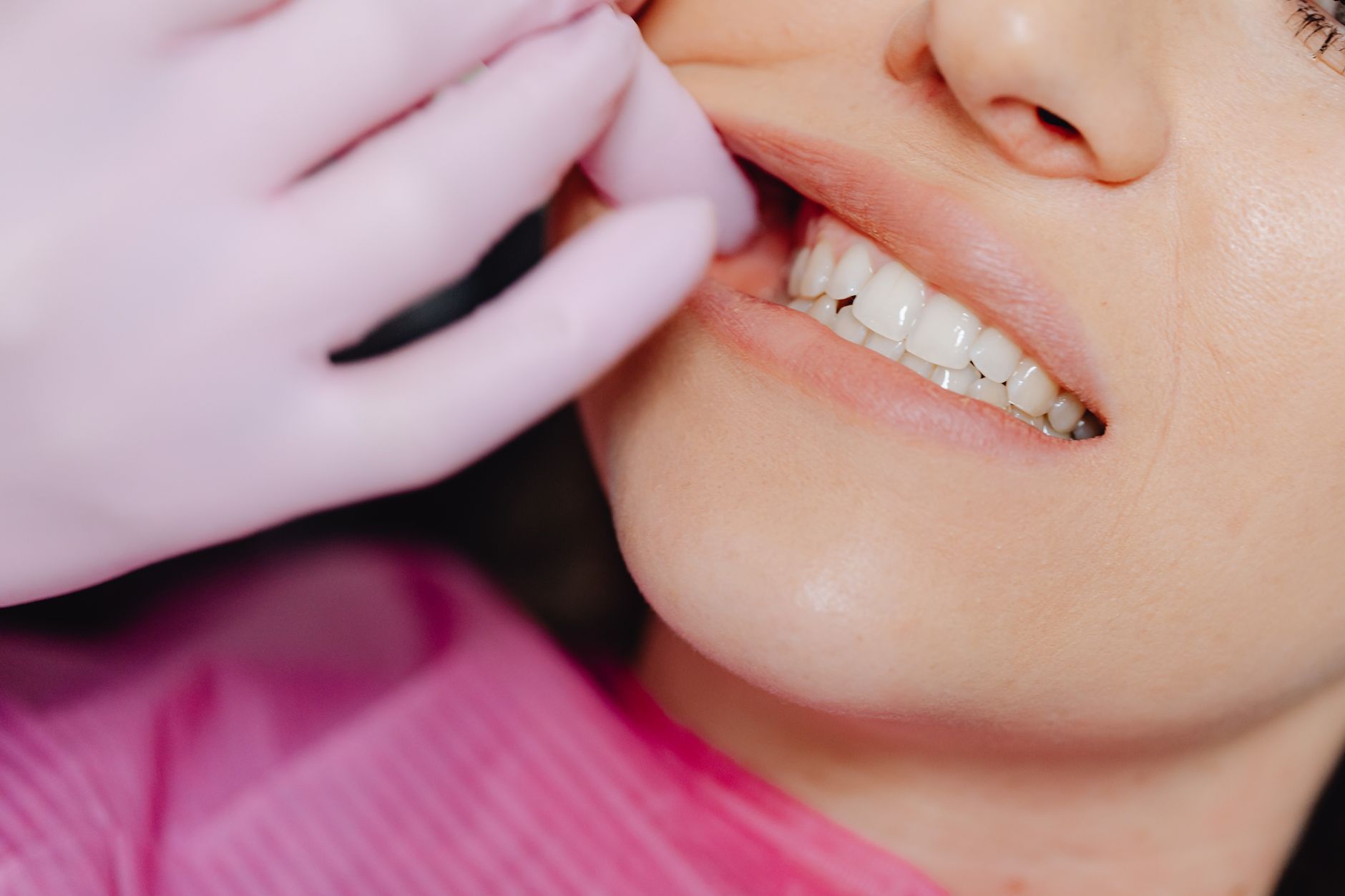
Photo by Kaboompics via Pexels
Why a Tooth Hurts When You Bite Down With No Cavity
A mirror and an x-ray are very good at finding decay. They are much worse at finding the other things that make a tooth sore to bite on, which is why "there's nothing there" can be true and unhelpful in the same breath. For bite pain that does come with decay, see tooth pain when biting.
- A crack. Most cracks run in a direction an x-ray cannot see, and many are too fine to spot even under magnification. The giveaway is a sharp jolt on one spot when you bite something small, or as you let go. More in the signs of a cracked tooth and the AAE's page on cracked teeth.
- A bite that lands too hard on one tooth. A new filling or crown sitting a fraction high takes the full force every time your teeth meet. The ligament that holds the tooth in its socket gets bruised, and the tooth feels tender and sometimes slightly tall.
- Clenching or grinding. Hours of pressure at night bruise that same ligament, usually on several teeth at once. It is worst in the morning, with a tired jaw to match.
- An inflamed sinus. The roots of the upper back teeth sit just under the floor of the sinus. When the sinus is congested, several upper teeth on one side can ache when you bite or walk down stairs. Sinus infection or toothache explains the difference.
- Trouble in the gum beside the tooth. A popcorn husk wedged under the gum, or an infection in the gum beside the root (a periodontal abscess), makes a tooth sore to chew on, usually with a tender patch of gum.
- A nerve that is inflamed or dying. An old deep filling, a crack, or a knock to the tooth years ago can injure the nerve without any new decay. Infection at the root tip can take weeks to show on an x-ray, so a clean picture early on does not rule it out.
When It Can Wait, and When It Can't
Plenty of this does not need us at all.
Can usually wait, or settle without a dentist:
- Several upper teeth mildly sore during a heavy cold, easing as the congestion clears.
- Mild tenderness across several teeth in the morning after a stressful stretch, with no swelling.
- A sore gum after something got stuck, which settles once you floss it out.
Worth being seen within a day or two:
- Sharp pain on one spot that you can reproduce.
- A recent filling or crown that makes your teeth meet differently.
Same day:
- Throbbing that wakes you, or pain that lingers long after you stop chewing.
- Swelling in the gum or face, a pimple on the gum, or a bad taste from one tooth.
With a crack, waiting to see is usually the more expensive choice. Caught while it is only sore to bite on, a cracked tooth can often be held together with a crown. Left to run down into the root, it may not be savable.
Finding the Cause at Our Beit Shemesh Clinic
When the x-ray is clean, the answer comes from testing one thing at a time. At our clinic on Harav Kook 28/1 that means biting on a small bite-testing tool one cusp at a time to find a crack, a cold test on the nerve, tapping the neighbouring teeth to find the tender one, checking the bite with marking paper, and looking along the gum for a pocket or something trapped.
The fix follows the cause. A high spot is usually a quick adjustment. A crack caught early often needs a crown to stop it spreading, which our page on cracked tooth repair in Beit Shemesh covers. Grinding needs a night guard more than it needs a drill. And a sinus needs the sinus treated, which means your family doctor rather than us.
If It Starts Before Shabbat
Bite pain has a habit of introducing itself at the Friday night table, somewhere between the challah and the chicken. The clinic is open Sunday to Thursday 08:00 to 20:00 and Friday 09:00 to 17:00, and Shabbat is reserved for genuine emergencies only. If one tooth has been sore to bite on since midweek, message us by Friday morning rather than spending Shabbat chewing on one side.
Same-day appointments are possible at the Beit Shemesh clinic. Dr. Joel trained in the United States and treats in Hebrew and English, and "it only hurts on the corner when I let go" is easier to say precisely in your first language.
Until You Are Seen, and When to Go to Hospital Instead
- Chew on the other side and avoid hard, sticky and very cold food.
- Floss gently around the tooth in case something is trapped under the gum.
- An anti-inflammatory painkiller such as ibuprofen, taken as the packet directs, if it is safe for you.
Try not to bite down every hour to check whether it still hurts. Nearly everyone does it, and a cracked tooth is the one that pays for it.
Go to a hospital emergency room, not to us, if swelling is spreading toward your eye or down into your neck, if you are having trouble breathing or swallowing, or if you have a high fever and feel genuinely unwell. MouthHealthy's page on dental emergencies draws the same line.
If a tooth hurts when you bite and nobody can find a cavity, send a WhatsApp saying which side, whether it is upper or lower, and what the pain does when you let go. That is often enough for us to say whether it needs today or can wait for next week. Call or WhatsApp 055-985-8845. Ramat Beit Shemesh Urgent Dental Care is at Harav Kook 28/1, Beit Shemesh, with same-day appointments when a tooth cannot wait and emergency dental care outside normal hours.
Common questions
Can a tooth hurt when biting even if the x-ray is clean?
Does pain when biting mean I need a root canal?
Can a sinus infection make my teeth hurt when I bite?
Why does my tooth hurt when I bite but not with cold drinks?
Will a tooth that hurts when biting heal on its own?
Can I be seen the same day in Beit Shemesh for pain when biting?
Still not sure? Message us.
Send Dr. Gabriel Joel, DMD a quick description of what's going on and we'll point you in the right direction.
Message on WhatsAppDentist in Beit Shemesh — our dental clinic