
Tooth Hurts Really Bad? What to Do Tonight and When to Go In
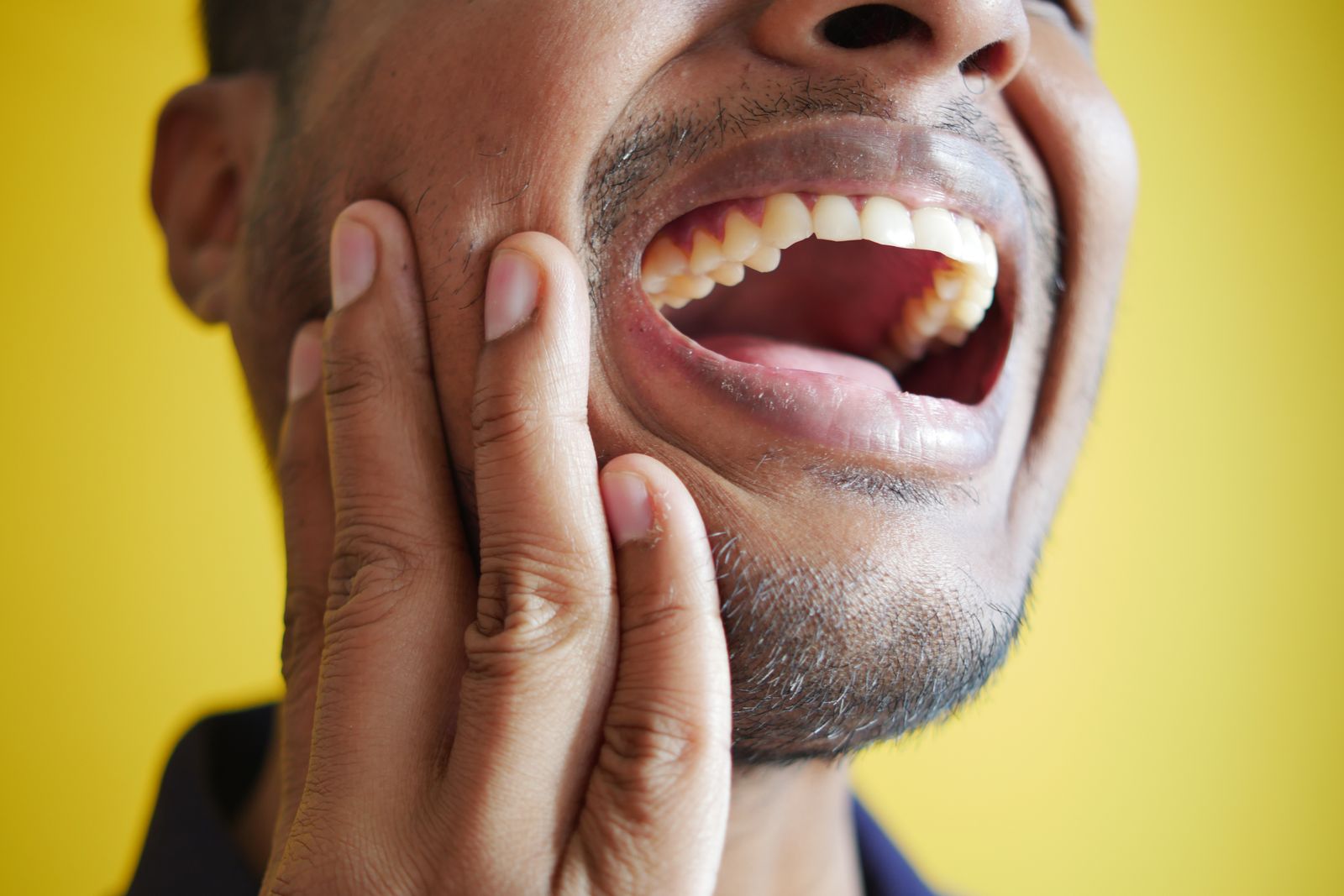
Photo by Towfiqu barbhuiya via Pexels
What to Do Right Now
- Take the painkiller you tolerate, at the dose on the packet. Ibuprofen usually does more for tooth pain than paracetamol, because much of the pain is inflammation. If you can safely take both, together they work better than either alone. Painkillers for a toothache goes through the options.
- Cold on the cheek, not on the tooth. Wrap ice in a cloth and hold it against the outside for 15 to 20 minutes at a time.
- Sit up. Lying flat sends more blood to your head and the throb gets louder. How to sleep with a toothache has the rest.
- Rinse gently with half a teaspoon of salt in a glass of warm water, then spit.
- Message the clinic now, not after you have tried to sleep it off. Most people who come to us with this have already had one bad night and hoped it was the last.
Why It Hurts This Much
A tooth is a small hard shell around a soft core (the pulp, which holds the nerve and blood vessels). When bacteria reach the pulp, it swells inside a space that cannot expand. The pressure has nowhere to go, and that is the throbbing.
That is why severe pain behaves differently from a twinge. It tends to keep going without a trigger, wake you at night, and respond poorly to painkillers. Throbbing toothache explains the pattern in more detail.
What Not to Do
- No heat on the face. If there is swelling, warmth can help an infection spread.
- No aspirin held against the gum. It burns the soft tissue and does nothing for the tooth.
- No leftover antibiotics. They will not clear an infection sealed inside a tooth, and they can quiet the pain just enough that you stop looking for the cause.
- Do not double up on painkillers past the packet limit because the pain is bad. If the correct dose is not working, that is information. It means the tooth needs treating today.
When Not to Come to Us First
Go to a hospital emergency room, not a dental clinic, if the pain comes with any of these:
- Swelling spreading toward your eye, or down your jaw and neck
- Difficulty breathing or swallowing, or being unable to open your mouth
- A high fever with chills, or feeling faint or confused
Those are signs of an infection moving beyond the tooth, and it needs hospital care first. The dentist comes after. Emergency room or dentist for tooth pain explains where the line sits.
Pain alone, even very bad pain, with no swelling and no fever, is a dentist problem, and it is urgent.
If It Starts on Thursday Night or Erev Shabbat
Severe tooth pain has a talent for arriving at the worst moment. The clinic at Harav Kook 28/1 is open Sunday to Thursday 8:00 AM to 8:00 PM and Friday 9:00 AM to 5:00 PM. Shabbat is reserved for genuine emergencies only, and severe pain that painkillers do not touch is one of them. A Thursday-night ache is worth dealing with before the weekend has had time to make it worse.
Dr. Joel is US-trained and treats in English and Hebrew, so you can say exactly where it hurts, what sets it off and how long it has been going on, without translating pain at midnight. Same-day appointments are possible; our emergency dentist in Beit Shemesh page explains how a visit works, and emergency dentist in Ramat Beit Shemesh is about 2 km from the chair.
What the Dentist Can Do the Same Day
The first goal is to switch the pain off, and that usually happens at the first visit. Once the tooth is numb, we find the cause with a bite test, a cold test and an x-ray.
- Inflamed or dying nerve: the tooth is opened to release the pressure and the nerve tissue is removed. That is the start of root canal treatment in Beit Shemesh, and for many people it is the moment the pain stops. See also emergency root canal.
- Abscess: the infection is drained and the cause treated. Antibiotics are used only when the infection has spread beyond the tooth.
- Cracked or badly broken tooth: sometimes it can be repaired. If it cannot, extraction is discussed honestly.
If the pain suddenly stops on its own, do not take that as good news. Pain stopped, is the infection gone explains why.
If your tooth hurts really bad, call or WhatsApp Urgent Dental Care in Beit Shemesh on 055-985-8845 and tell us when it started and what the pain is doing. The signs that need attention are listed in toothache emergency signs. For independent guidance, the ADA's MouthHealthy has a page on what to do about a toothache, and the American Association of Endodontists lists the symptoms that point to an inflamed or infected nerve.
Common questions
Why does my tooth hurt so bad at night?
How long can I wait with severe tooth pain?
Can a tooth hurt this much and not need a root canal?
Is severe tooth pain an emergency?
Can I see a dentist in Beit Shemesh the same day for severe pain?
What will the dentist do to stop the pain?
Still not sure? Message us.
Send Dr. Gabriel Joel, DMD a quick description of what's going on and we'll point you in the right direction.
Message on WhatsAppDentist in Beit Shemesh — our dental clinic