
How Long Wisdom Tooth Pain Lasts After Removal: Day by Day
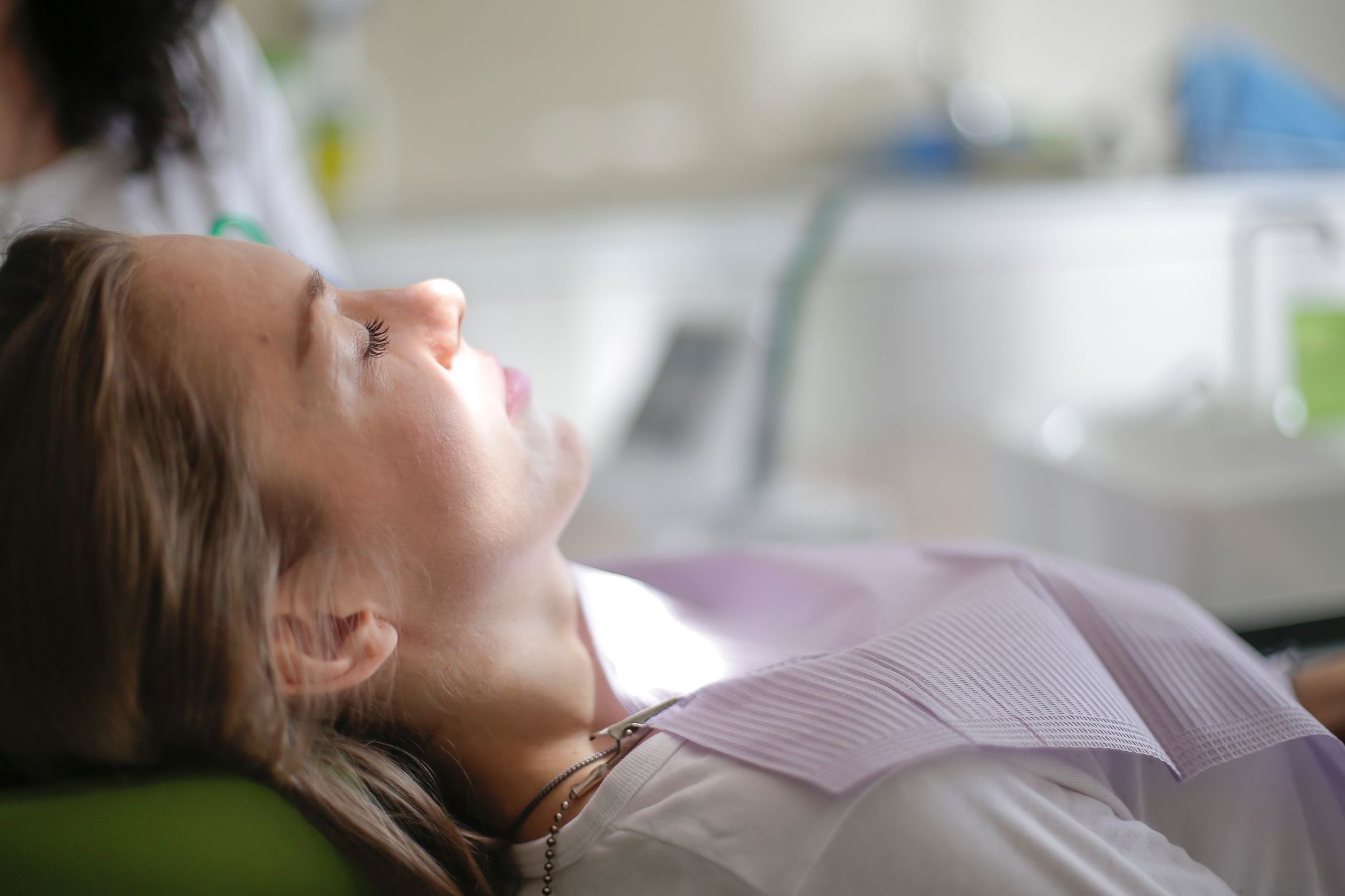
Photo by Andrea Piacquadio via Pexels
The Recovery Timeline, Day by Day
Every jaw heals on its own schedule, but a wisdom tooth extraction tends to follow the same arc.
- The day itself. The local anaesthetic wears off after two to four hours and the socket starts to ache. Get the first painkiller in before that happens rather than after.
- Days one and two. The peak. Throbbing, tenderness and a swollen cheek, and the swelling is usually worst on the second morning rather than the first.
- Day three. The corner turns for most people. The throb drops to a dull soreness that an ordinary painkiller handles.
- Days four and five. Swelling going down, sometimes with bruising appearing on the cheek or neck as it does, and the jaw stiffness at its most irritating.
- Days five to seven. Eating normally on the other side and barely thinking about it. Most simple extractions are finished here.
- Days seven to ten. Where an impacted lower tooth ends. The last of the tenderness goes, and any stitches dissolve or come out.
Day two is when people send us a photograph of their own cheek. Day two is also when the cheek is supposed to look like that.
Underneath, the socket runs on a much slower clock than the pain does. The gum closes over in a few weeks and the bone fills in across several months, and you feel none of it. Once the surface soreness has gone, the tooth is behind you even while the socket is quietly rebuilding. Our general extraction pain timeline covers the same arc for ordinary teeth.
Why a Lower Wisdom Tooth Hurts for Longer
Not every wisdom tooth is the same job, and the difference is set by the X-ray rather than by how much the tooth was hurting beforehand.
An upper wisdom tooth that has come through the gum often lifts out in one piece. The bone up there is softer, the wound is smaller, and soreness of two or three days is typical.
A lower one is a different proposition. The bone is dense, the tooth is frequently lying on its side against the molar in front, and it often has to be reached through the gum and taken out in sections. More tissue is disturbed, so there is more swelling and more days of it. Our post on what a wisdom tooth extraction involves explains why the two feel so different, and which wisdom teeth actually need removing covers the decision that comes before it.
Smoking, age and how deeply the tooth was buried all stretch the timeline as well. None of them change the shape of the recovery, only its length.
The Jaw Stiffness and Swelling Nobody Warns You About
Pain is the part people expect. Stiffness is the part that catches them out.
Holding your mouth open for a surgical extraction, and then swelling in the muscles around the joint, leaves the jaw reluctant to open properly. It is at its worst somewhere around days two to four and can take a week or two to loosen fully. Struggling with a sandwich on day three is ordinary, not a sign that something went wrong.
- Cold compress on the cheek in twenty-minute stretches on the first day, to hold the swelling down.
- Warm compresses from day two, once the swelling has stopped building, to ease the muscles.
- Gentle opening rather than forcing the jaw wide.
- Soft, cool food chewed on the other side. Our list of what to eat after an extraction keeps you fed without disturbing the socket.
- Ibuprofen and paracetamol together handle this better than either alone, if you can take both. Which painkillers actually help goes through the options.
An ache that travels up toward the ear on that side is also common after a lower extraction, and it is usually the muscles and the joint rather than the socket. Our post on jaw ache near the ear after wisdom tooth surgery covers where it comes from.
When the Pain Is Not Ordinary Healing
Here is the distinction that decides whether you sit tight or pick up the phone. Ordinary recovery improves. Anything that reverses direction is worth a call.
- Pain that eases for two or three days and then comes roaring back around day three to five, deep and throbbing toward the ear, with a bad taste and a socket that looks empty. That is dry socket, and lower wisdom teeth are where it turns up most. It is treated in a few minutes in the chair. Dry socket after an extraction has the full picture, and when the risk window closes covers the timing.
- Swelling still growing after day three rather than settling, particularly alongside a fever or pus, which points to infection rather than healing.
- Numbness in the lip, chin or tongue that is still there long after the anaesthetic should have worn off.
- Bleeding still soaking gauze several hours later despite firm, continuous pressure.
- Pain that painkillers do not touch at all when taken as directed on the packet.
Some of this is past a dental appointment. Go straight to a hospital emergency room, not to us, if swelling is spreading down under your jaw or pushing your tongue upward, if breathing or swallowing is getting harder, if the swelling is closing an eye, or if you have a high fever with chills and feel genuinely unwell. An infection at the back of the lower jaw sits close to the airway, and that needs a hospital the same night rather than a dental chair.
Recovering Through a Beit Shemesh Week
The calendar matters here more than it does in most places, because the hardest day of the recovery is rarely the day of the extraction.
A wisdom tooth taken out on a Wednesday or Thursday puts day three on Shabbat, when the clinic is shut and so is everything else. That is the day the pain is meant to be dropping, and usually is. It is also the day dry socket announces itself. The practical answer is unglamorous: have the painkillers in the house before Friday afternoon, rather than discovering at ten on Friday night that you do not. Our hours are Sunday to Thursday, 8:00 AM to 8:00 PM, and Friday 9:00 AM to 5:00 PM, Shabbat for emergencies only, with emergency treatment available outside those hours for the problems that genuinely cannot wait.
Most recoveries never need any of that. Sore, steadily improving, back to normal inside a week is textbook, and you do not need to call anyone about it. What earns a call is the reversal: worse after day three, a throb toward the ear with a bad taste, swelling that keeps growing.
Being able to describe it in your own language helps more than it sounds. Dr. Joel trained at Case Western Reserve University in the US, made aliyah in 2014, and treats in Hebrew and English. Telling dry socket from ordinary day-four soreness over the phone comes down to precise wording, and “it eased off and then came back deep, up toward my ear, with a bad taste” is far more useful than an approximate translation of it. We are at Harav Kook 28/1, roughly two kilometres from most of Ramat Beit Shemesh, and same-day appointments are possible when the diary allows. Our tooth extraction in Beit Shemesh page covers the treatment side.
If pain after a wisdom tooth removal is getting worse instead of better, throbbing up toward your ear with a bad taste, or coming with swelling that is still growing after day three, call or WhatsApp 055-985-8845. We are at Harav Kook 28/1 in Beit Shemesh, open Sunday to Thursday 8:00 AM to 8:00 PM and Friday 9:00 AM to 5:00 PM, with emergency treatment outside those hours. Our emergency dentist in Beit Shemesh page explains which problems belong in that category. If it is day two, your cheek is swollen and everything is slowly improving, book nothing. That is the extraction working.
For independent reading, the AAOMS has a patient page on healing after wisdom tooth extractions, and the ADA’s MouthHealthy covers what an extraction involves and the signs of dry socket.
Common questions
How long does wisdom tooth pain last after removal?
Is it normal for the pain and swelling to be worse on day two?
How do I tell dry socket from normal healing?
When can I stop taking painkillers after a wisdom tooth extraction?
Why can I not open my mouth properly after wisdom tooth removal?
Should I go back to the dentist for ordinary pain after an extraction?
My wisdom tooth was taken out elsewhere. Can I be seen in Beit Shemesh?
Still not sure? Message us.
Send Dr. Gabriel Joel, DMD a quick description of what's going on and we'll point you in the right direction.
Message on WhatsAppDentist in Beit Shemesh — our dental clinic