
Jaw Ache Near the Ear After Wisdom Tooth Surgery: Causes
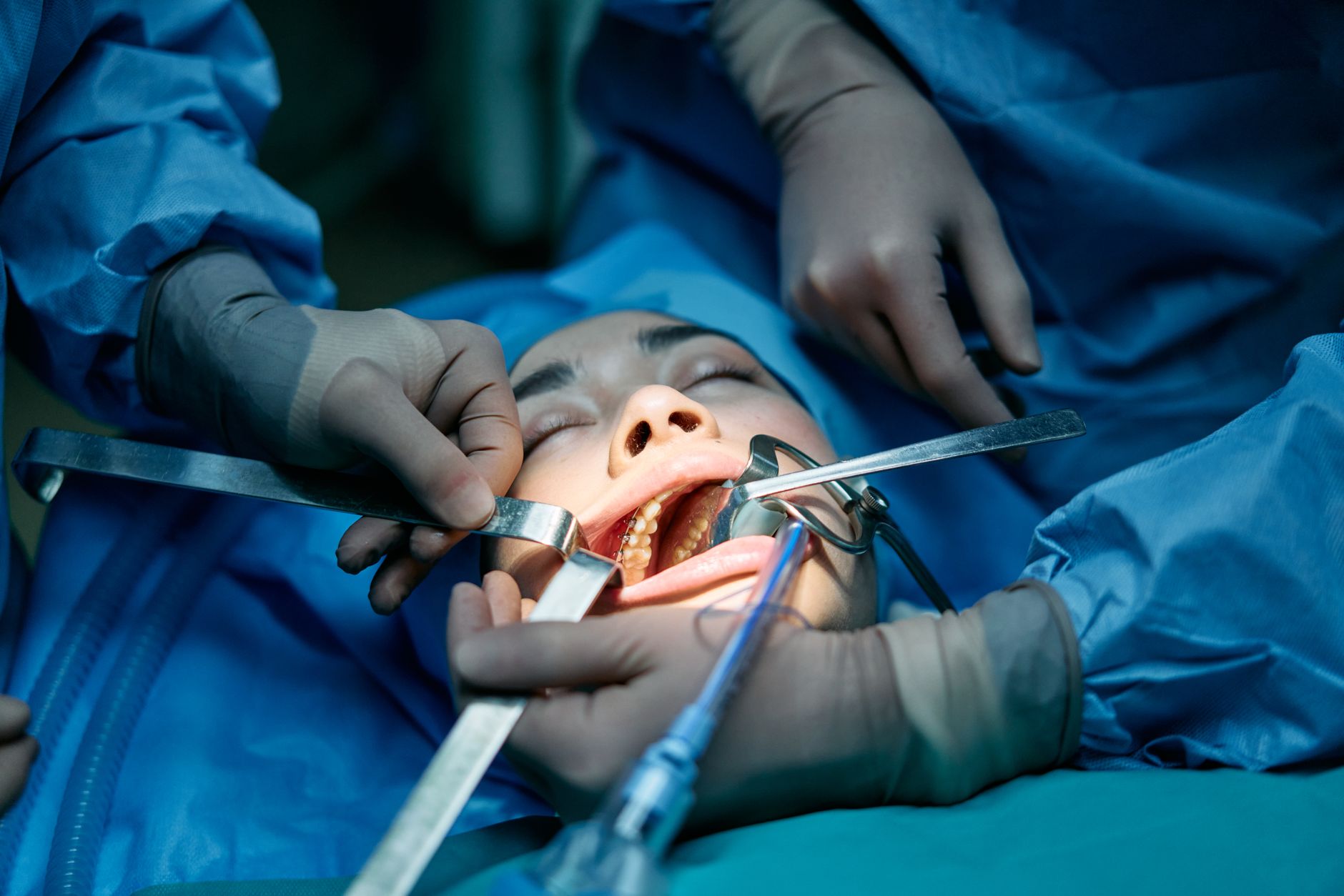
Photo by cottonbro studio via Pexels
Why the Ache Lands Near Your Ear
Put a finger just in front of your ear canal and open your mouth. The thing moving under your fingertip is the temporomandibular joint, and a lower wisdom tooth sits a short distance behind and below it. Four things push the soreness up into that area:
- Your mouth was held wide open for a long time. Half an hour at full opening stretches the joint and its ligaments further than they usually go, and holds them there.
- The chewing muscles were stretched too. The masseter over the angle of the jaw and the muscles on the inner side of the jaw all take the strain, and one of the anaesthetic injections passes right through that inner group.
- Shared nerve supply. The auriculotemporal nerve carries sensation from the joint capsule and from part of the outer ear. When the joint is irritated, the brain gets a message it can only place approximately, and the ear is close enough.
- Swelling tracks backwards. Fluid does not stay neatly around the socket. It spreads along the tissue planes towards the angle of the jaw and the ear, which is why the whole side feels tight.
The socket is the part that had surgery. The jaw is the part that complains about it. This is the same referral pattern that makes an untreated back tooth feel like ear pain when there is nothing at all wrong with the ear.
The Normal Timeline
Recovery from a lower wisdom tooth is not a straight line down from day one. It gets worse before it gets better, and knowing the shape of it saves a lot of worry.
- Day 0. The anaesthetic wears off after a few hours and the area starts to ache. The jaw itself usually feels fine at this stage.
- Days 1 to 2. Swelling builds and opening narrows. Most people notice the joint and muscle ache more on the second morning than on the evening of the surgery.
- Days 2 to 3. The peak. Stiffness often outranks the socket for how much it bothers you, and this is the point at which the ear ache is at its loudest.
- Days 4 to 7. Swelling settles, the ache turns from sharp to dull, and your mouth opens further each morning.
- Week 2. The last of the stiffness goes. Jaw tightness is usually the final symptom to leave, well after the socket has stopped registering at all.
Direction matters more than intensity. A jaw that is sore but a fraction better than yesterday is healing. A jaw that is worse than yesterday, on day four or five, is telling you something else. How long extraction pain lasts covers the socket side of the same timeline, and wisdom tooth extraction walks through the procedure that caused all this.
What Helps a Sore Jaw Joint
The socket looks after itself if you leave it alone. The jaw needs a bit of managing.
- Ice for the first 24 hours, twenty minutes on and twenty off, held against the outside of the cheek. This is for the swelling, not the muscle.
- Warm compress from day three onwards. Once the swelling has peaked, heat is what loosens a stiff muscle. Doing it in the wrong order, heat on day one, makes the swelling worse.
- Ibuprofen, as directed on the packet, if you can take it. It works on the inflammation in the joint and not only on the pain.
- Soft food, cut small. Not because chewing hurts the socket, but because a sandwich or a burger asks the jaw to open wide, which is the one thing it does not want to do this week.
- No chewing gum, no chewy bread, no crunching ice. Repetitive load on an already strained muscle keeps it strained.
- Gentle opening practice from day three or four. Open slowly to the point of tightness, not into pain, hold a few seconds, release. A few times a day. Forcing it open early achieves nothing except a longer recovery.
- Sleep with your head raised on an extra pillow for the first two or three nights.
- No smoking and no straws. That is about protecting the blood clot rather than the jaw, and it matters more than most people think. Why the straw rule exists explains it.
- Warm salt water rinses from day two, held and tipped gently rather than swished hard.
When Day Three Falls on Shabbat
This is worth thinking about before you book the extraction, not after. The worst day is usually the second or third, so a Wednesday or Thursday surgery puts the peak on Friday afternoon or Shabbat, which is exactly when nothing here is open. We are open Sunday to Thursday, 8:00 AM to 8:00 PM, and Friday 9:00 AM to 5:00 PM, Shabbat for emergencies only. If you have any choice in the matter, a Sunday or Monday extraction puts your bad day inside a working week and the difference is real.
If the peak does land on Shabbat and the ache is following the pattern above, ibuprofen, soft food and a warm compress will carry you through to Sunday morning without any drama. Emergency treatment is available outside our opening hours when something genuinely cannot wait, and a jaw that is getting worse rather than better on day four qualifies. Same-day appointments are possible at our Beit Shemesh clinic for exactly this kind of problem.
One more thing that helps here, for the Anglo community in particular. Dr. Joel trained at Case Western Reserve University in the US, made aliyah in 2014, and treats in both Hebrew and English. Being able to say "it hurts in the joint when I open, not in the hole" instead of "my jaw hurts" changes what we do about it, and that distinction is hard to make through an approximate translation while you are in pain.
When the Ache Is Not Normal
Most jaw ache after wisdom tooth surgery is muscle and joint, and it resolves without anybody touching it. These are the exceptions:
- Pain that increases from day three instead of easing, deep and throbbing, often with a bad taste and a socket that looks empty rather than filled with clot. That is dry socket, and it needs a dressing rather than more painkillers. Why extraction pain spikes on day three goes through how to tell the two apart.
- Swelling that grows after day three, feels hot, or comes with a fever. Swelling should be shrinking by then. Growing swelling is infection.
- Numbness in the lip, chin or tongue that is still there the next day. Call whoever did the extraction and tell them. It is usually temporary, but it needs to be on record from the start.
- A jaw that will not open more than a finger's width after a week, or one that clicks and catches when it did not before.
- Symptoms that are actually the ear. Discharge from the ear canal, muffled hearing, or pain that gets worse when you tug your earlobe is an ear problem, not a jaw one. That is a family doctor, not us.
Go to a hospital emergency room rather than to a dental clinic if swelling is spreading under your jaw or down into your neck, if swallowing or breathing is getting harder, if your tongue is being pushed upward, or if you have a high fever alongside a jaw that barely opens. That infection has moved past what a dental chair can deal with safely.
And the honest version of the other side: if it is day two, your jaw is stiff and sore near the ear, the swelling is on the outside of your face, and things are moving in the right direction, you do not need an appointment. You need a warm compress and another few days.
If your jaw is getting worse instead of better after a wisdom tooth extraction, or the ache near your ear is not settling by the end of the second week, call or WhatsApp 055-985-8845 and we will take a look. Urgent Dental Care is at Harav Kook 28/1 in Beit Shemesh, open Sunday to Thursday 8:00 AM to 8:00 PM and Friday 9:00 AM to 5:00 PM, with emergency treatment outside those hours. Tell us which day the surgery was and whether the pain is improving or worsening, because that one detail decides how quickly we need to see you. Our tooth extraction in Beit Shemesh page covers what we do here, and emergency dentist in Beit Shemesh explains how urgent problems are handled.
For independent reading, the AAOMS covers healing after wisdom tooth extractions, and the ADA's MouthHealthy has plain-language pages on wisdom teeth and on dry socket.
Common questions
How long does jaw pain last after wisdom tooth removal?
Is it normal for my ear to hurt after a wisdom tooth extraction?
Why can't I open my mouth properly after wisdom tooth surgery?
Should I use heat or ice on my jaw after the extraction?
How do I know if it is dry socket rather than a sore jaw?
The pain got worse over Shabbat. Can I be seen in Beit Shemesh on Sunday?
Could this be my TMJ rather than the extraction?
Still not sure? Message us.
Send Dr. Gabriel Joel, DMD a quick description of what's going on and we'll point you in the right direction.
Message on WhatsAppDentist in Beit Shemesh — our dental clinic