
Can a Loose Adult Tooth Tighten Back Up? What Decides It
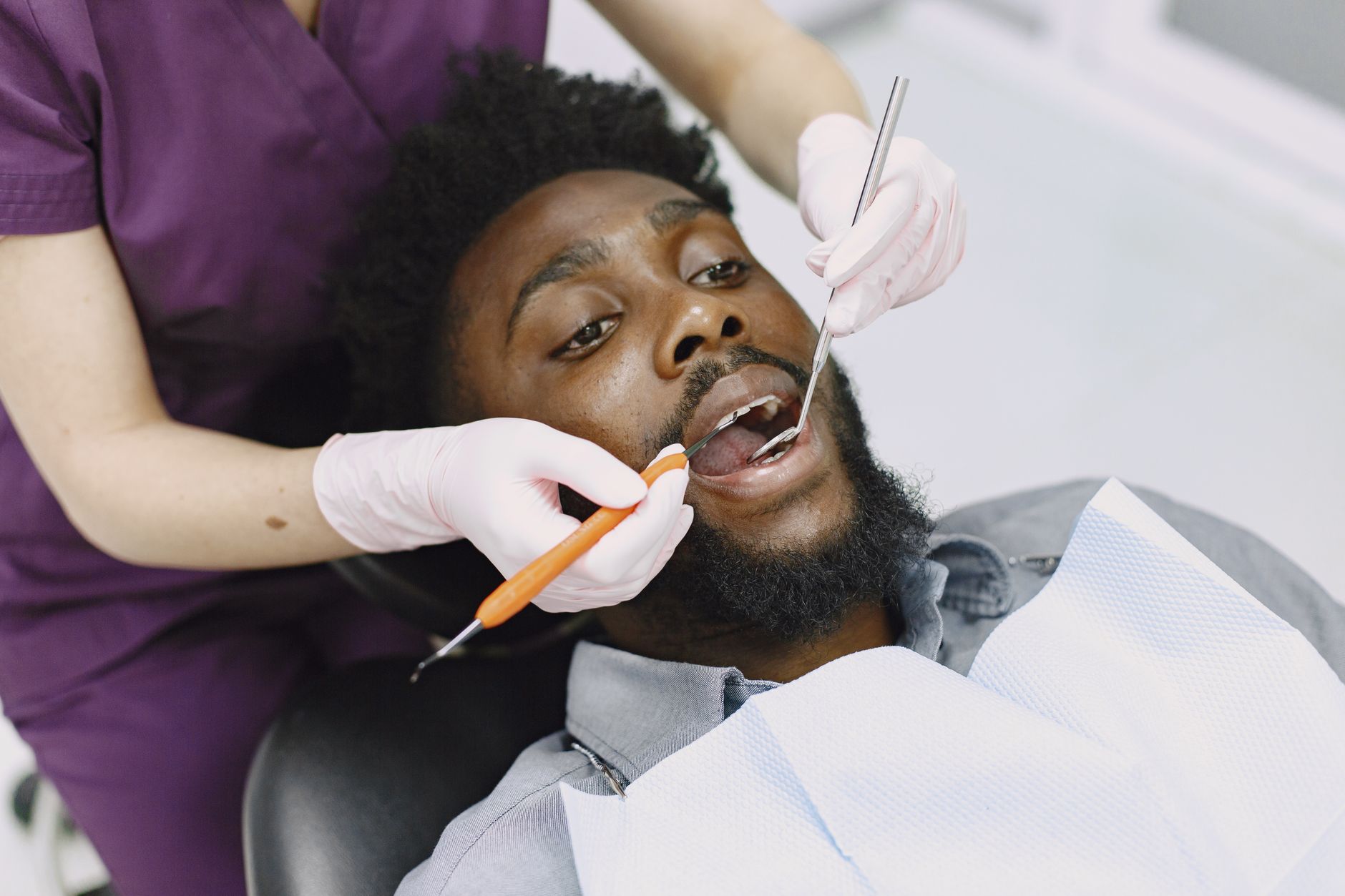
Photo by Gustavo Fring via Pexels
What Makes an Adult Tooth Go Loose
An adult tooth is not cemented into the jaw. It hangs in its socket on thousands of tiny fibres called the periodontal ligament, attached to bone on one side and to the root on the other. A tooth goes loose when those fibres are inflamed and swollen, or when the bone they anchor into has shrunk back.
The usual causes:
- Gum disease. The most common cause in adults, and the quietest. Bacteria under the gum line drive an inflammation that destroys bone around the root, and it rarely hurts until it is advanced. Gums that bleed when you brush are the early version of the same process.
- A knock or a fall. Trauma stretches or tears the ligament without necessarily harming the bone. A tooth loosened by an injury has a different answer and a much shorter fuse.
- Grinding and clenching. Repeated sideways force widens the ligament space and the tooth develops a little give. Grinding loosens several teeth slightly rather than one dramatically.
- A bite that has changed. A filling or crown sitting a fraction high, or a gap left by a missing neighbour, leaves one tooth carrying more load than it was built for.
- Infection at the root tip. An abscess can loosen a tooth within days, usually with pain and often with swelling.
When It Tightens Again, and When It Does Not
It comes down to one question: is the bone still there? Ligament fibres recover. Adult bone, once lost around a root, largely does not come back. So the outlook follows the cause.
Usually firms up again, once the cause is dealt with:
- Inflammation with the bone still intact. Clear the infection out from under the gum, keep it clean, and the tooth tightens over a few weeks.
- A tooth loosened by a knock and splinted quickly. The ligament reattaches if the tooth is held still while it heals.
- A tooth overloaded by a high filling or crown. Adjusting the bite takes the force off and it settles.
- Slight looseness during orthodontic treatment. That is the ligament remodelling, and it firms up after the braces come off.
Usually does not:
- Advanced gum disease with real bone loss. Treatment can halt it, and the tooth can sometimes be splinted to its neighbours, but it will not go back to solid.
- A root cracked vertically. The two halves move independently and there is no fixing that.
- A tooth that has been getting looser for months. By then the bone has usually gone.
Time is the one variable you control. Waiting to see whether a loose tooth settles by itself is usually the more expensive choice, because the cheap version of this problem is a deep clean and the expensive version is an extraction and a replacement.
Stop Wiggling It
This is the most useful line on the page and the hardest to follow. Every push with your tongue stretches the fibres you are hoping will reattach and keeps the inflammation topped up.
- Do not test it. Not with your tongue, not with a finger, not to show somebody.
- Chew on the other side. Soft food, and no pressure on that tooth at all.
- Keep brushing it, gently. People stop cleaning a loose tooth out of fear, and the plaque that builds up makes the gum inflammation worse.
- Do not glue or splint it yourself. Whatever you stick it with has to come off again, and the wrong material traps plaque against the gum.
Getting a Loose Tooth Looked At in Beit Shemesh
This is one of the problems where the appointment is short and the X-ray does most of the work. We check how far the tooth moves and in which direction, measure the gum pockets around it, and take a film to see how much bone is left. One visit is usually enough to know whether you are looking at a deep clean, a splint, a bite adjustment, or a conversation about replacing the tooth.
We are at Harav Kook 28/1 in Beit Shemesh, open Sunday to Thursday 8:00 AM to 8:00 PM and Friday 9:00 AM to 5:00 PM, Shabbat for emergencies only. Same-day appointments are possible, which matters here more than with most symptoms: a tooth loosened by a blow has a splinting window measured in hours, so a Thursday evening injury that waits for Sunday has usually waited too long. Dr. Joel trained at Case Western Reserve University in the US and treats in Hebrew and English, which is worth knowing when the difference between "it moves sideways" and "it sinks when I bite on it" is the first thing lost in an approximate translation.
When It Needs Seeing Today, and When It Can Wait
Call the same day if:
- The tooth went loose after a blow to the mouth.
- It is loose and painful, especially with a swollen gum or a bad taste. That points to infection.
- It has become noticeably looser over days rather than months.
- There is swelling in your face or under your jaw alongside it.
Go to a hospital emergency room instead, not to us, if swelling is spreading down your neck, if swallowing or breathing is getting harder, or if you have a high fever with facial swelling.
The part nobody advertises: plenty of loose teeth do not need an urgent appointment. A tooth with a barely detectable amount of give that has been the same for years, with no pain and no bleeding, can wait for a routine check. A child's wobbly baby tooth is supposed to be wobbly and does not need us at all. If you had a filling replaced in the last few days and one tooth feels slightly odd, give it a week. Sore, inflamed gums with no movement at all are a separate and far more common problem.
If a tooth has started moving and you are not sure why, call or WhatsApp 055-985-8845 and we will get an X-ray of it. Urgent Dental Care is at Harav Kook 28/1 in Beit Shemesh, open Sunday to Thursday 8:00 AM to 8:00 PM and Friday 9:00 AM to 5:00 PM, with emergency treatment outside those hours. Tell us whether it followed a knock and how long it has been moving, because those two details decide how fast we need to see you. Our emergency dentist in Beit Shemesh page explains how urgent problems are handled here.
For independent reading, the ADA's MouthHealthy has plain-language pages on gum disease and teeth grinding, and the American Association of Endodontists sets out why saving a natural tooth is worth the effort.
Common questions
How long does it take for a loose tooth to tighten up?
Will a loose adult tooth eventually fall out on its own?
Can a dentist save a loose tooth?
Is a loose tooth a dental emergency?
Does a loose tooth always mean gum disease?
My tooth feels loose after a new filling. Is that normal?
Can I be seen for a loose tooth in Beit Shemesh the same day?
Still not sure? Message us.
Send Dr. Gabriel Joel, DMD a quick description of what's going on and we'll point you in the right direction.
Message on WhatsAppDentist in Beit Shemesh — our dental clinic