
How Long Does a Tooth Filling Last? Composite vs Amalgam
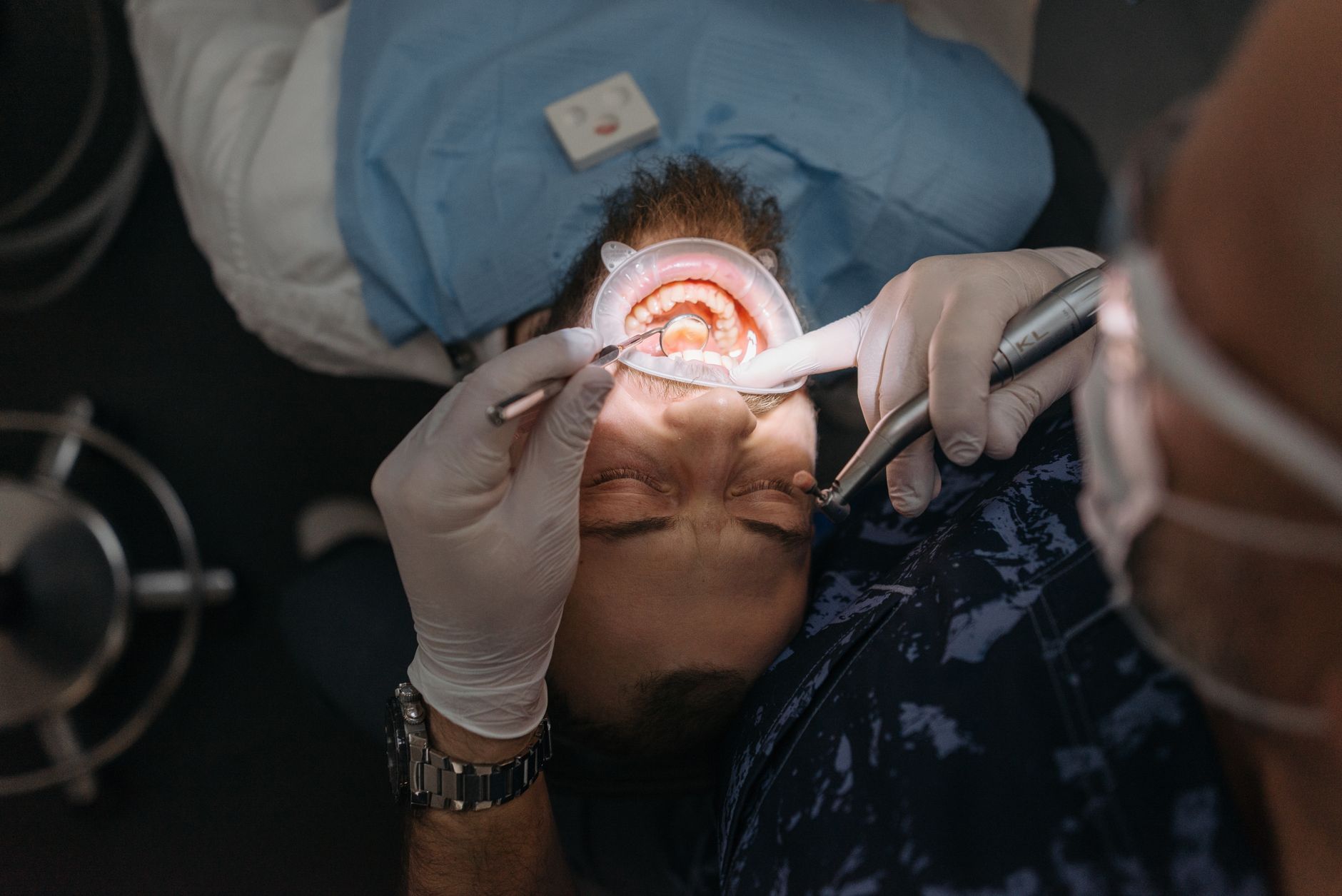
Photo by Pavel Danilyuk via Pexels
Typical lifespans by material
Two materials cover most fillings, and they age differently.
- Composite (white, tooth-coloured). Commonly lasts around 5 to 10 years, sometimes more. It is bonded to the tooth, which is why it holds on well, but the resin wears down faster under heavy chewing.
- Amalgam (silver). Often 10 to 15 years or longer. It is tougher, but it is held in mechanically rather than bonded, so the tooth around it can crack over time.
Gold and ceramic restorations, used for larger repairs, can run longer again. These are general figures from dental literature, not numbers from our own cases, and any individual filling can fall well either side. The dental filling guide covers the materials in more detail.
What actually wears a filling out
The filling itself rarely fails first. The usual causes sit around it:
- New decay at the edge. The most common reason fillings are replaced. Bacteria find the thin line where filling meets tooth, and decay starts underneath.
- Size. A small filling in a small cavity can last decades. A large one that replaces half the tooth has far less tooth to hold onto and tends to give out sooner.
- Grinding and clenching. Heavy night-time grinding chips composite and cracks the tooth walls around any filling.
- Hard food and ice. Chewing ice or hard sweets is a reliable way to split a filling. Most people who come to us with a broken one can name the culprit.
- Brushing and flossing. Clean margins are what keep the edge seal intact.
Signs a filling is near the end
Often there are none, and it only shows up on an X-ray at a routine check. When there are signs, they look like this:
- Sensitivity to cold, sweet or biting that was not there before.
- A rough or sharp edge your tongue keeps finding.
- Floss that catches or shreds at one spot.
- A dark line or stain around the edge of the filling.
- A visible chip, crack, or a gap between filling and tooth.
None of these means the tooth is lost. A worn filling replaced early is a short visit. Left for years, the same tooth may need a crown, or in the worst case a root canal. If a filling that was fine for months has started to hurt, our post on a filling that hurts months later explains the usual reasons.
Fillings and Beit Shemesh timing
A filling rarely fails at a convenient moment. The ones that come out tend to do it on a Friday afternoon or the first night of a holiday, when you have a challah in one hand and an exposed tooth in the other.
If that happens, it is usually not urgent unless there is pain, swelling or a sharp edge cutting your cheek. Avoid chewing on that side and see us when we are open: Sunday to Thursday 8:00 AM to 8:00 PM and Friday 9:00 AM to 5:00 PM, at Harav Kook 28/1. Same-day appointments are possible at the Beit Shemesh clinic, and Dr. Joel treats in Hebrew and English, so you can describe exactly what you feel. See what to do when a permanent filling falls out.
How to make a filling last longer
- Brush twice a day with fluoride toothpaste and floss where the filling touches its neighbour.
- Do not chew ice, pen caps or fingernails.
- If you wake with a sore jaw, ask about a night guard. Grinding wrecks more fillings than decay does.
- Keep your check-ups. Decay under the edge of a filling is painless until it is deep, and an X-ray finds it earlier than you will.
The ADA's MouthHealthy has a plain summary of how fillings work and how to care for them, and its page on cavities covers why new decay starts at the edge.
When a filling is not enough, and when to leave it
Some teeth outgrow fillings. If most of the crown is already filling, or the tooth has cracked, a crown is the sturdier option. Crown or filling: how to tell walks through that choice, and deep filling or root canal covers the case where decay has got close to the nerve.
If your filling is old but quiet, it can wait for your next routine check. Do not rush in for a replacement on a calendar alone. Come sooner for a throbbing tooth, swelling, a bad taste, or pain that wakes you at night. For fever, or swelling that spreads across the face or makes swallowing hard, go to a hospital emergency department rather than a dental clinic.
If a filling has started to feel wrong, call or WhatsApp Urgent Dental Care at 055-985-8845. We are at Harav Kook 28/1, Beit Shemesh, and we also see patients from Ramat Beit Shemesh. After-hours emergency treatment is available outside our opening hours. Our dental fillings in Beit Shemesh page explains what a replacement involves.
Common questions
How long do white fillings last compared with silver ones?
Can a filling last a lifetime?
How do I know if my filling needs replacing?
Is a filling that fell out an emergency?
Does a replacement filling last as long as the first one?
Do fillings last longer in some people than others?
Still not sure? Message us.
Send Dr. Gabriel Joel, DMD a quick description of what's going on and we'll point you in the right direction.
Message on WhatsAppDentist in Beit Shemesh — our dental clinic