
Why Does My Tooth Filling Hurt After Months? What Changed
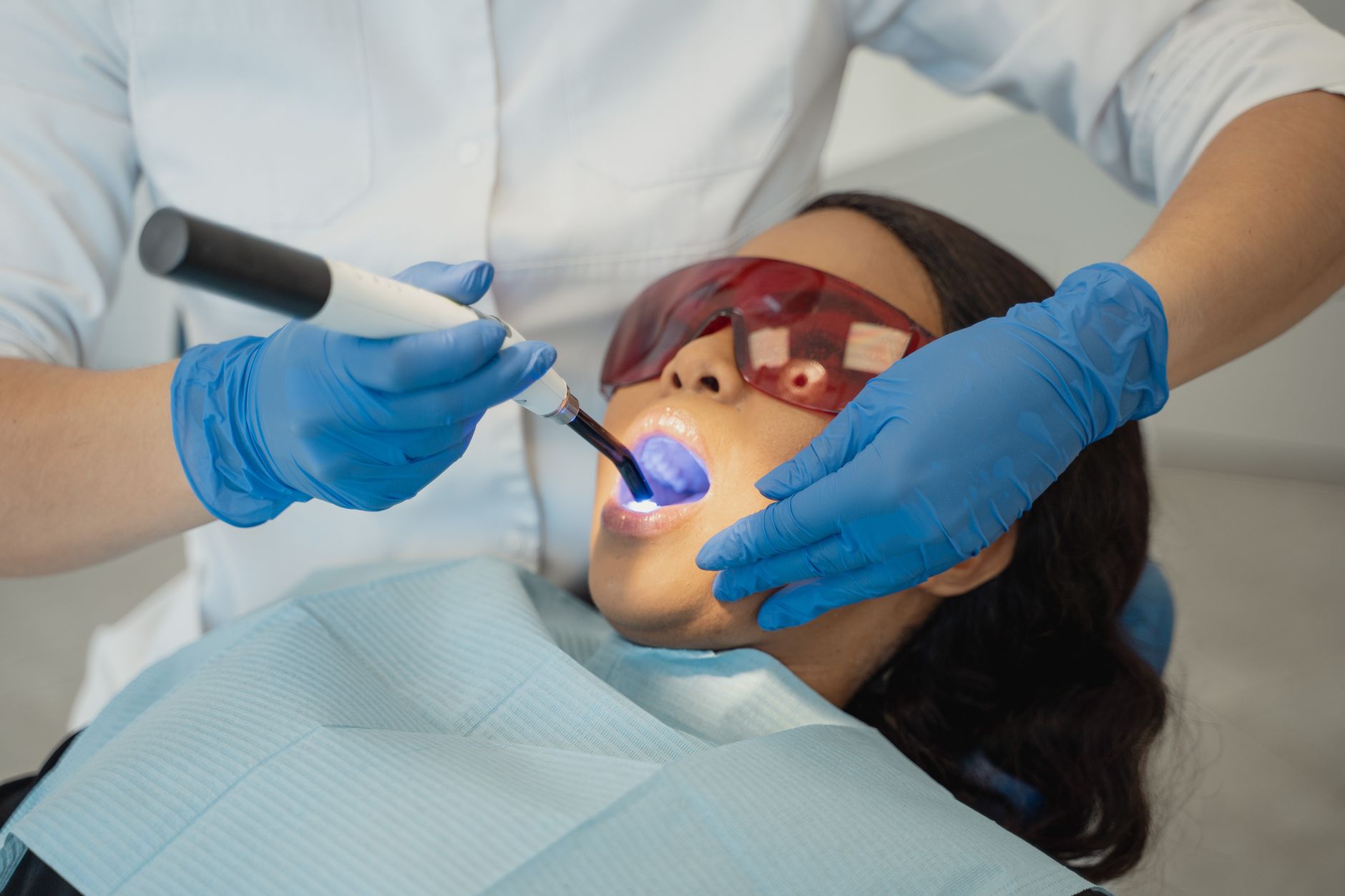
Photo by Tima Miroshnichenko via Pexels
What Usually Makes a Filling Hurt Months Later
Four causes account for most of what we see, and the pain pattern is a decent first clue.
- Decay creeping in at the edge. Every filling has a seam where it meets the tooth. Over time that seam can open by a fraction of a millimetre, bacteria get underneath, and new decay (secondary decay) grows out of sight. It usually starts as a sharper twinge to cold or sweet on a tooth that used to be quiet.
- A crack in the tooth beside the filling. A large filling leaves thinner walls of tooth around it, and years of chewing can split one. The classic sign is a sharp pain when you bite on something small, or at the moment you let go. Tooth pain when biting explains how that differs from other bite pain, and the AAE describes the different kinds of cracked teeth.
- A nerve that is slowly failing. When a cavity was deep, the nerve inside the tooth (the pulp) was already irritated before the filling went in. Some recover. Some don't, and they can take months to make up their mind. A dull ache that lingers after hot drinks, or throbbing that wakes you, points here. Deep filling or root canal covers why it happens.
- Clenching or grinding. A tooth that is tender to chew on, alongside a tired jaw in the morning, is often being overloaded at night rather than decaying.
A filling that sits too high shows up within days, not months. If yours is only weeks old, pain after a new filling is the better read.
Why It Took Months to Start Hurting
The delay is what puzzles people most, and it usually arrives with a polite suggestion that the filling was done badly. Sometimes it was. More often the tooth had a longer history than the filling did.
Decay under a filling grows slowly and has no nerve endings of its own, so it can be well established before the nerve notices. A crack can sit quietly until one bite on a hard crust opens it enough to hurt. None of this shows in a mirror.
When It Needs Seeing Soon, and When It Can Wait
Most of these are not emergencies.
Can usually wait for an ordinary appointment:
- A brief twinge to cold that fades within seconds and has not got worse in the past two weeks.
- Mild tenderness on chewing with no swelling, especially if you know you clench.
Worth being seen within a day or two:
- Pain that lingers for more than a few seconds after hot or cold.
- Sharp pain on biting that you can reproduce on one spot.
- A piece of filling or tooth that has broken away.
Same day:
- Throbbing that wakes you, or that painkillers barely touch.
- Swelling in the gum or face, a pimple on the gum, or a bad taste coming from that tooth.
- Pain that was severe and then suddenly stopped, which often means the nerve has died rather than recovered.
Waiting to see whether it settles is usually the more expensive choice. A leaking filling caught early is often just a new filling. The same tooth a year later is often a root canal and a crown.
What We Check at the Clinic in Beit Shemesh
At our clinic on Harav Kook 28/1, working out which of these it is takes one visit: a look at the edges of the filling, a cold test, a bite test on one part of the tooth at a time to find a crack, and an x-ray to see under the filling and at the root tip. Sometimes the honest answer is to leave it alone and keep an eye on it.
The fix follows the cause. Decay at the edge means removing the old filling and placing a new one. A cracked wall often needs an onlay or crown to hold the tooth together. A failing nerve needs root canal treatment. Grinding usually needs a night guard more than it needs a drill. Our page on fillings in Beit Shemesh covers replacement, and MouthHealthy explains the different filling materials.
If an Old Filling Flares Up Before Shabbat
The clinic is open Sunday to Thursday 08:00 to 20:00 and Friday 09:00 to 17:00, and Shabbat is reserved for genuine emergencies only. If a filling that has been twinging all week starts to linger or throb on a Thursday, message us before Friday afternoon rather than finding out over Shabbat what it has planned.
Same-day appointments are possible at the Beit Shemesh clinic. You can also describe it in English. Dr. Joel trained in the United States and treats in Hebrew and English, and "it aches for a minute after coffee, and the filling is from last winter" gets to the answer faster than a translated guess.
Until You Are Seen, and When to Go to Hospital Instead
None of this fixes the cause.
- Chew on the other side and avoid very hot, very cold and sticky food.
- A sensitivity toothpaste rubbed onto the tooth can blunt a cold twinge. It does nothing for a crack or a failing nerve.
- An anti-inflammatory painkiller such as ibuprofen, taken as the packet directs, if it is safe for you.
Go to a hospital emergency room, not to us, if swelling is spreading toward your eye or down into your neck, if you are having trouble breathing or swallowing, or if you have a high fever and feel genuinely unwell. MouthHealthy's page on dental emergencies draws the same line.
If an old filling has started to hurt and you cannot tell which of these it is, send a WhatsApp saying roughly how old the filling is, what sets the pain off, and how long it lasts. That is usually enough for us to say whether it needs today or can wait for next week. Call or WhatsApp 055-985-8845. Ramat Beit Shemesh Urgent Dental Care is at Harav Kook 28/1, Beit Shemesh, with same-day appointments when a tooth cannot wait and emergency dental care outside normal hours.
Common questions
Can a filling go bad without me noticing?
Does a filling that hurts months later mean I need a root canal?
How long should a filling last?
Can a filling crack or come loose after months?
Is it the filled tooth or the one next to it?
Can I get a painful old filling checked the same day in Beit Shemesh?
Still not sure? Message us.
Send Dr. Gabriel Joel, DMD a quick description of what's going on and we'll point you in the right direction.
Message on WhatsAppDentist in Beit Shemesh — our dental clinic