
How Long Does Tooth Resorption Take? Months to Years
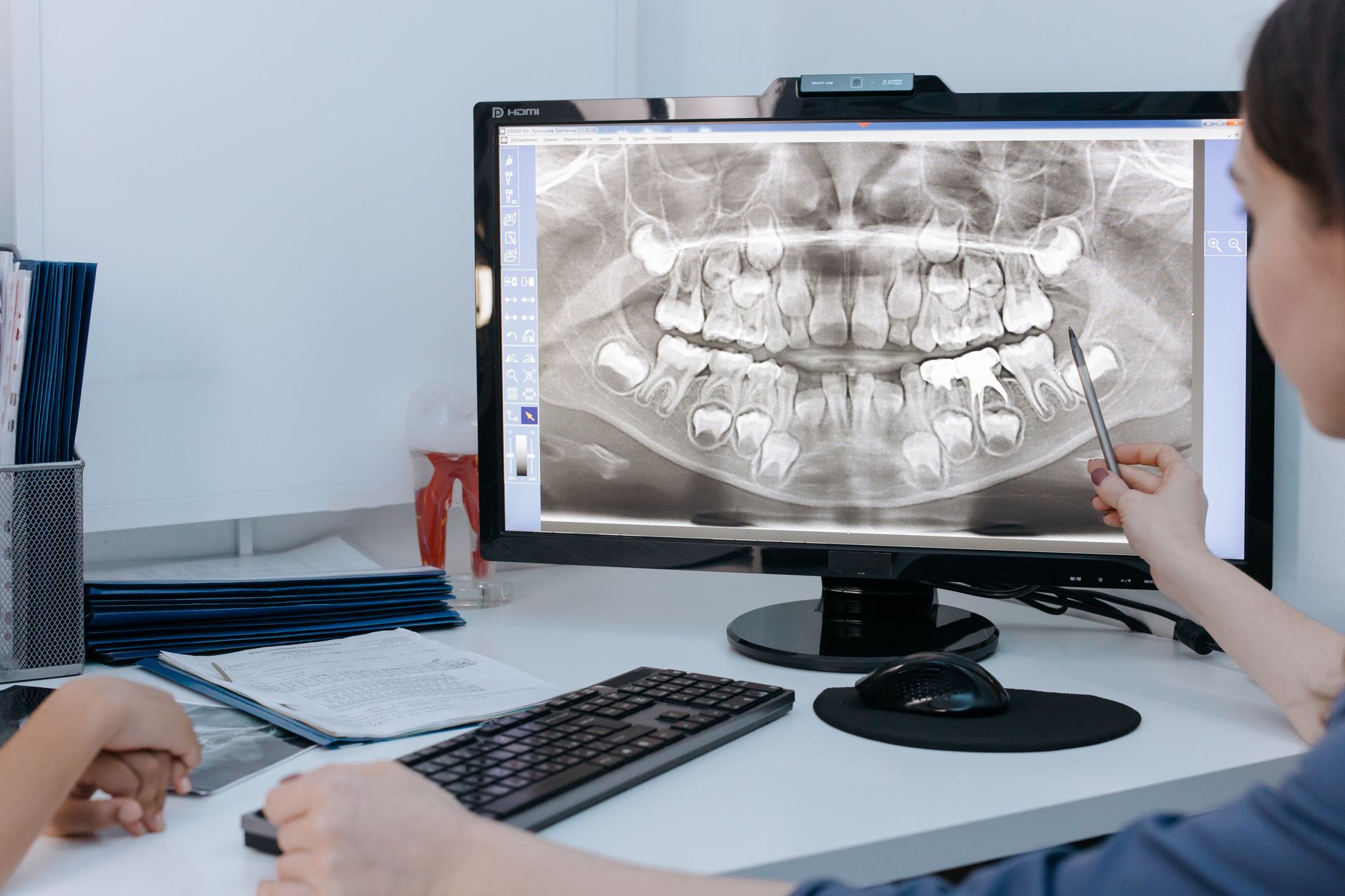
Photo by cottonbro studio via Pexels
What resorption is
Resorption means the body is dissolving part of its own tooth. Specialised cells that normally remodel bone start working on the root or the inside of the tooth instead. In baby teeth this is normal, and it is how they loosen and fall out. In an adult tooth it is not normal, and it is usually found by accident on an X-ray, because it rarely hurts at first.
There are two broad kinds:
- Internal resorption. The tissue inside the tooth (the pulp, the nerve chamber) is inflamed and the tooth is eaten away from the inside out.
- External resorption. The root surface is eaten away from outside. It can follow a knock, long-standing infection, or pressure on the root. A form near the gum line is called cervical resorption.
Most people expect one answer to the timing question. The honest answer is that it depends on which of these it is.
How long it takes
Nobody can give you a date, and a dentist who does is guessing. What can be said is how the different patterns tend to behave:
- Slow and quiet. Some cases progress over years. The X-ray changes very little between visits, and the tooth stays comfortable.
- Faster, with a clear driver. When there is active infection or inflammation feeding it, the damage can move over months. Internal resorption inside a tooth with a failing nerve is a common example.
- Stopped or stable. Resorption that follows an injury sometimes settles by itself, and the only job is to keep watching it.
This is why one X-ray rarely settles it. A second one some months later, compared with the first, tells us whether it is moving. For the general picture of what we can and cannot read on a film, see what a dental X-ray shows.
Signs you might notice
Often there are none, which is the whole difficulty. When there are signs, they look like this:
- A pink or reddish patch on a tooth, usually near the gum line.
- A tooth that has started to hurt on hot or cold, or to ache for no clear reason, see tooth pain that comes and goes.
- A tooth that has darkened, or that gums keep bleeding around.
- A tooth that is loose, in an adult, with no gum disease to explain it.
A pink spot is not always resorption, and a normal-looking tooth can have it. Do not diagnose it from a mirror. Do not try to scrape or polish it away either.
What decides the treatment
Treatment follows the cause and the position, not the calendar.
- Internal resorption. The nerve tissue is what is driving it, so a root canal removes the cause and usually stops it, provided enough tooth wall is left. See root canal treatment in Beit Shemesh.
- External resorption caught early. The affected area can sometimes be cleaned out and the tooth rebuilt, with a root canal added if the nerve is involved.
- Advanced resorption. If the root or crown has been undermined too far, the tooth may not be restorable. Then the choice is between extraction and replacement, and root canal versus extraction sets out how that decision is made.
Earlier is easier in every one of these. That is true of most dental problems, and it is more true here because the tooth is being lost while you decide.
Tooth resorption in Beit Shemesh: how an appointment works
At our clinic on Harav Kook 28/1, we start with an X-ray and a look at the tooth, and we can often offer same-day appointments when something has changed. Dr. Joel trained in the United States, completed his DMD at Case Western Reserve University in 2012, and treats in English and Hebrew, so you can describe exactly what you have seen and when.
We are open Sunday to Thursday 08:00 to 20:00 and Friday 09:00 to 17:00, with Shabbat reserved for genuine emergencies only. A resorbing tooth that is not hurting does not need a Shabbat call. Book it for a weekday and bring any earlier X-rays you have, even old ones from another dentist, because an earlier film is the only way to measure speed. If there is a history such as a knock years ago, mention that as well; an injured tooth pushed up into the gum is one example of the kind of history that matters.
When this is not a question for us
If you are only curious about a child's baby tooth that is loosening on schedule, that is normal and your family dentist will cover it. If you have swelling spreading across the face or neck, a fever, or any trouble breathing or swallowing, go to a hospital emergency room rather than a dental clinic. A painless pink spot can wait for a weekday appointment, but it should not wait for years.
Tooth resorption can take years or months, depending on the type and what is driving it, and the only way to know is an X-ray, then another one later for comparison. We see patients from Beit Shemesh and Ramat Beit Shemesh at our clinic at Harav Kook 28/1. Call or WhatsApp 055-985-8845, and look at our tooth extraction page if you have already been told the tooth cannot be saved. After-hours emergency treatment is available outside our opening hours.
For neutral reading, the American Association of Endodontists has a patient section on root canal treatment and tooth health, and the ADA's MouthHealthy covers root canals.
Common questions
Is tooth resorption painful?
Can tooth resorption be stopped?
Can a tooth with resorption be saved?
What does resorption look like on a tooth?
Does resorption mean I need a root canal?
Can I get a tooth resorption checked in Beit Shemesh?
Still not sure? Message us.
Send Dr. Gabriel Joel, DMD a quick description of what's going on and we'll point you in the right direction.
Message on WhatsAppDentist in Beit Shemesh — our dental clinic