
Tooth Broke and You Swallowed the Piece? What to Do Next
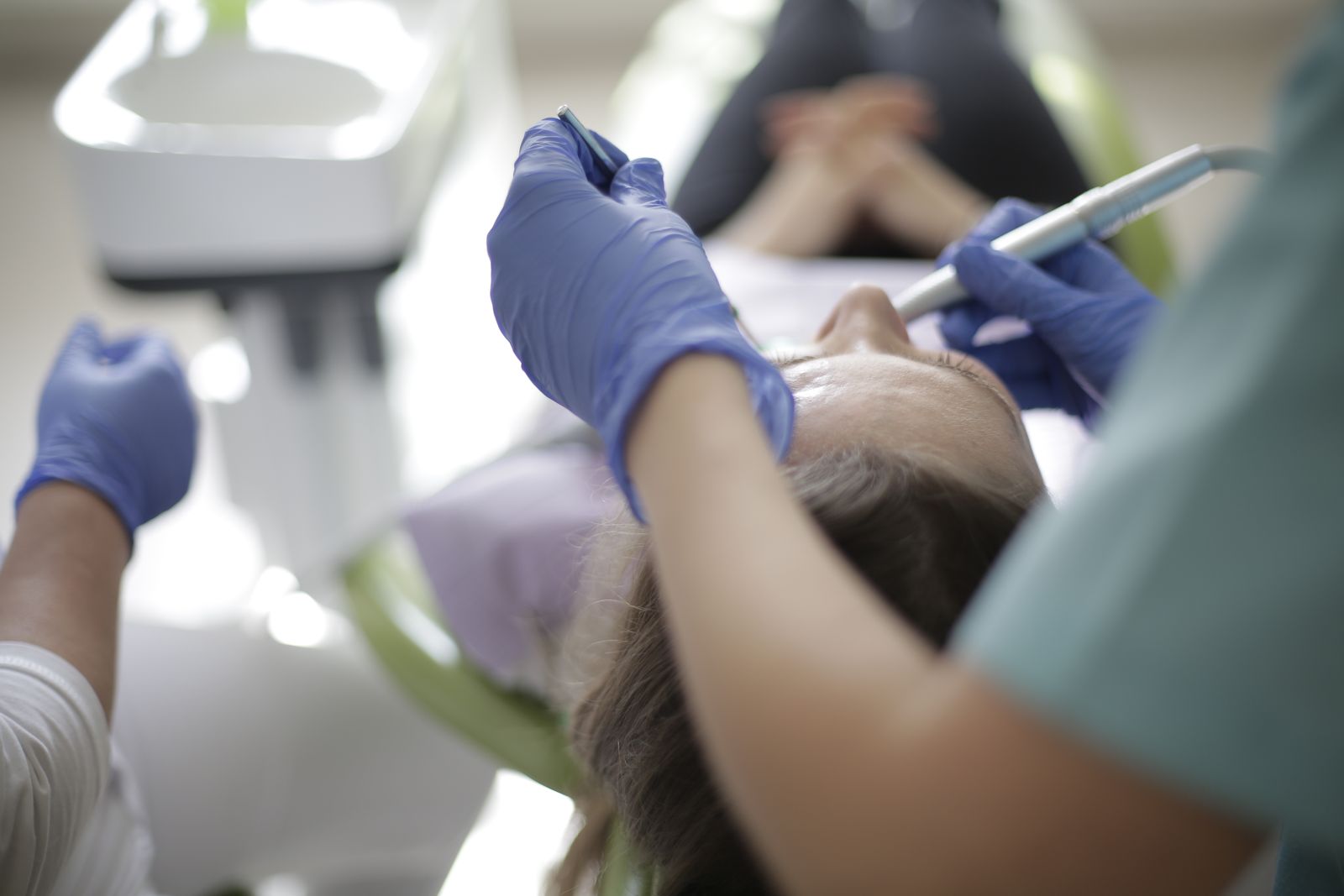
Photo by Andrea Piacquadio via Pexels
First: Did It Go Down the Gullet or the Windpipe?
Swallowing and inhaling feel different, and the difference matters more than anything else in this post. A piece that went into the stomach leaves you with a slightly odd feeling and not much else. A piece that went into the airway does not.
Go to an emergency room, or call 101 for Magen David Adom, if you have any of these:
- Coughing that does not settle, or a feeling that something is stuck in your throat or chest.
- Wheezing, noisy breathing or trouble getting a full breath.
- Chest pain, or pain when you swallow.
This is not a dentist's problem to solve, and we would rather you did not stop to call us first.
If You Simply Swallowed It
A small chip or fragment of enamel is a lot like any other small hard thing that gets swallowed with a meal. It travels through the digestive system and leaves on its own, usually within a few days. You do not need to hunt for it, take a laxative or eat anything special.
Most people who come to us after this have already spent a while quietly worrying about the swallowing and a lot less time on the tooth that actually broke. That is understandable, and it is the wrong way round.
See a doctor if, over the following days, you get:
- Pain in the abdomen that builds rather than fades.
- Repeated vomiting.
- Blood in the vomit or stool.
Those are uncommon with a small fragment. A large piece with sharp edges, or a whole crown or filling, is a different case. If you swallowed something that big, mention it to a doctor and do not just wait and see.
What Matters Is the Tooth You Still Have
Whatever happened to the piece, you now have a tooth with a broken edge. Depending on how deep the break goes, it may be:
- Sharp enough to cut your tongue or cheek.
- Sensitive to cold, heat or air, because dentin (the layer under the enamel) is exposed.
- Open to the nerve, which tends to mean a sudden, strong ache.
- Cracked further than you can see, which is common when a large piece breaks away.
A break that does not hurt is not necessarily a minor one. Bacteria can reach the nerve through an exposed surface over days or weeks, so a painless break should still be looked at soon. Our guides to how a broken tooth is repaired and what to do with a cracked tooth go through the options, from a bonded filling to a crown to, if the nerve is damaged, a root canal.
What to Do Until You Are Seen
- Rinse gently with warm water, and avoid chewing on that side.
- If a sharp edge is cutting your tongue or cheek, cover it with a piece of sugar-free gum or dental wax from a pharmacy.
- Take a painkiller you normally tolerate, as directed on the packet, if it aches.
- If you can find the broken piece in your mouth or on the plate, keep it in a clean container and bring it. It rarely changes the plan, but it does no harm.
- Stay away from very hot, very cold and very hard food until the tooth is covered.
There is more on the first minutes after any dental injury in the first 10 minutes of a dental emergency.
When This Happens on a Friday or at Night in Beit Shemesh
Teeth break on pita crusts, nuts and fish bones, which is to say at the table, and often just before Shabbat. We are open Sunday to Thursday 8:00 AM to 8:00 PM and Friday 9:00 AM to 5:00 PM. Shabbat is for genuine emergencies only, and after-hours emergency treatment is available outside those hours. We do not quote a response time, because an honest answer on the phone is worth more than a number we cannot promise.
Dr. Joel treats in English and Hebrew, so you can describe exactly what broke and what you swallowed without translating on the way. Same-day appointments are often possible at the Beit Shemesh clinic. The guide to emergency dental care on Friday and Shabbat explains how to judge whether it is worth an urgent call.
When It Can Wait for a Normal Appointment
If the break is small, smooth to the tongue and not sensitive, it can wait for the next available appointment, within the week and not the month. A chipped tooth is rarely a reason to leave your Friday dinner. Sharp pain, swelling, a bump on the gum or a visibly large missing piece should be seen the same day if we can manage it. If swelling spreads toward your eye or neck, or you struggle to breathe or swallow, go to a hospital instead. Our comparison of when the emergency room is the right call and when a dentist is sets this out.
Call or WhatsApp us at 055-985-8845, tell us which tooth broke and whether it hurts, and we will say how soon to come in. The clinic is at Harav Kook 28/1, Beit Shemesh, and our emergency dentist and cracked tooth repair pages explain how urgent visits work. We give you the cost before anything starts.
For independent guidance, the ADA's MouthHealthy lists what counts as a dental emergency, and the American Association of Endodontists explains cracked and broken teeth.
Common questions
Is it dangerous to swallow a piece of broken tooth?
What if I think I inhaled the piece instead of swallowing it?
Do I need an X-ray after swallowing part of a tooth?
My tooth broke and doesn't hurt. Do I still need to be seen?
Can a broken tooth be saved?
Can I be seen the same day in Beit Shemesh for a broken tooth?
Still not sure? Message us.
Send Dr. Gabriel Joel, DMD a quick description of what's going on and we'll point you in the right direction.
Message on WhatsAppDentist in Beit Shemesh — our dental clinic