
Can a Root-Canaled Tooth Get Infected? Signs and Fixes
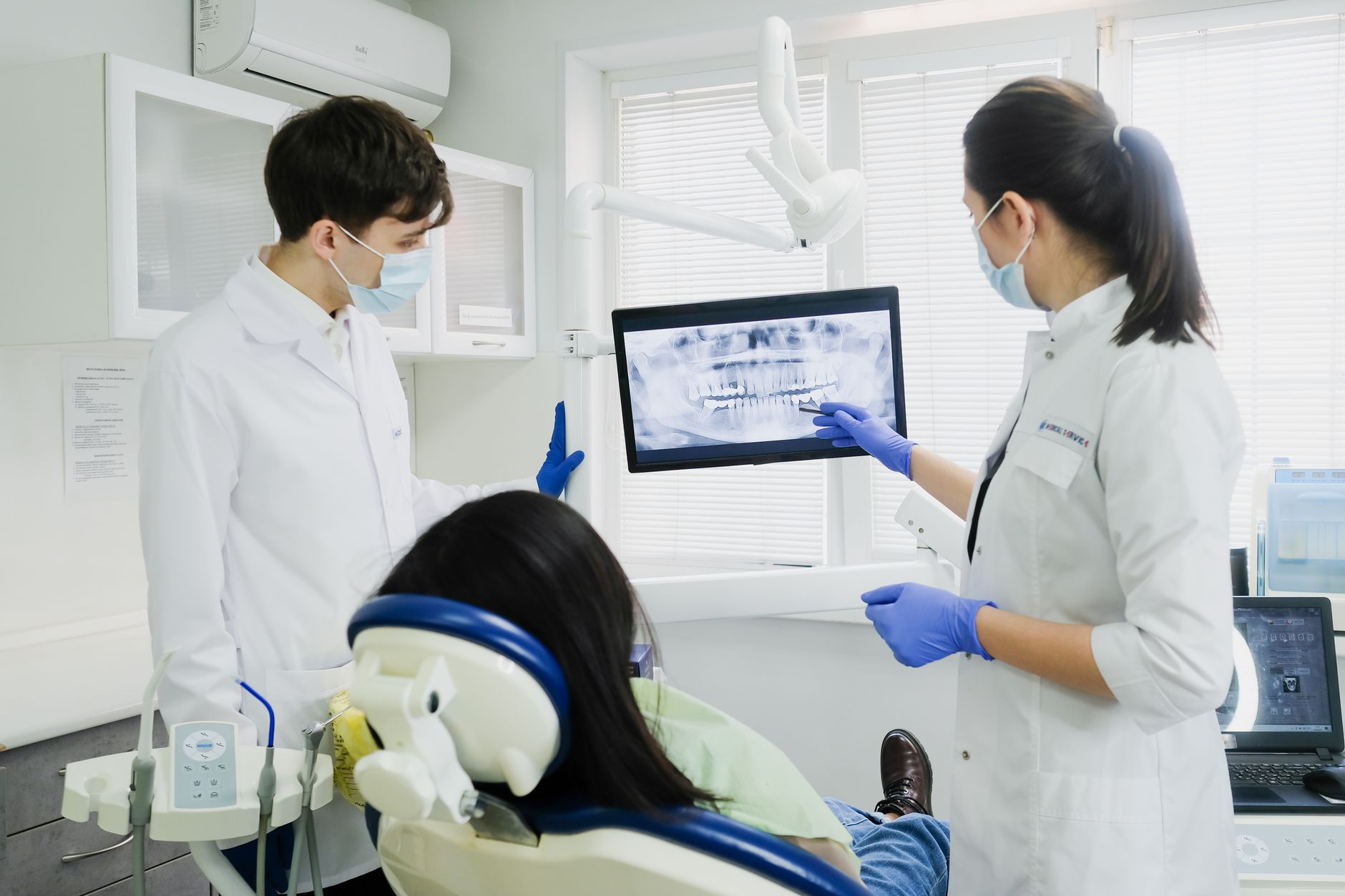
Photo by Nadezhda Moryak via Pexels
Where the Infection Actually Sits
Before treatment, the infection lives inside the tooth, in the pulp (the nerve and blood supply). The root canal cleans that out and seals it. What can return is infection in the canals, or in the bone at the tip of the root, where the canals open out.
That bone is not part of the nerve. So even though the tooth has no nerve left, the tissue around the root can still become inflamed and sore. Plenty of people assume "no nerve" means "no problem", and it is a reasonable assumption that happens to be wrong.
How Bacteria Get Back Into a Treated Tooth
A few routes cover most cases:
- A leaking seal. A temporary filling left for months, or a crown whose edge has opened up, lets saliva reach the canals.
- New decay at the edge of the filling or crown.
- A missed canal. Some molars have a small extra canal that was not found the first time.
- A crack in the root, which gives bacteria a path down the side of the tooth.
A crown covers the top of the tooth, not the root underneath, which is why a crowned tooth can still get infected. For the longer list of causes, see why infection comes back after a root canal.
Signs a Treated Tooth Is Infected
It may not hurt the way it did the first time. These are the usual signs:
- Tenderness when you bite or tap on the tooth.
- A dull ache that comes and goes, or a tooth that feels "high".
- A small bump on the gum near the root that may leak a salty or bad-tasting fluid.
- Gum swelling, or a bad taste that keeps returning.
- No symptoms at all, with a dark area at the root tip found on a routine X-ray.
Most people who come to us with this have already spent a few days hoping it was the filling settling. It is a very human plan. The signs a root canal is failing go through each one in more detail.
If swelling is spreading toward your eye or neck, or you have trouble swallowing or breathing, do not call us first. Go to a hospital emergency room. Facial swelling from a tooth infection explains when that line is crossed.
When It Starts on a Friday in Beit Shemesh
Infections have a talent for waking up on Thursday night. Our clinic on Harav Kook is open Sunday to Thursday 8:00 to 20:00 and Friday 9:00 to 17:00. Shabbat is for genuine emergencies only, and there is after-hours emergency treatment outside those hours.
If a treated tooth starts to ache or swell late on Friday, message us on WhatsApp rather than waiting out the weekend. You can describe it in English or Hebrew, and that precision helps. We keep same-day appointments possible at the Beit Shemesh clinic.
How We Fix It
The first step is an X-ray and a bite test, so we know whether the infection is in the canals, at the root tip, or whether the root is cracked.
If the root is intact, the usual answer is root canal retreatment: the tooth is reopened, the old filling is cleared, the canals are cleaned again and resealed. Many of these teeth are saved. If the root is cracked, the tooth often cannot be kept, and we will tell you that plainly. Antibiotics alone will not clear it, because the bacteria sit in a place the blood supply barely reaches. They may be added when there is spreading swelling, but they are not the fix.
For the wider question, can a root canal get infected covers the same ground from the other direction.
When to Book, and When It Can Wait
If the tooth is quiet and your dentist checks it on X-ray now and then, leave it alone. A treated tooth with no symptoms does not need action.
If anything has changed, book a visit rather than waiting to see. Call or message 055-985-8845 and Urgent Dental Care in Beit Shemesh will look at it. Our root canal retreatment in Beit Shemesh and emergency dental care pages explain what to expect.
For background with nothing to sell, the AAE patient guide explains how root canal treatment saves a natural tooth, and the ADA's MouthHealthy covers what a root canal involves and how treated teeth are cared for.
Common questions
Can a tooth get infected after a root canal?
Will an infected root-canaled tooth hurt?
Can antibiotics cure an infection in a root-canaled tooth?
Does an infected root-canaled tooth have to be pulled?
How fast can I be seen in Beit Shemesh?
When is a tooth infection a hospital emergency?
Still not sure? Message us.
Send Dr. Gabriel Joel, DMD a quick description of what's going on and we'll point you in the right direction.
Message on WhatsAppDentist in Beit Shemesh — our dental clinic