
Root Canal Retreatment vs Pulling the Tooth: How to Choose
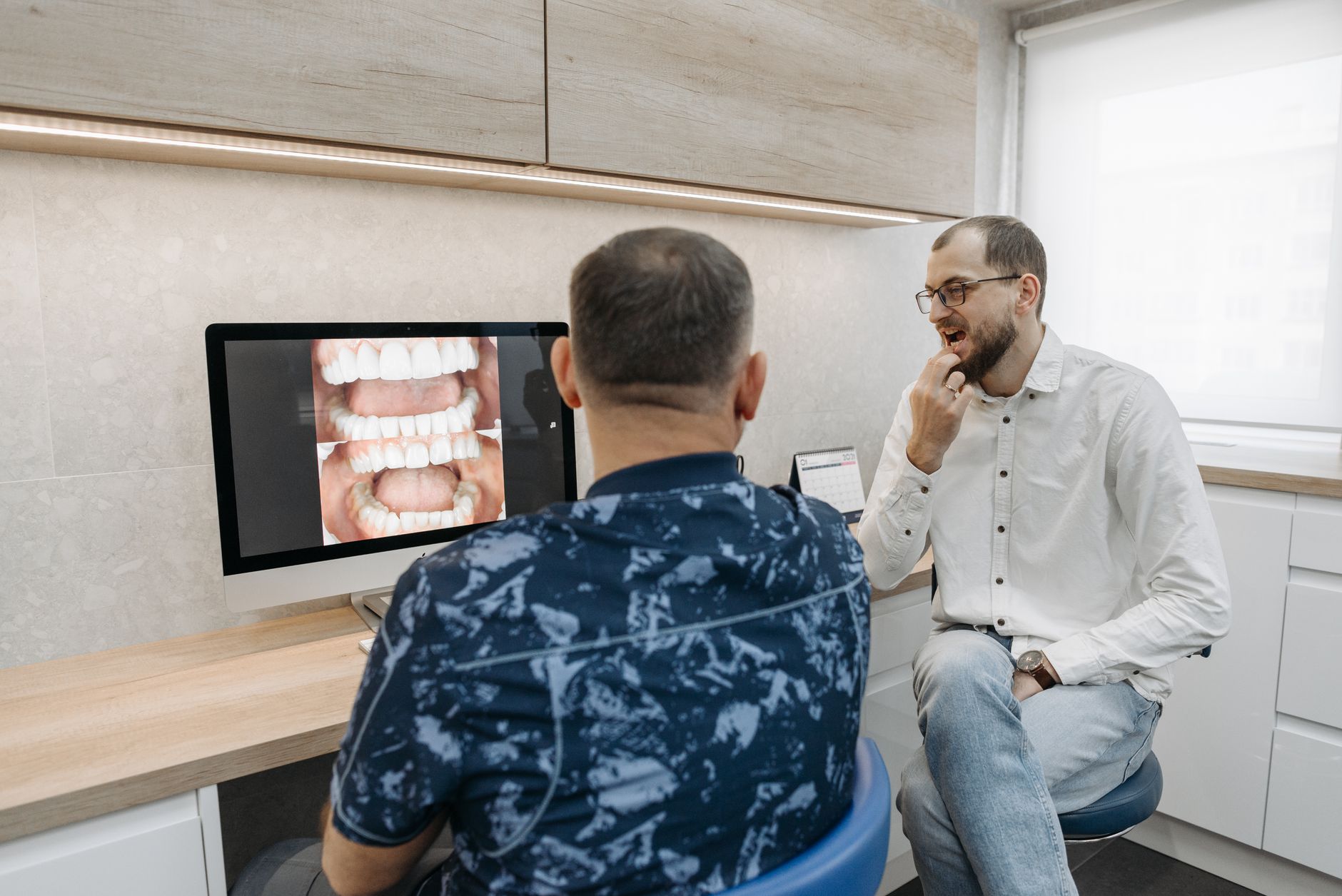
Photo by Pavel Danilyuk via Pexels
What actually decides it
Not how much you dread sitting through a second root canal. Not the fact that the first one did not hold. The decision is made almost entirely by how much tooth is left and whether the root is intact.
A tooth is rebuilt from the outside in. The crown needs a collar of sound tooth to grip, roughly two millimetres of it, all the way round. With that collar, a retreated tooth can carry a crown and chew normally for years. Without it, the crown sits on a post and a hope, and it comes off.
The root is the other half. A vertical crack running down a root cannot be sealed, cleaned, or crowned around. Bacteria live inside the crack, and there is no version of retreatment that reaches them. That tooth comes out, and the sooner it does the more bone is left for whatever replaces it. The American Association of Endodontists explains retreatment in similar terms: the question is what the tooth can still support, not what went wrong the first time.
What we look at before saying either word
The consultation is a film, a probe, and about fifteen minutes of looking. These are the things being weighed:
- How much tooth is above the gum. Broken at the gum line is a different conversation from a small hole in the side of a crown.
- Whether the root is fractured. A crack shows as a narrow band of bone loss running down the side of the root rather than sitting at the tip, and sometimes only a deep pocket in one spot gives it away.
- The bone around the root tip. A dark area there is infection, and infection is treatable. Bone lost along the whole length of the root is a different problem.
- Why it failed. A canal that was missed, a canal filled short, decay tracking under a crown margin — each of those is a fixable reason, and a fixable reason is the strongest argument for retreatment there is. No visible reason is the weakest.
- What the tooth does for you. A molar you chew on earns its rescue. A second molar with nothing biting against it sometimes does not.
We covered the retreatment appointment itself separately, and why a root canal fails years after it was done in its own post.
When pulling the tooth is the right answer
There is a version of this article that says every tooth can be saved. It would be a nicer article and a worse one. These are the cases where extraction is the honest recommendation:
- The root has a vertical fracture.
- The tooth has broken below the level of the bone, so there is nothing for a crown to hold.
- Gum disease has already taken most of the bone support, and the tooth is loose.
- The tooth has been retreated once already, failed again, and nothing new can be found to explain it.
- Decay has tunnelled under an old crown and into the root itself.
In those cases retreatment is not a gamble, it is a delay with a bill attached. Taking the tooth out cleanly, while the bone around it is still healthy, leaves the best foundation for an implant or a bridge later. The point at which a tooth genuinely needs extracting is worth reading if that is where your case is heading.
The gap is part of the decision, and people forget it
An extraction is cheaper than retreatment on the day. It is very often not cheaper by the end. The tooth comes out, and then the space has to be dealt with, because teeth on either side lean into a gap and the tooth above it drops down over the following months. Replacing a molar with an implant or a bridge generally costs more than retreating and crowning the tooth would have.
Waiting to see whether it settles down is usually the more expensive choice too. A failed root canal that is quiet today is not healing; it is a slow infection at the root tip that has not yet found a way to hurt. What it does in the meantime is eat bone, and bone is what an implant needs later. We have put the arithmetic side by side in extraction versus root canal on cost and in what an implant costs compared with saving the tooth.
None of which means save the tooth at any price. It means comparing the whole plan against the whole plan, not one appointment against another.
Deciding this in Beit Shemesh
We are at Harav Kook 28/1 in Beit Shemesh, open Sunday to Thursday 8:00 to 20:00 and Friday 9:00 to 17:00, Shabbat for emergencies only. A failed root canal that starts announcing itself on a Thursday evening is the case worth phoning about, because the alternative is holding it through Friday afternoon and all of Shabbat. Same-day appointments are possible.
Dr Joel trained in the United States and treats in Hebrew and English, which matters more here than it sounds. A tooth with a fifteen-year history behind it needs that history described accurately, and translating it costs detail. Root canal retreatment in Beit Shemesh and tooth extraction both happen in the same chair, which is the point: nobody here is arguing for the treatment they happen to offer.
Two cases that should not come to us. If the dentist who did the original root canal has offered to redo it, let them. They know what they found in those canals, and changing practice out of embarrassment is a bad reason to start a complicated case from scratch. And if there is swelling spreading toward your eye or down your neck, difficulty breathing or swallowing, or fever with chills, go to a hospital emergency room rather than a dental chair. That infection is no longer a decision about one tooth.
Further reading with nobody selling anything: the ADA's MouthHealthy on root canals and on dental implants, both written for patients rather than dentists.
If a tooth that has already had a root canal is aching, swelling, or feeling wrong under pressure, get a film of it before the decision makes itself. Urgent Dental Care is at Harav Kook 28/1 in Beit Shemesh. WhatsApp or call 055-985-8845 and we will put the X-ray on the screen and tell you plainly whether that tooth is worth retreating. Root canal treatment in Beit Shemesh is most of what we do.
Common questions
Is root canal retreatment more painful than the first root canal?
How do I know if my root canal actually failed?
Can any dentist do retreatment or does it need referring on?
How long does a retreated tooth last?
Should I just get an implant instead of going through this twice?
Can I have this looked at in Beit Shemesh without changing dentist?
What happens if I do nothing for now?
Still not sure? Message us.
Send Dr. Gabriel Joel, DMD a quick description of what's going on and we'll point you in the right direction.
Message on WhatsAppDentist in Beit Shemesh — our dental clinic