
Can a Root Canal Fail Years Later? Why Late Failure Happens
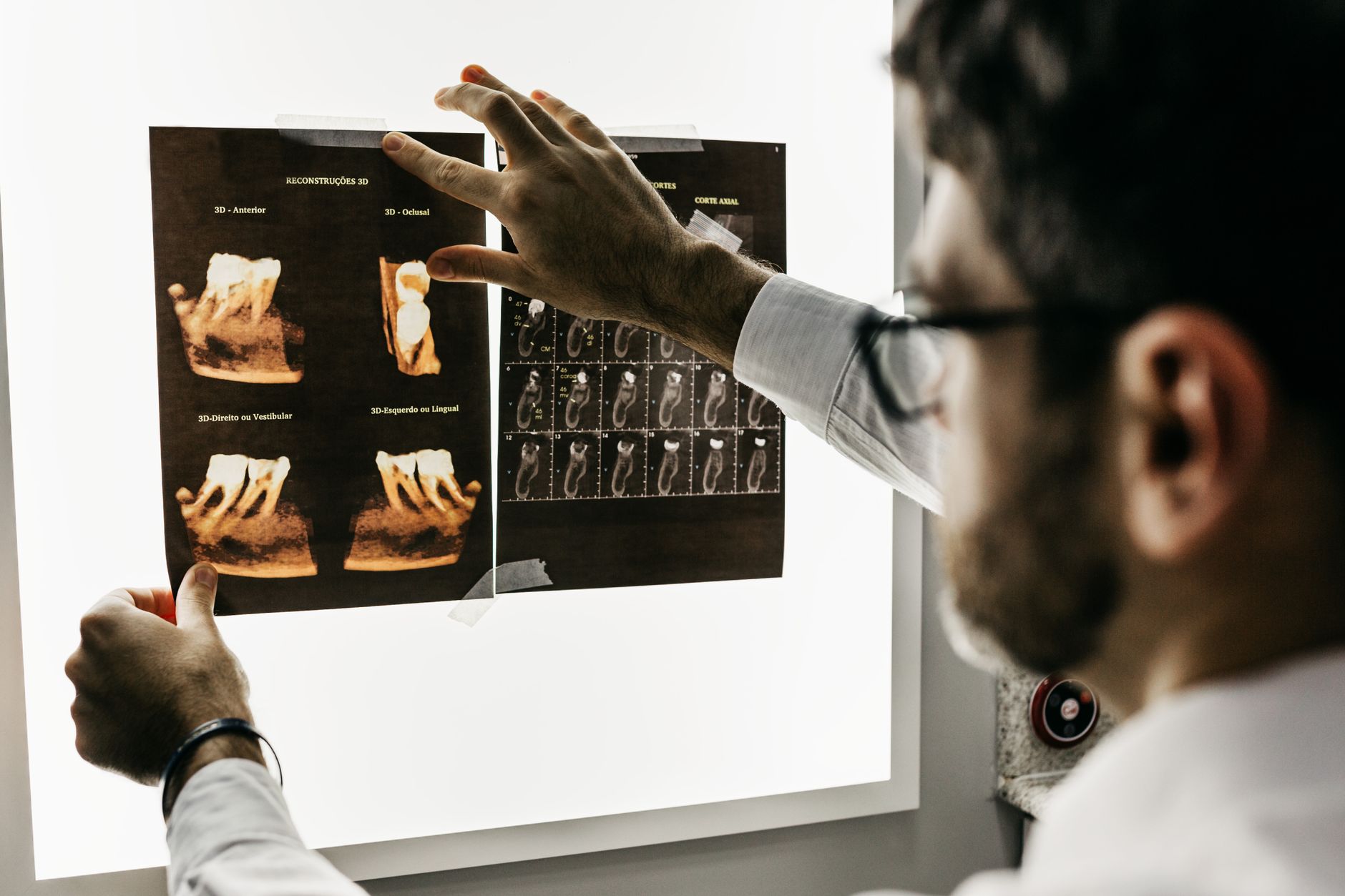
Photo by Jonathan Borba via Pexels
Why a root canal that worked for years suddenly fails
The nerve is gone, so a treated tooth cannot get infected the way a live one does. What can happen is that bacteria find their way back into a space that was sealed. Late failure is almost always a seal problem, and seals age. The usual routes back in:
- A leaking crown or filling margin. Cement washes out over a decade, a hairline gap opens, and saliva does the rest.
- New decay around the restoration. The tooth cannot feel it, so it advances quietly until it reaches the sealed canals.
- A crack. A treated molar has less structure holding it together, and a crack into a root reopens everything at once.
- Gum recession. When the gum drops below the edge of an old crown, exposed root surface decays faster than enamel.
- A canal that was never found. Narrow or extra canals can hold a low-grade infection for years before it shows on a film.
What is not on that list is the filling material going off on its own. It has no shelf life, and how long a root canal lasts is decided by what sits on top of it.
What late failure feels like, and when it feels like nothing
Sometimes it announces itself: the tooth turns sore to bite on, the gum swells, a small boil appears and drains a bad taste. That is the straightforward version, because it sends you to a dentist.
The harder version is silence. With no nerve in the tooth, a slow reinfection at the root tip can build for years without hurting, and turns up as a shadow on an X-ray taken for something else. That is why old root canals are worth filming occasionally: if one fails, the tooth has no way of telling you.
Worth taking seriously in a tooth treated long ago:
- Pain or tenderness when you bite on it
- A boil on the gum, even a painless one
- Swelling that comes and goes
- A bad taste traced to one spot
- A crown that feels loose or high, or catches floss where it never used to
The signs a root canal has failed works through each, and infection under a crowned tooth covers the version where the crown hides the problem.
Does late failure mean the original root canal was bad?
Usually not, and worth saying plainly, because people arrive furious with a dentist who did nothing wrong. A root canal that held for twelve years did its job. Twelve years of chewing, a crown at the end of its life and a new cavity are not evidence of bad work.
There is a genuine exception: a tooth that never fully settled after treatment, or a film showing a canal that was never cleaned. That is a different story from one comfortable for a decade.
Either way, the useful question is not who to blame. It is what is holding the tooth together now.
What can be done about a root canal that failed years later
A failed root canal is not automatically an extraction.
- Retreatment. The old material comes out of the canals, the space is cleaned and disinfected again, and the tooth is resealed. This saves most teeth that fail, provided the tooth is sound. Redoing a root canal covers what the appointment involves.
- A small procedure at the root tip. When the canals cannot be reached from above, for example under a crown and post that would be wrecked coming off, the root tip can sometimes be treated through the gum.
- Extraction. The honest answer when a crack runs into the root, or decay has gone so far under the gum that there is nothing left to build on. Then it is a question of an implant, a bridge, or living with the gap.
What decides between them is structural, not how old the root canal is. A twenty-year-old root canal in a tooth with solid walls is a better candidate for retreatment than a three-year-old one in a tooth that has cracked into the root.
Waiting to see whether an old treated tooth settles on its own is almost always the more expensive route. The infection does not clear itself, and a tooth that could have been retreated in the spring can need extraction by the summer.
Getting an old root canal looked at in Beit Shemesh
The first appointment is a film and a conversation, not a decision.
We are at Harav Kook 28/1 in Beit Shemesh, open Sunday to Thursday 8:00 to 20:00 and Friday 9:00 to 17:00, Shabbat for emergencies only. Same-day appointments are possible, which matters most on a Thursday evening or a Friday morning, when the alternative is sitting with it until Sunday. Dr Joel trained in the United States and treats in Hebrew and English, so you can describe a fifteen-year-old dental history in the language you remember it in. Root canal retreatment in Beit Shemesh and the crown that finishes it happen in the same chair.
Two things that are not us. If an old root canal is quiet and someone spotted a shadow on a routine X-ray, that is an ordinary appointment in ordinary hours. Book it and go to sleep. And if there is swelling spreading toward your eye or down your neck, trouble breathing or swallowing, or fever with chills, go to a hospital emergency room instead. That infection has left the tooth.
If a tooth that had a root canal years ago aches, swells, or feels wrong when you bite, get a film of it before the decision gets made for you. Urgent Dental Care is at Harav Kook 28/1 in Beit Shemesh. WhatsApp or call 055-985-8845 and we will put the X-ray on the screen and tell you honestly whether the tooth can be retreated. Root canal treatment in Beit Shemesh is most of what we do.
Further reading with nothing attached to it: the American Association of Endodontists on what retreatment involves, and the ADA's MouthHealthy on root canals from the patient's side.
Common questions
How many years after a root canal can it fail?
Can a root canal fail without any pain?
Does a failed root canal always mean losing the tooth?
Will antibiotics sort out an old root canal that has reinfected?
My old root canal is fine but the crown feels loose. Is that urgent?
Can the same tooth have a root canal twice?
Where can I get an old root canal checked in Beit Shemesh?
Still not sure? Message us.
Send Dr. Gabriel Joel, DMD a quick description of what's going on and we'll point you in the right direction.
Message on WhatsAppDentist in Beit Shemesh — our dental clinic