
Implant Cost vs Root Canal Cost: How the Prices Compare
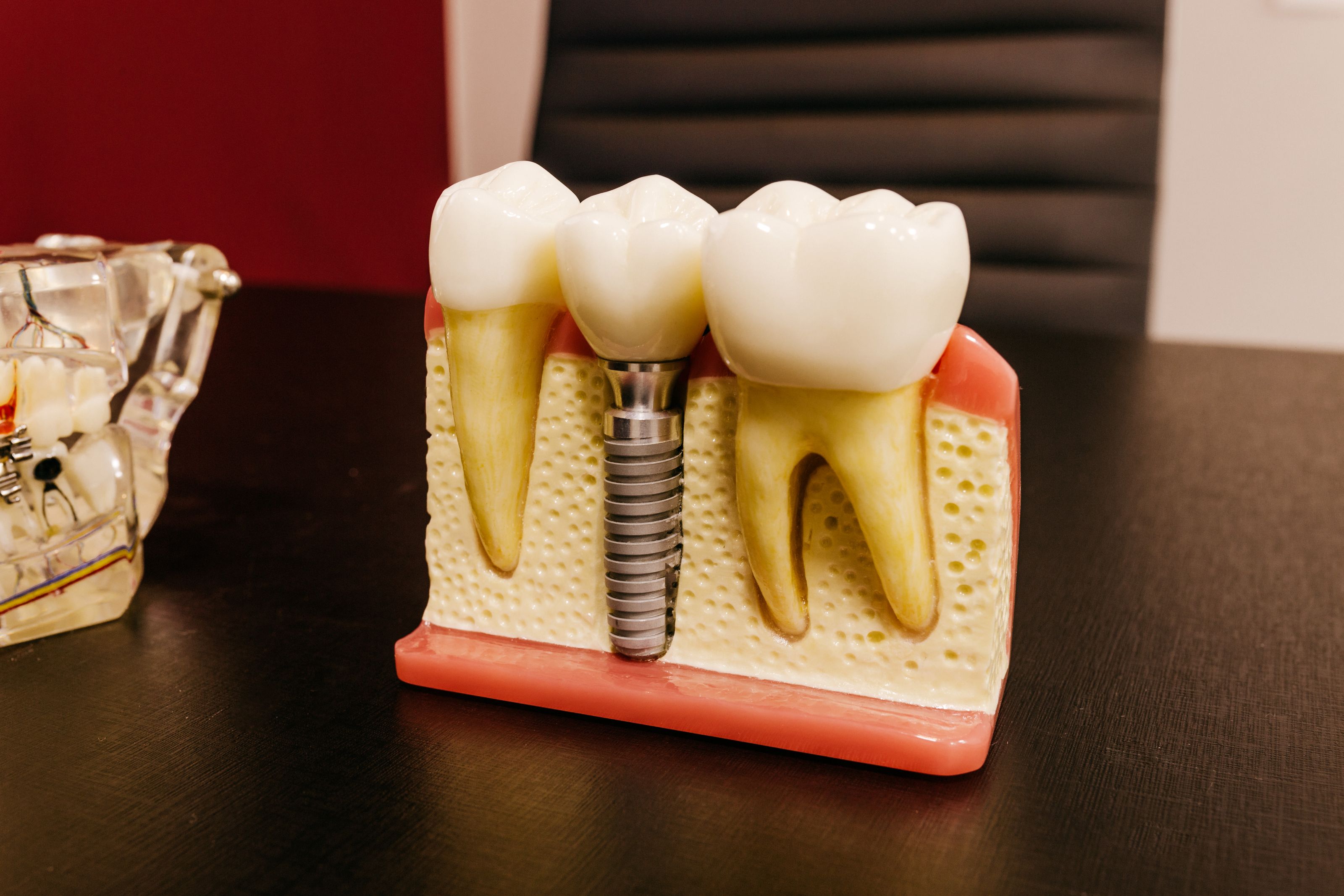
Photo by Jonathan Borba via Pexels
The Short Answer: Keeping the Tooth Usually Costs Less
A root canal treats the tooth you already have. The infected nerve is cleaned out, the roots are sealed, and the tooth stays in your mouth. An implant does the opposite: the tooth comes out, a post goes into the jawbone, and a new tooth is built on top of it over several months. More stages means more cost, and that's the whole reason an implant sits higher on the bill.
So when people ask which is cheaper, the answer for most savable teeth is the root canal. The real question sitting underneath it is whether this particular tooth can still be saved at all, because that's what decides whether the cheaper option is even on the table. Whether it's better to pull the tooth or save it covers how that call gets made.
Why an Implant Costs More
An implant isn't one price. It's a series of steps, each with its own cost, and they stack up:
- Extraction of the tooth that's coming out.
- The implant post, a titanium screw placed surgically into the jaw.
- The abutment, the connector that links the post to the new tooth.
- The crown that sits on top and does the chewing.
- A bone graft or sinus lift first, in some cases, if there isn't enough bone left to hold the post.
A root canal has fewer moving parts by comparison. That difference in the number of stages, not any single step being wildly pricey, is what makes the implant the more expensive route overall.
Compare Like for Like: Add the Crown to the Root Canal
Here's the mistake people make when they price this up. They compare the whole implant against the root canal on its own and conclude the gap is enormous. But a back tooth that's had a root canal almost always needs a crown afterward to stop it cracking, so the honest comparison is a root canal plus a crown against the full implant.
Counted that way, the two are closer than the raw root-canal figure suggests, and saving the tooth still usually comes out lower. What a root canal and crown cost together breaks down that combined price, and why a root canal costs what it does explains where the money in the root canal itself goes.
Look at the Lifetime Cost, Not Just the First Bill
The number on the first invoice isn't the whole story. A natural tooth saved with a root canal and a good crown can last for decades, often for life, and keeping it also protects the bone and the neighbouring teeth from shifting. That's cost you never pay because the problem never starts.
An implant can last a long time too, and it's an excellent tooth replacement. But it's replacing something you had to remove first, and the road there is longer and pricier. Whether a root canal is worth the cost goes further into the value side of keeping your own tooth.
When Paying More for an Implant Is the Right Call
Sometimes the implant is genuinely the better spend, and it's worth being straight about when. A root canal is only cheaper if the tooth can actually be kept. If it can't, paying for one is money spent to save a tooth that's coming out anyway. The implant becomes the right call when:
- The tooth is cracked down through the root, which no root canal can fix.
- There's too little healthy tooth left to rebuild and crown.
- The tooth is loose from severe bone loss around it.
- A previous root canal has failed and can't be redone.
In those situations, spending less on a root canal isn't saving money, it's delaying the extraction and paying twice. Root canal versus extraction walks through where that line sits.
Getting a Real Number for Your Tooth
Nobody can give you an honest price for either option over the phone without seeing the tooth, because the cost turns on things only an X-ray shows: how much healthy tooth is left, whether the roots are intact, and how much bone is holding it. Anyone quoting you a firm figure sight unseen is guessing. We put the X-ray on the screen and go through the actual numbers for your tooth before anything is decided.
One thing that quietly makes the choice for people is waiting. Waiting to see whether it settles is usually the more expensive choice, because a tooth that could have had a straightforward root canal a month ago can crack or decay further while it's left, until saving it stops being realistic and the only route left is the pricier one. If a tooth is bothering you, the time to keep the cheaper option open is before it closes. And if we look and the tooth genuinely can't be saved, we'll tell you that plainly rather than sell you a root canal that won't hold.
If you're weighing an implant against a root canal and want a real number for your own tooth, get it looked at before the decision gets made for you. Call or message us on WhatsApp at 055-985-8845. We're open Sunday to Thursday 8:00 AM to 8:00 PM and Friday 9:00 AM to 5:00 PM, with after-hours emergency treatment outside those hours, and we handle root canal treatment and emergency dental care in Ramat Beit Shemesh. If cost is the worry, what to do when you can't afford a root canal and crown lays out the honest options.
For background from sources with nothing to sell, the American Association of Endodontists explains why saving a natural tooth is worth it, and the ADA's MouthHealthy covers how dental implants work and when they're used.
Common questions
Is a root canal cheaper than an implant?
Why is a dental implant more expensive than a root canal?
Should I just pull the tooth and get an implant to save money?
Does the root canal price include the crown?
Is an implant ever cheaper in the long run?
Can you tell me the price over the phone?
Still not sure? Message us.
Send Dr. Gabriel Joel, DMD a quick description of what's going on and we'll point you in the right direction.
Message on WhatsAppDentist in Beit Shemesh — our dental clinic