
Does a Root Canal Hurt During the Procedure? What to Expect
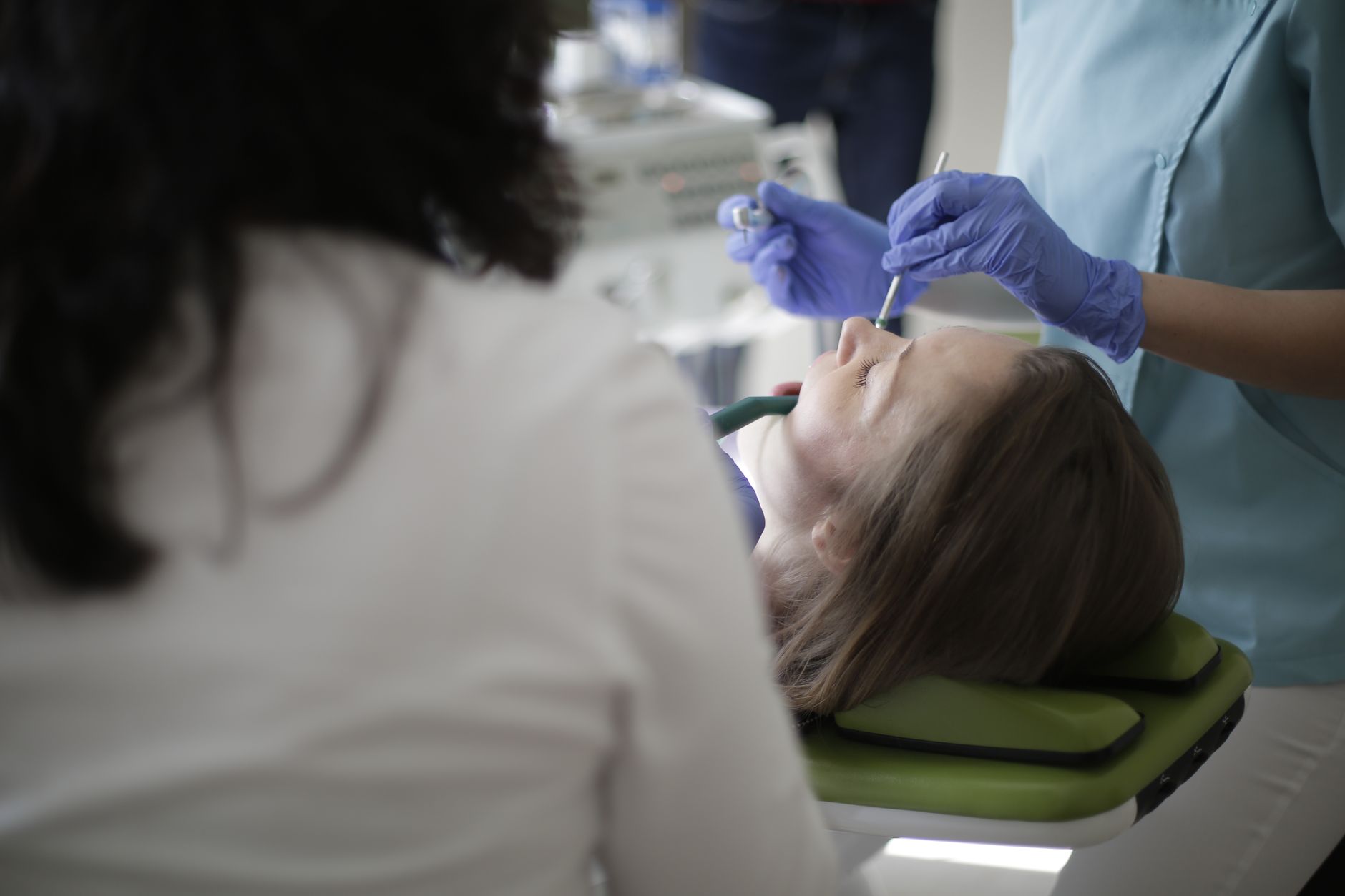
Photo by Andrea Piacquadio via Pexels
What You Feel at Each Stage of the Appointment
Here is the order the appointment runs in:
- Numbing gel, then the injection. Gel goes on the gum first. The injection after it is a few seconds of sting or pressure, then the area goes heavy and warm. Our page on whether you stay numb the whole time covers that side in full.
- Waiting for it to work. Five to ten quiet minutes. The tooth gets tested before anything else happens, and if you feel anything sharp during that test, say so then.
- The rubber dam goes on. A thin sheet clipped around the tooth to keep it dry and clean. Odd rather than sore, and it keeps the rinse out of your throat.
- Opening the tooth. Noise and vibration through the jaw, no sensation from the tooth itself. This is the part that sounds much worse than it feels.
- Cleaning the canals. Fine files work down inside the root. Light tapping and pressure, nothing more. A genuine sting here means more anaesthetic.
- Sealing and a temporary filling. Pressure while the canals are filled and the top is closed, then a bite check at the end.
Most teeth take 30 to 90 minutes of chair time. Our step-by-step walkthrough of a root canal covers the clinical detail.
The Noise and the Open Jaw
When people call a root canal unpleasant, they usually mean one of these, and neither is pain.
The drill noise travels through the bone of your jaw, so it is far louder to you than to anyone else in the room. Bring headphones and something you actually want to listen to. Patients who leave the music to me get my playlist, and my teenagers will confirm that is not a reward.
Holding your mouth open is the other one. A soft bite block props your jaw so the muscles are not doing the work, and you can ask for one. If your jaw starts aching, say so and take a break.
You Can Stop It at Any Point
Agree a hand signal before anything starts. You raise your hand, everything stops, and the tooth gets topped up before we carry on. Patients who know they can stop it almost never need to.
Fear of the needle costs most people more dread than the needle itself causes pain. If needles are your particular problem, say so when you book rather than when you sit down, and our page on being frightened of the dentist covers what else can be arranged.
Being able to say "that one was sharp" in your own language matters more than it sounds. Plenty of the Anglo families in Ramat Beit Shemesh have spent years translating symptoms approximately. Dr. Joel trained in the US and treats in both English and Hebrew, so you can describe what you felt instead of reaching for the word.
One patient asked us to pass on her thanks after her root canal, and mentioned that her mother, a dentist herself, had seen the photos and was impressed with the work. The people who know enough to judge the work are often the most surprised.
Getting a Throbbing Tooth Treated the Same Day in Beit Shemesh
A tooth that has started throbbing rarely settles on its own, and the longer it is left, the more anaesthetic it tends to need. Same-day appointments are possible at our Beit Shemesh clinic, which is the practical reason to call in the morning rather than wait out the day.
The clinic on Harav Kook 28/1 is open Sunday to Thursday, 8:00 AM to 8:00 PM, and Friday 9:00 AM to 5:00 PM, Shabbat for emergencies only. That makes a Thursday-night toothache and a Friday-lunchtime one two different problems: one has a full working day ahead of it, the other has a couple of hours. After-hours emergency treatment is available outside those times. If you are not sure yet that this is root canal territory, our guide to a throbbing toothache and our root canal treatment in Beit Shemesh page help you work that out first.
When a Root Canal Does Hurt More Than It Should
There are real exceptions, and pretending otherwise helps nobody.
A badly infected pulp (the nerve inside the tooth) is harder to numb. Sometimes called a hot tooth, it resists ordinary local anaesthetic and needs more of it, or a different injection technique. Known problem, known solutions, and the best argument for coming in early rather than after a fortnight of painkillers.
Soreness afterwards is a separate question from pain during: the tooth is often tender to bite on for a few days, and our pages on root canal recovery and a tooth that still hurts afterwards cover what is normal.
Some of this is not our appointment at all. If your face is swelling toward your eye or down your neck, if swallowing or breathing has become difficult, or if you have a high fever with chills, go to a hospital emergency room rather than a dental chair. Our page on when a dental infection becomes a hospital emergency sets out where that line sits. And if a tooth is quiet and nobody has told you it needs treating, you do not need to book anything on the strength of a page found at midnight.
If a tooth is throbbing and you have been told you need a root canal, the appointment is unlikely to be the painful part of this. Call or WhatsApp us on 055-985-8845, tell us which tooth and how long it has been going on, and we will tell you whether it needs to be seen today. We are at Harav Kook 28/1 in Beit Shemesh, Sunday to Thursday 8:00 AM to 8:00 PM and Friday 9:00 AM to 5:00 PM, with after-hours emergency treatment outside those hours. Our emergency dentist page explains how urgent visits work.
For a view from sources with nothing to sell, the American Association of Endodontists explains what a root canal involves and takes apart the myths about root canals being painful. The ADA's MouthHealthy has a plain-language overview of root canals.
Common questions
Does a root canal hurt during the procedure?
What does a root canal actually feel like while it is happening?
Can I stop a root canal halfway through if it hurts?
Does the rubber dam hurt?
How long will I be in the chair?
Can I get a root canal on the same day in Beit Shemesh?
Is a root canal more painful than having the tooth pulled?
Still not sure? Message us.
Send Dr. Gabriel Joel, DMD a quick description of what's going on and we'll point you in the right direction.
Message on WhatsAppDentist in Beit Shemesh — our dental clinic