
Old Root Canal Hurting Again? Causes and How It's Fixed
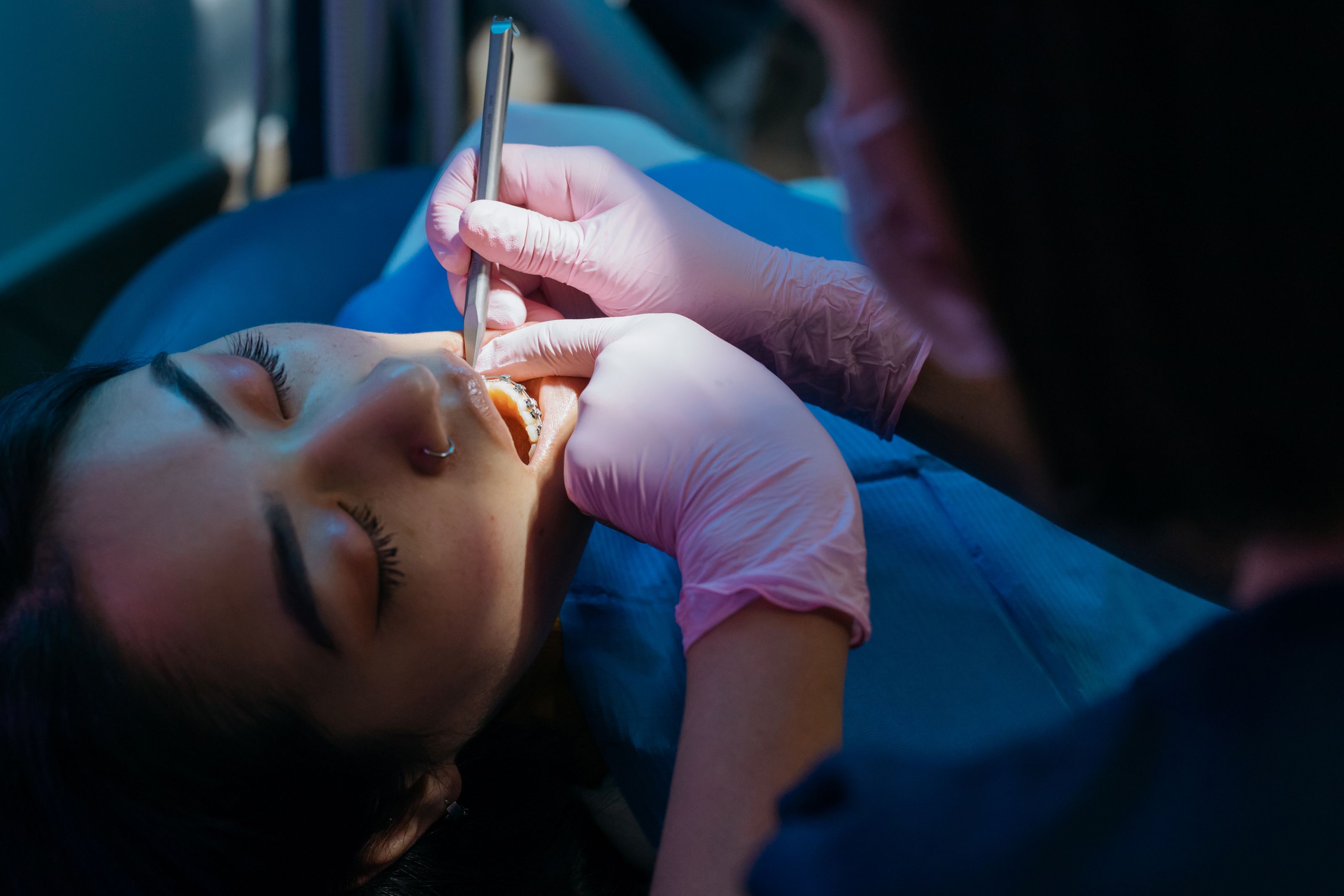
Photo by cottonbro studio via Pexels
Why a Tooth With No Nerve Can Still Hurt
A root canal removes the pulp (the nerve inside the tooth), so it's fair to assume the tooth can't hurt anymore. But the tooth still sits in living bone, held in place by a gum and a ligament that have their own nerve supply. When a treated tooth aches, that surrounding tissue is what's reacting, usually to infection or to pressure from a crack.
So "the nerve is gone" doesn't mean pain is impossible. It changes what the pain means. Instead of an irritated nerve inside the tooth, you're feeling the area around the root complaining, which is why the ache often feels deeper and shows up when you bite.
The Common Reasons an Old Root Canal Flares Up
A few things send a previously quiet tooth back into pain, sometimes years later:
- A new infection got back in. Bacteria can leak past a filling or crown that's worn or cracked, or reach the sealed canal through fresh decay, and set up an infection again. Our guide to a recurring infection after a root canal covers how that happens.
- A canal was missed or not fully cleaned the first time. Some teeth have extra or curved canals that are hard to find. If one wasn't reached, bacteria can linger there and flare up long afterward. Our pages on an incomplete root canal and the signs of a good root canal explain what that looks like.
- The tooth has cracked. A root-canalled tooth is more brittle, especially if it never got a crown. A crack lets bacteria straight in, and a fracture running down into the root is sometimes what ends a tooth's second chance.
- The infection at the root tip never fully cleared. Occasionally a low-grade infection sits quietly at the end of the root and only announces itself later.
- It isn't actually the treated tooth. Gum disease around it, or a problem in a neighbouring tooth, can feel like the old root canal is acting up when it isn't.
What the Pain Is Telling You
The way it hurts is a rough guide to what's going on, though only an X-ray settles it:
- Sore to bite on or tender to touch often points to infection at the root tip or a crack in the tooth.
- A pimple-like bump on the gum, sometimes with a bad taste, is the tooth draining an infection.
- Swelling of the gum or cheek means an active infection that needs seeing promptly. Our guide to facial swelling from a tooth infection covers this.
- A dull ache that comes and goes is often a low-grade reinfection building slowly.
An X-ray of a treated tooth shows whether there's a dark shadow of infection at the root, whether a canal looks incompletely filled, and sometimes whether a root has fractured. That picture is what turns guesswork into a plan.
What We Can Do About It
Most old root canals that hurt again can be saved. There are three routes, and the tooth decides which one:
- Retreatment, or redoing the root canal. The tooth is reopened, the old filling material and infection are cleaned out, the canals are disinfected and sealed again, and often a missed canal is found and dealt with. This is the usual fix. Our guides on having a failed root canal redone, and our root canal retreatment page, walk through it.
- A small procedure at the root tip. When retreatment can't reach the source, such as an infection sealed off below a solid crown and post, a minor surgical step removes the very tip of the root and the infection with it, keeping the rest of the tooth.
- Extraction, when the tooth can't be saved. A root that has fractured through, or a tooth too broken down to restore, is more honestly removed and replaced. Our guides to the signs a root canal has failed and what happens if it's left cover this.
We'll tell you straight which side of that line your tooth is on, with the X-ray in front of you, rather than push a retreatment that won't hold.
What to Do Until You're Seen
A returning ache in a treated tooth needs looking at, but you can stay comfortable while you arrange it:
- Take an over-the-counter painkiller you normally tolerate, at the dose on the packet. Our guide to painkillers for a toothache covers what tends to help.
- Use a cold compress on the outside of the cheek for swelling, and rinse gently with warm salt water.
- Keep your head propped up at night, and try not to chew on that side.
A mild twinge for a day or two right after a recent retreatment can be normal healing and doesn't need a call. What isn't normal is a tooth that was fine for months or years suddenly aching, swelling, or getting sore to bite on. Don't wave that off because the tooth is "already done." A treated tooth can still get infected, and waiting to see if it settles is usually the more expensive choice, not the cheaper one.
When It's a Hospital Emergency, Not a Dental One
Most flare-ups of an old root canal are miserable but safe to treat in a dental chair over the next day or two. A small number are not, and these belong in a hospital emergency room, not here. Go straight to a hospital if you have:
- Swelling spreading up toward your eye, or down into your neck.
- Any difficulty breathing or swallowing, or a change in your voice.
- Swelling on the floor of the mouth pushing your tongue up.
- A high fever with chills, or feeling seriously unwell with it.
Those signs mean the infection is moving into spaces where it can threaten the airway, and a hospital can manage it in a way a clinic cannot. It's rare, but it's exactly why an infected tooth isn't something to sit on for weeks.
Getting Seen in English in Beit Shemesh
If your Hebrew is fine for the shops but not for words like retreatment, root tip, and fracture, you can do the whole visit in English here. Dr. Joel trained and qualified in the United States, so telling us the history of the tooth, hearing whether it can be saved again, and asking whatever you want to ask all happen in a language you're comfortable in. When a tooth you thought was sorted starts hurting, not having to translate for yourself is a real relief.
We're in Ramat Beit Shemesh and see patients from across the wider area, not only local residents, and you don't need to be registered with us in advance. You also don't need to have had the original root canal done here; we treat teeth that were first worked on elsewhere all the time.
If a tooth that already had a root canal is throbbing, sore to bite on, swelling, or draining a bad taste, call or WhatsApp us at 055-985-8845 and send a photo or your old X-ray if you have one. We'll tell you how soon you need to be seen, give you the cost before anything starts, and if it can safely wait, we'll say so. We're in Ramat Beit Shemesh, open Sunday to Thursday 8:00 AM to 8:00 PM and Friday 8:00 AM to 2:00 PM, with after-hours emergency treatment outside those hours. Our root canal retreatment, root canal, and emergency dentist pages explain how we handle urgent visits.
For guidance from sources with nothing to sell, the ADA's MouthHealthy explains what root canal treatment involves, and the American Association of Endodontists covers retreating a tooth that hurts again and the symptoms of an infected tooth.
Still not sure? Message us.
Send Dr. Gabriel Joel, DMD a quick description of what's going on and we'll point you in the right direction.
Message on WhatsApp