
Incomplete Root Canal: What Happens and What to Do Next
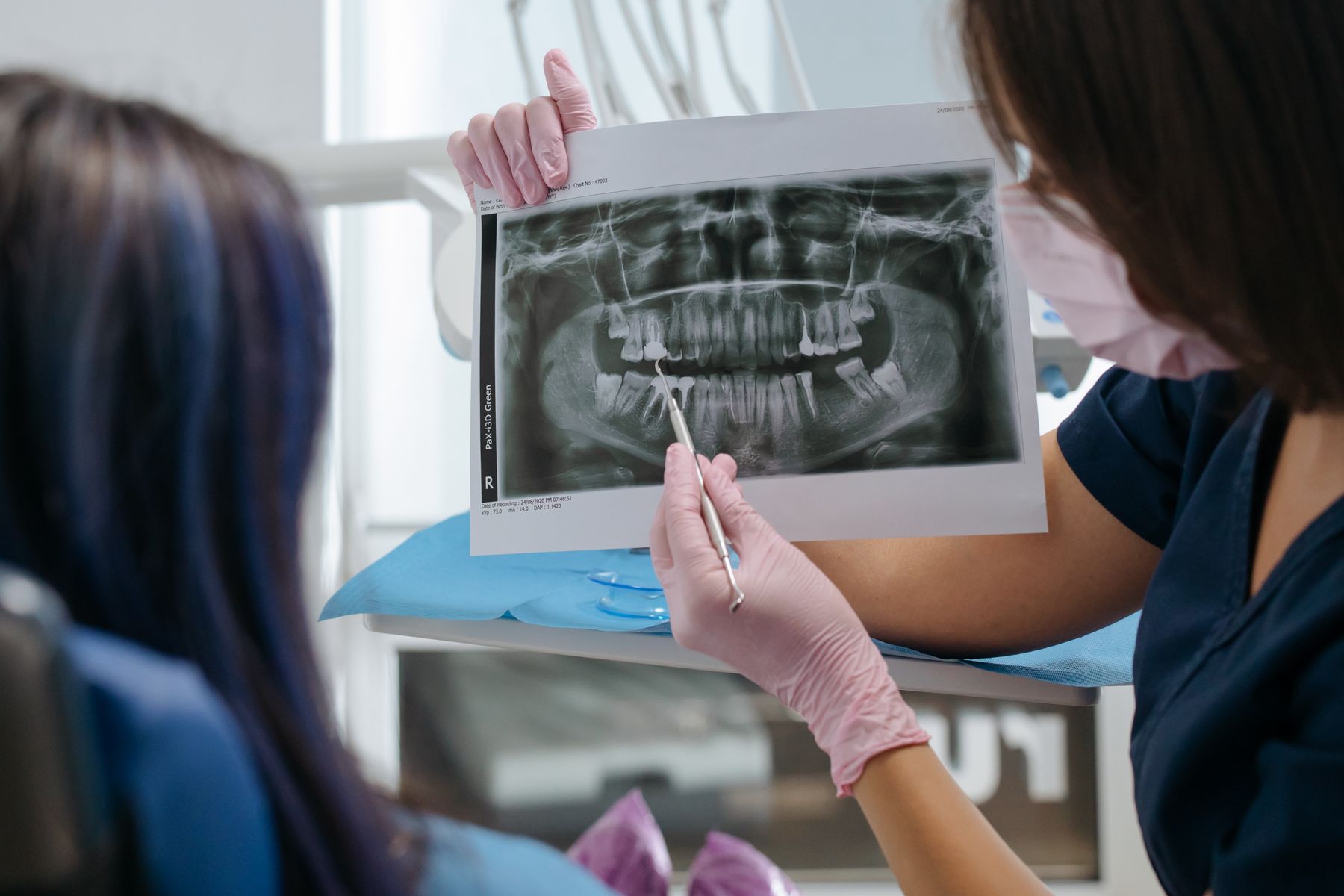
Photo by cottonbro studio via Pexels
How you'd know a root canal wasn't finished
Often you would not, at first. A tooth can look treated on the outside and still have a problem hiding at the root. When there are signs, these are the common ones:
- Pain that never fully went away, or came back weeks or months later.
- Pain when you bite or press on the tooth specifically.
- Swelling or tenderness in the gum near the tooth.
- A small pimple on the gum that drains and refills, which is infection finding a way out.
- A bad taste that keeps coming back from around the tooth.
Some incomplete root canals cause nothing at all and only show up as a dark shadow at the root tip on an X-ray at a routine visit. That is why the X-ray matters as much as how the tooth feels.
Why a root canal comes out incomplete
A tooth is not always straightforward on the inside, and a few things can leave a treatment unfinished:
- A missed canal. Molars can have an extra canal that is narrow and easy to overlook. If one canal is left uncleaned, the infection has somewhere to stay.
- Canals not cleaned to the tip. If the cleaning stops short of the end of the root, bacteria are left behind at the part that matters most.
- A seal that fell short or leaked. If the filling material does not reach the tip, or the tooth was left open to the mouth too long, bacteria seep back in.
- No crown, or a crown placed too late. A back tooth that had a root canal usually needs a crown to keep it sealed. Skip it, and the tooth can leak and reinfect even when the canal work was fine.
None of this means anyone was careless. Finding and cleaning every canal is the hard part of the job, which is part of what the step-by-step of a root canal is really about, and it is why a missed canal is one of the real risks worth knowing before treatment.
What happens if you leave it alone
An incomplete root canal does not heal on its own. The nerve inside a tooth cannot recover once it is infected, so the bacteria left behind keep working whether you feel them or not. Over time the infection can build into an abscess, eat away at the bone around the root, and turn a tooth that was fixable into one that has to come out.
Waiting to see whether it settles is usually the more expensive choice, not the cheaper one. A tooth caught early often needs only a straightforward retreatment. The same tooth left for a year can end up beyond saving, which trades a filling-sized problem for an extraction and a replacement.
Fixing it with retreatment
Most incompletely treated teeth get a second chance through retreatment: reopening the tooth, removing the old filling material, finding whatever was missed, cleaning the canals properly this time, and sealing them again. It is the same idea as the first root canal, with the added step of undoing the previous work, so it usually takes a little longer, sitting at the higher end of what a normal root canal takes.
A few teeth need a different approach. If the tip of the root cannot be cleaned well enough from inside, a small surgical procedure at the root end (an apicoectomy) can seal it from the outside. Either way, the tooth almost always needs a proper crown afterward to stay sealed for good.
When the tooth can't be saved
Sometimes retreatment is not the right call. If the root is cracked, or there is too little healthy tooth left to hold a crown, redoing the root canal only delays the inevitable. In that case, taking the tooth out and replacing it with an implant or a bridge is the honest answer, and pretending otherwise just costs you more treatment for a tooth that was always going to be lost. The trade-offs between saving and extracting a tooth are worth reading through before you decide.
When to call, and when it isn't us you need
If a tooth that had a root canal is aching, tender to bite on, or has a lump on the gum next to it, have it looked at rather than waiting for it to declare itself. An X-ray settles quickly whether the treatment was finished and whether retreatment would help.
A couple of times it is not us you need. If a dentist you trust has already checked the tooth, seen it healing on an X-ray, and told you it is fine, a comfortable tooth does not need a redo just because you once had symptoms. Chasing a healthy tooth causes more harm than leaving it be. And if you have facial swelling spreading toward your eye or down your neck, trouble breathing or swallowing, or a high fever with chills, that is a medical emergency: go to an emergency room now, not to a dental chair. For the ordinary case of an old root canal that never fully settled, retreatment, the surgical option, and the crown afterward are all handled in one place at our clinic in Ramat Beit Shemesh.
If you think an old root canal was never finished properly, call or message us on WhatsApp at 055-985-8845. We are open Sunday to Thursday 8:00 AM to 8:00 PM and Friday 9:00 AM to 5:00 PM, with after-hours emergency treatment outside those hours. Tell us what the tooth is doing and we will tell you plainly whether it needs retreatment, a crown, or something else.
For background from sources that are not trying to sell you anything, the American Association of Endodontists explains second treatments on its page about endodontic retreatment, and the ADA's MouthHealthy has a plain overview of what a root canal involves.
Common questions
What happens if a root canal isn't done completely?
How do I know if my root canal failed or was incomplete?
Can an incomplete root canal be fixed?
What is a missed canal?
What if the tooth can't be retreated?
Still not sure? Message us.
Send Dr. Gabriel Joel, DMD a quick description of what's going on and we'll point you in the right direction.
Message on WhatsAppDentist in Beit Shemesh — our dental clinic