
What Happens If You Don't Get a Root Canal You Need?
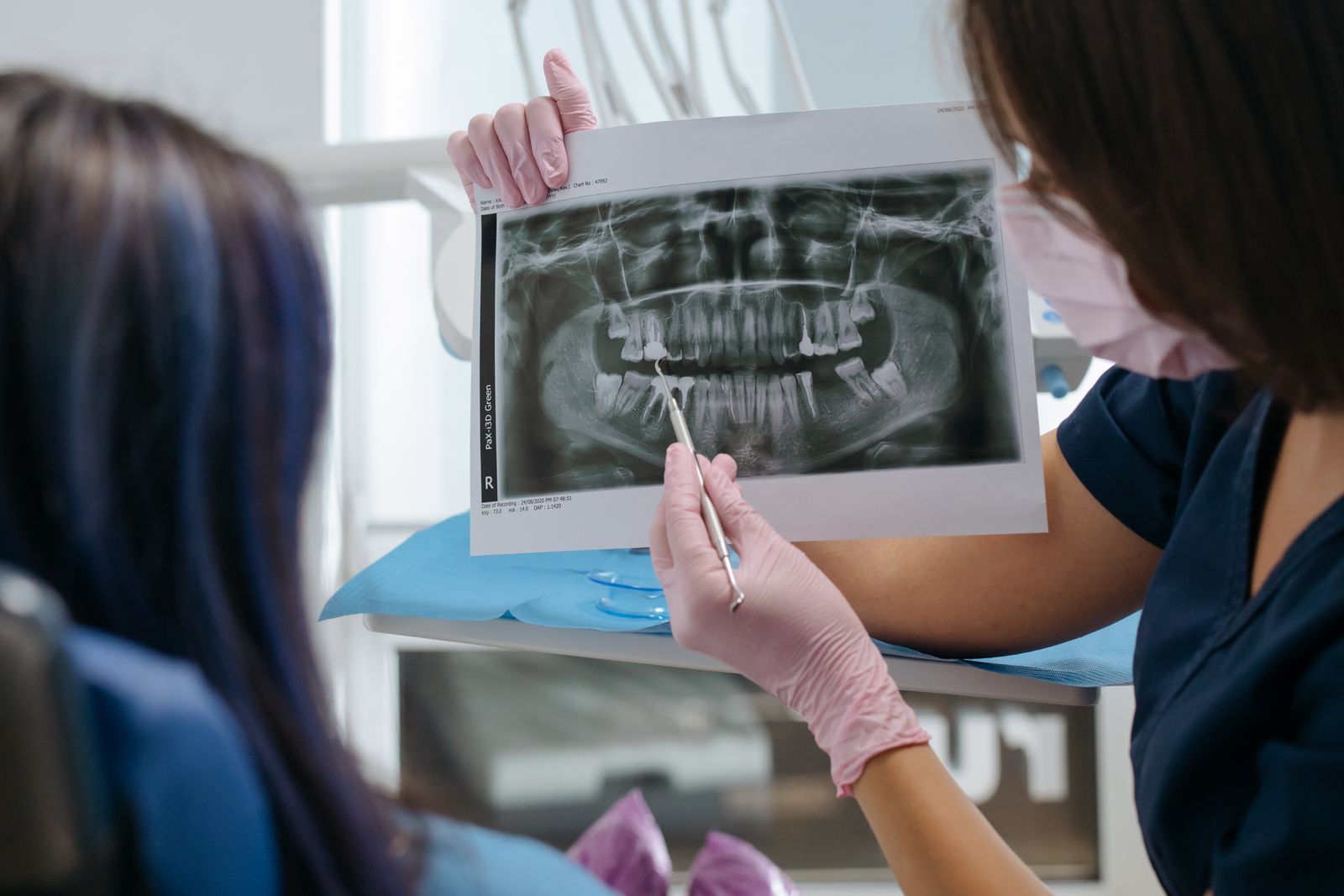
Photo by cottonbro studio via Pexels
What a Root Canal Is Actually Treating
By the time a tooth needs a root canal, the nerve inside it (the pulp) is either badly inflamed or already dead. That happens when decay, a crack, or an old deep filling lets bacteria reach the soft tissue in the middle of the tooth. Once that tissue is infected, it can't recover, and no amount of brushing, rinsing, or waiting brings it back.
A root canal clears out that infected tissue, disinfects the space inside the root, and seals it, which lets you keep your own tooth. Skipping it doesn't leave the tooth where it is today. An infected tooth is a live problem that keeps moving, and the direction is always the same. The only real question is how quickly. The symptoms that mean a tooth needs a root canal cover how you get to this point.
What Happens to the Tooth If You Leave It
An untreated tooth tends to follow the same path, roughly in this order:
- The nerve dies. The pain can actually stop at this stage, which fools a lot of people into thinking the problem sorted itself out. It didn't. There's just no live nerve left to hurt.
- Infection builds at the root. Bacteria multiply in the dead tissue and push out through the tip of the root into the bone, forming an abscess, a pocket of pus at the base of the tooth.
- The abscess makes itself known. This is where the deep throb, the bad taste, the swelling, and the tenderness to biting usually return, often worse than the original ache. A gum boil, a small draining pimple on the gum, can show up too.
- The bone around the root is damaged. Left long enough, the infection eats into the bone that holds the tooth in place, and that bone doesn't grow back.
- The tooth is lost. Past a certain point there isn't enough healthy tooth or bone left to save, and the only option is to take it out.
The frustrating part is that the tooth was usually saveable at the start. Waiting turns the cheaper, tooth-saving fix into an extraction and, later, the cost of replacing the tooth with an implant or bridge.
How Fast Does It Move?
There's no fixed timetable, which is exactly what makes an untreated tooth risky. Some teeth sit quietly for months before flaring up. Others go from a dull ache to a swollen face in a couple of days. A tooth that's gone silent after weeks of pain isn't safer than one that still hurts. It's often further along, with the infection building where you can't feel it.
What sets the speed is how aggressive the bacteria are and how strong your own defences are. A run-down immune system, diabetes, or anything that lowers your resistance can turn a slow problem into a fast one. Because you can't predict which tooth will stay quiet and which will blow up overnight, "it doesn't hurt right now" isn't a reliable reason to leave it.
When It Stops Being Just a Tooth Problem
Most of the time an infected tooth stays a dental problem, and we treat it in the chair. Sometimes it doesn't. A dental infection can spread from the tooth into the tissues of the face and neck, and at that point it stops being about the tooth and starts being about the airway.
Go straight to a hospital emergency room, not a dental clinic, if you have swelling spreading toward your eye or down your neck, a fever alongside facial swelling, or any trouble breathing or swallowing. Those are signs the infection is moving into spaces where it becomes dangerous, and that needs a hospital, not a dental chair. It's rare, but it's the reason "I'll deal with the tooth eventually" is a gamble worth not taking.
Is It Ever Reasonable Not to Do the Root Canal?
Sometimes, and it's worth being honest about that. Not getting a root canal doesn't have to mean doing nothing. For some teeth, taking the tooth out is a legitimate choice, especially if it's too broken down to save. What isn't a real option is leaving an infected tooth in place and untreated, hoping it settles. The choice is treat it or remove it, not treat it or ignore it. Root canal versus extraction lays out how that decision actually gets made.
Waiting to see whether it gets better on its own is usually the more expensive choice. The tooth-saving fix while the tooth is still intact tends to become an extraction plus the cost of replacing the tooth once you've waited too long. If cost is the reason you're putting it off, that's worth saying out loud at the visit, because the delayed version is almost always the pricier one. How long you can safely delay a root canal covers where the real deadlines sit.
If you've been told a tooth needs a root canal and you're weighing whether to do it, get it looked at before the decision gets made for you. Call or message us on WhatsApp at 055-985-8845. We're open Sunday to Thursday 8:00 AM to 8:00 PM and Friday 8:00 AM to 2:00 PM, with after-hours emergency treatment outside those hours, and we handle root canal treatment and emergency dental care in Ramat Beit Shemesh. We'll put the X-ray on the screen and tell you honestly whether the tooth can still be saved and what happens if it isn't.
For background from sources with nothing to sell, the ADA's MouthHealthy explains what causes a toothache and when a tooth needs treatment, and the American Association of Endodontists covers what a root canal does and why saving the natural tooth matters.
Still not sure? Message us.
Send Dr. Gabriel Joel, DMD a quick description of what's going on and we'll point you in the right direction.
Message on WhatsApp