
Why Does My Jaw Feel Tight All of a Sudden? Causes and Fixes
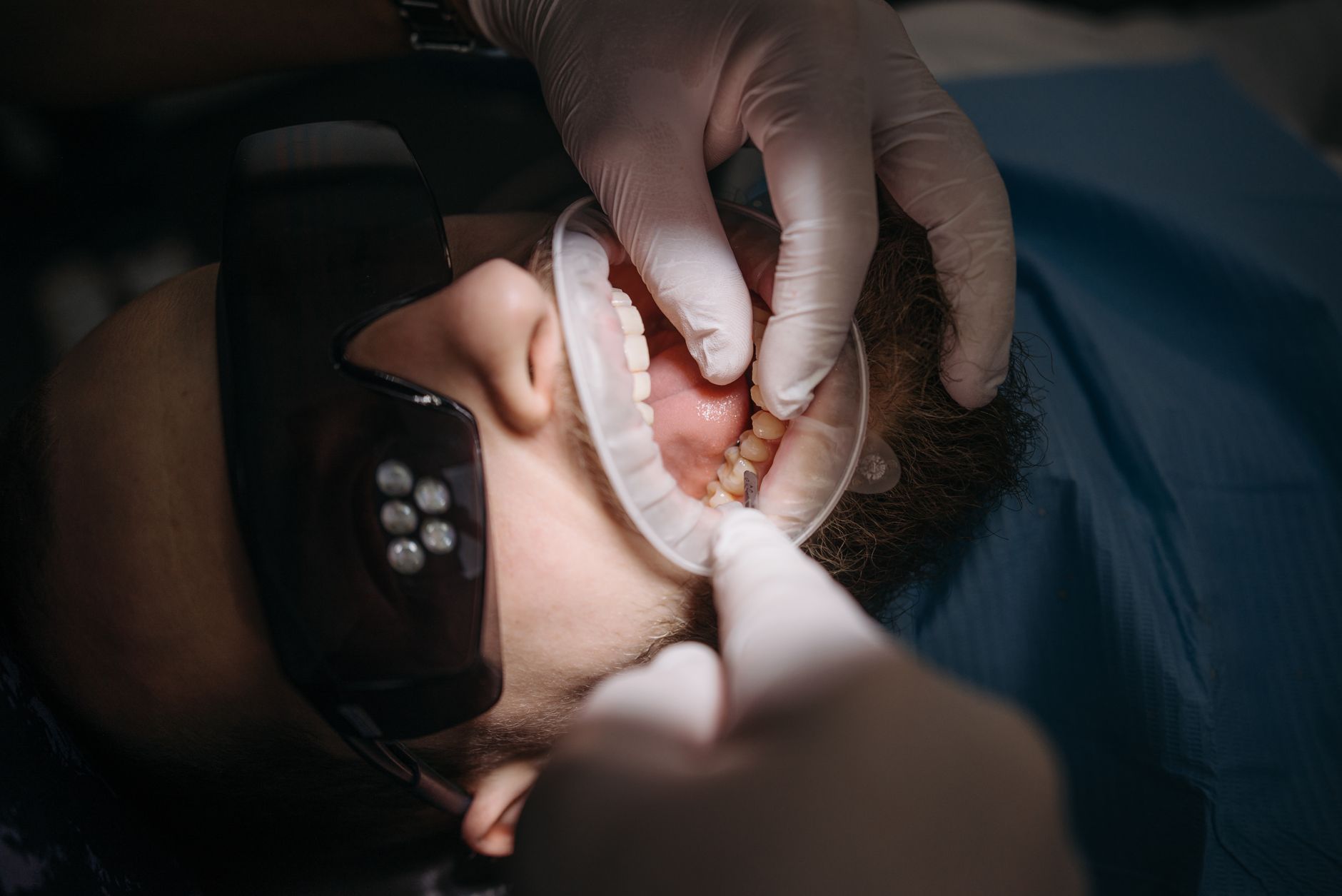
Photo by Pavel Danilyuk via Pexels
What Usually Changed Just Before It Tightened
Jaw tightness rarely comes from nowhere. It tends to follow one of these:
- A few days of clenching. A deadline, a bad night's sleep, a week of Yom Tov cooking. The muscles at the side of the face (the masseters) tire like any other muscle, then seize up.
- A wide-open mouth. A big yawn, a long dental appointment, a giant sandwich, or an intubation for surgery can strain the joint and the muscle around it.
- Dental work. Wisdom tooth removal and injections into the back of the jaw can leave the muscle guarding for a week or two. That is different from the ache near the ear we describe in jaw pain after wisdom tooth surgery.
- A new bite. A crown or filling sitting a fraction too high makes you chew differently, and the jaw complains about it a few days later.
Most people find the trigger if they think back a week. The answer is usually boring, which is good news.
Is It the Muscle, or Is It a Tooth?
Muscle tightness is broad and dull, on one or both sides, and it eases a little once you have been moving the jaw for a few minutes. A tooth problem is more specific.
- Tightness plus a tooth that hurts on cold, heat or biting points towards the tooth.
- A jaw that will only open part way, with swelling on one side of the face or under the chin, points towards infection. The muscle tightens to protect the area.
- A bad taste, a bump on the gum or a tooth that feels taller than its neighbours points the same way. See when jaw pain is really a tooth.
- Tightness that started with a sore throat or a blocked ear is often the throat, sinus or ear, not the jaw at all.
If you are unsure, look in a mirror with good light. Swelling on one side, or a gum that is red and puffy around one tooth, is your answer.
What to Do for the First Few Days
- Warm compress on the muscle in front of the ear for 10-15 minutes, a few times a day.
- Soft food for two or three days. Skip chewy bread, raw carrots, steak and gum.
- Open slowly and only as far as is comfortable. Do not force it wide to test it.
- Rest the jaw with lips together and teeth apart. Teeth should only touch when you swallow or chew.
- Paracetamol or ibuprofen at the label dose, if you can normally take them.
Most muscle tightness improves within three to five days. If it has not improved after a week, or it keeps returning, it is worth a check. A night guard is the usual fix for repeated clenching, and we cover it in teeth grinding and tooth pain.
Sudden Jaw Tightness in Beit Shemesh: Which Day You Notice It Matters
Clinic hours decide how urgent this feels. We are open Sunday to Thursday, 08:00-20:00, and Friday 09:00-17:00. Shabbat is for genuine emergencies only. A jaw that tightens on Friday evening with no swelling can wait until Sunday, with the home care above. A jaw that tightens with swelling, fever or a hot, throbbing tooth should not wait for Sunday, and we can see you the same day in Beit Shemesh on a weekday.
You can also describe it to Dr. Joel in English or Hebrew. That helps, because "tight" means different things to different people: stiff, locked, sore, or unable to open past two fingers. The exact words change the diagnosis.
Signs That Should Not Wait
- Chest pressure, shortness of breath, sweating, or pain spreading to the left arm with the jaw tightness. Call Magen David Adom on 101. Jaw pain can be a heart symptom, and a dentist is the wrong address.
- Difficulty swallowing or breathing, or swelling spreading under the chin or towards the eye. Go to the nearest emergency room.
- You cannot open your mouth more than about two fingers' width, with a fever or swelling. This needs to be seen the same day.
- The jaw is stuck open or stuck shut. See what to do when the jaw locks.
- Tightness after a blow to the face.
If the cause is a spreading tooth infection, the treatment is at the tooth, not the jaw. Our page on tooth abscess treatment in Beit Shemesh explains what that involves. The ADA MouthHealthy guide to abscesses lists the same warning signs.
What Happens at the Visit
We check how far the jaw opens and whether it tracks straight, feel the muscles and joint, look at how your teeth meet, and take an X-ray if a tooth is under suspicion. If it is muscle, we tell you so and you go home with a plan. If it is a tooth, we treat it, often that day. For recurring clenching we can make a night guard, described on our night guard page. The ADA's TMJ guidance supports starting with conservative care like this before anything invasive.
A tight jaw that has a clear trigger, no swelling and no fever can usually be managed at home. If you are not sure which group yours falls into, message us on WhatsApp and describe it. Urgent Dental Care, Harav Kook 28/1, Beit Shemesh, will tell you whether it needs a visit or just a few soft meals. For something more like a dull ache than tightness, see why the jaw feels tight.
Common questions
Why does my jaw feel tight when I wake up?
Can stress make my jaw tight suddenly?
Can a tooth infection make my jaw tight?
How long does a suddenly tight jaw last?
Can I be seen in Beit Shemesh the same day for a tight jaw?
Could jaw tightness be a heart problem?
Still not sure? Message us.
Send Dr. Gabriel Joel, DMD a quick description of what's going on and we'll point you in the right direction.
Message on WhatsAppDentist in Beit Shemesh — our dental clinic