
Root Canal Without a Crown: When You Can Skip It
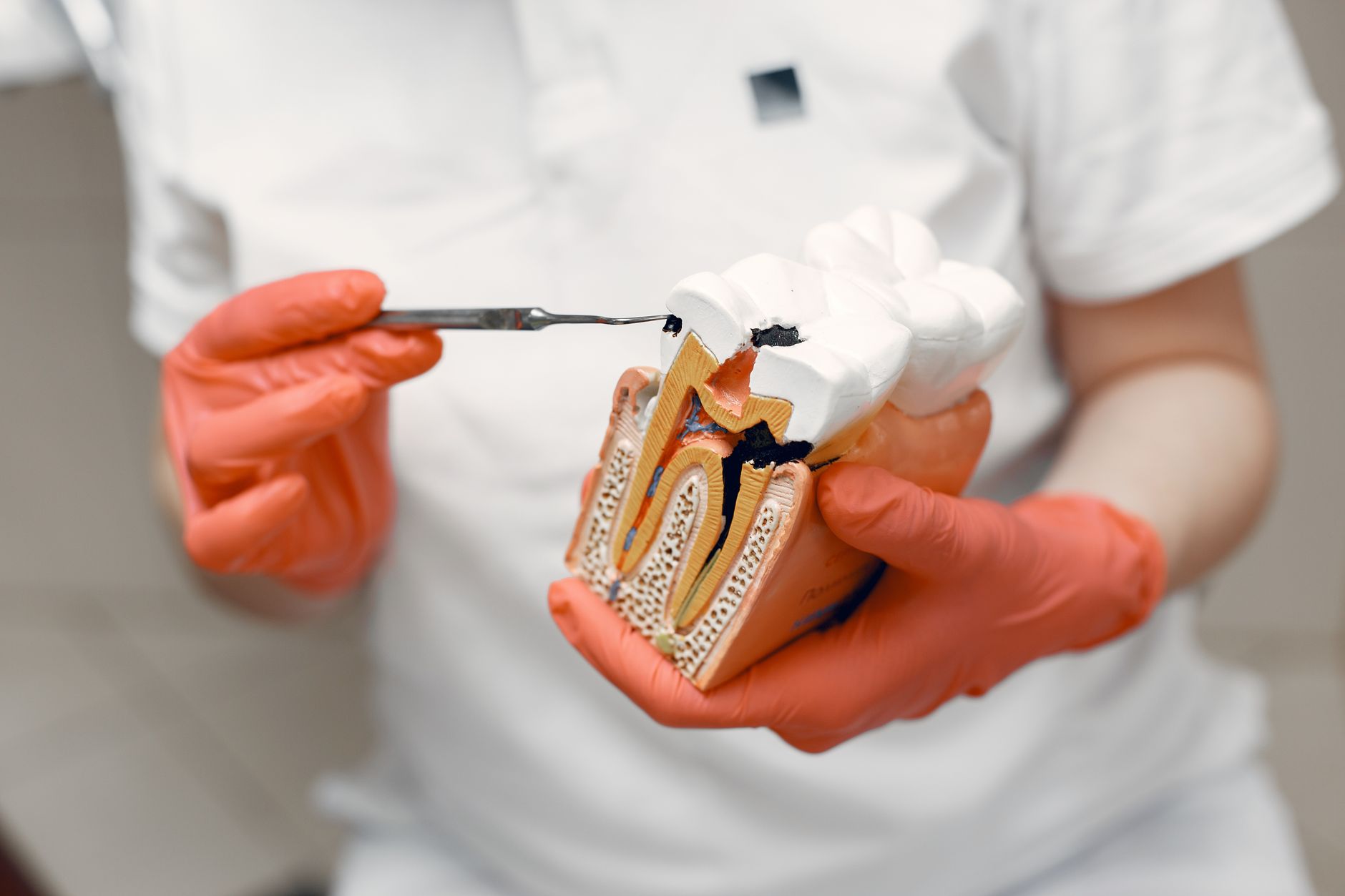
Photo by Gustavo Fring via Pexels
When a Root Canal Can Skip the Crown
Some teeth genuinely don't need a crown after a root canal, and it's fair to say so plainly. Two things let a tooth get away with a filling instead: where it sits in the mouth, and how much solid tooth is left standing.
Front teeth, the incisors and canines, take far less force than the ones at the back. They bite and tear rather than grind, they have a single root, and a root canal on a front tooth usually needs only a small opening through the back of the tooth to reach the canal. When most of the natural tooth is still intact, a well-sealed filling closes that opening and the tooth carries on for years without a crown. A root canal on a front tooth goes into how those single-rooted teeth are restored.
Why Back Teeth Almost Always Need One
Molars and premolars are a different story. They do the grinding, and the forces they absorb every time you chew are far higher than anything a front tooth sees. A root canal, and the decay or crack that made it necessary, hollows the tooth out and leaves it thinner and more brittle than a healthy one. Add heavy chewing to a brittle, hollowed-out tooth and something eventually gives.
A crown solves that by wrapping the whole tooth and holding it together, so the chewing force is spread across a cap instead of splitting the weakened walls apart. That's why a back tooth is nearly always crowned after a root canal, while a front tooth often isn't. Why a back tooth needs a crown after a root canal covers the reasoning in full, and the American Association of Endodontists explains why a treated tooth needs a proper restoration to last.
What Happens If You Skip a Crown the Tooth Needs
The risk isn't abstract. Two things tend to go wrong when a back tooth is left without the crown it needed:
- The tooth cracks. A hollowed-out molar under full chewing load can split, and if the crack runs below the gum line the tooth usually can't be saved. You end up losing the tooth you paid to keep.
- The seal leaks. A filling on a heavily used back tooth is more likely to wear or leak over time than a crown, and once bacteria seep back into the canals the root canal can fail and need redoing.
That's what makes skipping the crown a false economy on the wrong tooth. Saving the cost of the crown and then losing the tooth to a crack means paying for an extraction and an implant or bridge instead, which costs far more than the crown would have. Cutting this particular corner is usually the more expensive choice in the end. A cracked tooth covers how these fractures happen, and delaying a root canal runs through the same logic on the treatment itself.
Front Tooth or Back Tooth: The Dividing Line
The decision usually comes down to two questions your dentist weighs together:
- Where is the tooth? Front teeth (incisors and canines) take shearing forces and often do fine with a filling. Back teeth (premolars and molars) take grinding forces and nearly always need a crown.
- How much tooth is left? A tooth with solid walls still standing can sometimes take a filling; one that's broken down and needs a buildup to rebuild it almost certainly needs a crown to protect that rebuild.
The two often line up, since back teeth are usually more broken down by the time they need a root canal. But not always. A badly cracked front tooth might still need a crown, and a well-preserved premolar might occasionally get by without one. It's a judgment made tooth by tooth, on the X-ray and in the mouth, not a blanket rule.
When a Filling Is Enough
On a tooth that qualifies, a composite filling seals the access opening and rebuilds the small amount of missing structure, and that's the whole restoration. No crown, no separate buildup, one appointment. What matters is that the seal is solid, because a leaky filling is how bacteria find their way back to the canals.
There's also a middle option people don't always hear about: an onlay, sometimes called a partial crown, which covers the chewing surface and the weak cusps without wrapping the entire tooth. It can be the right answer for a back tooth that needs more protection than a filling but hasn't lost enough structure to justify a full crown. If a crown is being recommended, it's reasonable to ask whether a filling or an onlay would do the job instead.
The Cost Question, Honestly
Most people asking about a root canal without a crown are really asking about the money, and that's understandable. The crown is often billed as its own item on top of the root canal and any buildup, so it can be the larger single line on the bill. The crown cost after a root canal breaks down where that money goes.
Here's the honest version. On a front tooth with plenty of structure left, skipping the crown may be genuinely fine, and a dentist pushing one you don't need is worth questioning. On a back molar that's been hollowed out, skipping the crown to save money usually costs you more later, when the tooth cracks and has to come out. The right question isn't whether you can avoid the crown; it's whether this particular tooth actually needs one, and a good dentist will show you on the X-ray why it does or doesn't.
If you've had a root canal and you're not sure whether the tooth really needs a crown, or someone has quoted you one and you want a straight second opinion, we can look at it and tell you honestly. Call or message us on WhatsApp at 055-985-8845. We're open Sunday to Thursday 8:00 AM to 8:00 PM and Friday 8:00 AM to 2:00 PM, with after-hours emergency treatment outside those hours, and we handle root canal treatment in Ramat Beit Shemesh. We'll check the tooth and the X-ray with you and tell you what it needs, and what it doesn't.
For background from sources with nothing to sell, the ADA's MouthHealthy explains what a dental crown involves, and the American Association of Endodontists covers how root canal treatment works.
Still not sure? Message us.
Send Dr. Gabriel Joel, DMD a quick description of what's going on and we'll point you in the right direction.
Message on WhatsApp