
Gum Inflammation Around a Wisdom Tooth: What to Do Now
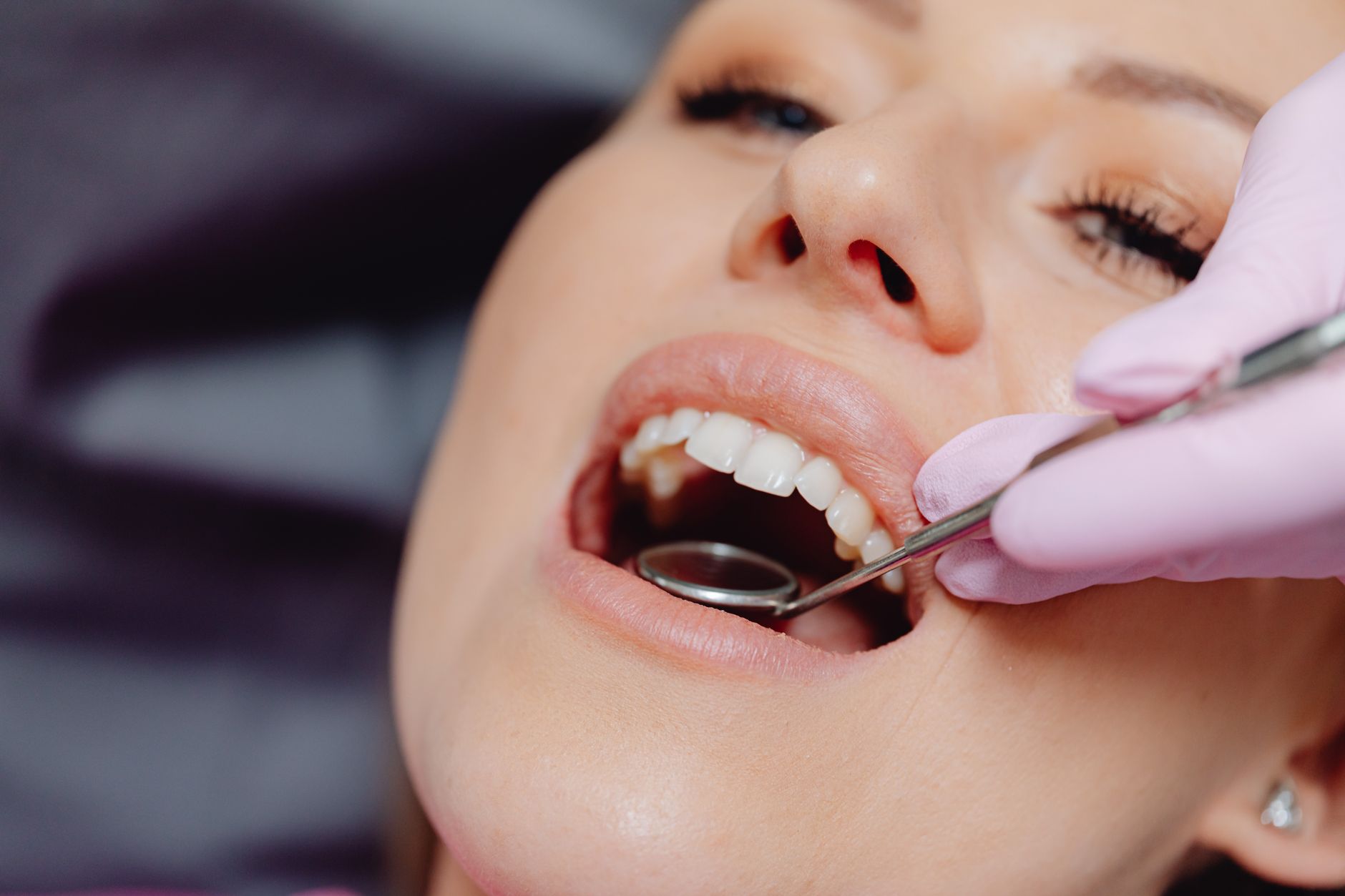
Photo by Kaboompics via Pexels
Why the Gum Around a Wisdom Tooth Gets Inflamed
A wisdom tooth that comes through fully, in line with the others, can be brushed like any other tooth. The trouble starts with the ones that stop halfway. Part of the crown is in the mouth and part is still under a flap of gum called the operculum, and the space between the two is a pocket nothing can clean.
What tips it from a quiet pocket into a painful one:
- Food packed underneath. Rice, bread, anything small enough to work its way under the flap and stay there.
- The upper wisdom tooth biting down on the flap. This is the cause people never guess. The tooth above traumatises the swollen gum below every time you close, and the swelling keeps it in the firing line.
- Being run down. Flare-ups cluster around illness, exam periods, army service and bad weeks of sleep. The bacteria were always there; the immune response changed.
- Partial eruption in general. Wisdom tooth pain in the late teens and twenties is usually this, not decay.
Lower wisdom teeth account for the large majority of cases. They erupt later, more crookedly, and sit further back than a toothbrush comfortably goes.
What It Feels Like, and What Else It Could Be
Pericoronitis has a recognisable pattern. The pain is behind the last tooth rather than in a tooth, and it builds over a day or two rather than arriving all at once.
- A swollen, red flap of gum at the very back of the lower jaw, often with a visible dent from the upper tooth.
- Pain on biting, worst on closing rather than on chewing something cold.
- A bad taste or a discharge of pus from under the flap.
- Difficulty opening wide, and soreness on swallowing on that side.
- A tender lump under the jaw on the same side.
What it is not: a tooth that is sensitive to cold and hot is a pulp problem, not a gum one. A gum swelling with a head on it, further forward and next to a specific tooth, is more likely a gum boil from an infected root. Bleeding gums all around the mouth on brushing are gum disease, a different problem with a different fix. If your whole cheek has ballooned, read facial swelling from a tooth infection instead, because that has a shorter fuse.
What Actually Helps Tonight
None of this treats the problem. It buys you comfort until the area can be cleaned out properly.
- Warm salt water, held over the area, several times a day. Half a teaspoon in a cup of warm water. Hold it there rather than swishing hard, and let it drain out rather than spitting forcefully.
- Clean the flap gently. A soft brush angled into the back corner, or a single-tuft brush if you have one. It will bleed. Clean it anyway, carefully, because plaque left on an inflamed flap is what keeps it inflamed.
- Chew on the other side. Every bite on that side is the upper tooth landing on the swelling.
- Painkillers taken properly. Ibuprofen works well for this because the problem is genuinely inflammatory. See what to take for a toothache and stay within the dose on the packet.
- Do not poke at it. Not with a pin, not with a toothpick, and please do not try to lance it. The flap is not a blister.
A leftover course of antibiotics from a previous flare-up is the other thing to leave alone. Antibiotics do not clear a tooth or gum infection on their own when there is debris trapped under a flap. They can quiet it down for a fortnight and let the same pocket rebuild, which mostly delays the appointment rather than removing the need for it.
Getting a Wisdom Tooth Flare Seen in Beit Shemesh
The visit for this is short. We look at the flap, clean under it, flush the pocket out, check whether the upper tooth is biting into it, and take an X-ray to see which way the wisdom tooth is actually pointing. The X-ray is the part that decides the rest, because a tooth angled forwards into its neighbour will keep doing this and one that is nearly upright may simply need a few more months to arrive.
We are at Harav Kook 28/1 in Beit Shemesh, open Sunday to Thursday 8:00 AM to 8:00 PM and Friday 9:00 AM to 5:00 PM, Shabbat for emergencies only. That Friday 2pm closing matters more for this than for most problems, because pericoronitis has a habit of announcing itself on Thursday night and being properly swollen by Friday morning. If you wake up on a Friday with a sore flap at the back, call early rather than waiting to see how the day goes. Same-day appointments are possible, and emergency treatment is available outside those hours.
Dr. Joel trained at Case Western Reserve University in the US, made aliyah in 2014, and treats in Hebrew and English. For this problem in particular that is worth something, because "it hurts at the back" and "I cannot open my mouth all the way and it hurts when I swallow" are two very different sentences, and the second one changes what we do that day.
How It Is Treated, and Whether the Tooth Has to Come Out
Treatment happens in two stages, and they are separate decisions.
First, settle the flare-up. The area is cleaned and irrigated under the flap, which is the step that actually removes the cause. If the upper wisdom tooth is chewing into the swollen gum, taking that tooth out of the bite, or removing it, often ends the cycle by itself. Antibiotics are added when the infection has spread beyond the flap, when there is swelling under the jaw or a fever, or when you cannot open your mouth properly.
Then, decide about the tooth. Once it has calmed down, the honest question is whether this will happen again. It usually does, if nothing has changed. A wisdom tooth that is impacted against its neighbour, or that will never have an opposing tooth to bite against, is generally better out, and extraction in Beit Shemesh is a planned appointment rather than an emergency one once the infection is quiet. A tooth that is close to upright, with room to finish erupting, can be worth keeping and watching. Our page on whether wisdom teeth need removing goes through that decision, and the recovery from wisdom tooth surgery covers what the days afterwards look like.
Extracting a tooth in the middle of an acute flare is possible but not ideal, which is why the two stages exist. Waiting to see whether the problem sorts itself out, on the other hand, is usually the more expensive choice. Each flare-up adds a little bone loss behind the second molar, and that molar is a tooth you want to keep for the next fifty years.
When It Is Urgent, When It Can Wait, and When to Skip Us Entirely
Go to a hospital emergency room, not to us, if the swelling is spreading down your neck or under your tongue, if swallowing or breathing is getting harder, if you cannot open your mouth more than a couple of centimetres and have a fever, or if you feel genuinely unwell with it. Infections behind the lower wisdom teeth sit next to spaces where swelling can affect the airway. That is rare, and it is the one version of this that belongs in a hospital rather than a dental chair.
Call us the same day if there is swelling under the jaw, pus coming from under the flap, a fever, or if opening your mouth has become noticeably harder over a day.
It can wait a couple of days if the flap is mildly sore, there is no swelling in your face or under your jaw, you can open and swallow normally, and salt water is holding it. That is the common version. It still wants an appointment, because it will come back, but it does not want one at 11pm.
If the gum behind your last tooth is swollen and sore, call or WhatsApp 055-985-8845 and tell us whether you can open your mouth normally and whether there is any swelling under your jaw. Those two answers decide how quickly we need to see you. Urgent Dental Care is at Harav Kook 28/1 in Beit Shemesh, open Sunday to Thursday 8:00 AM to 8:00 PM and Friday 9:00 AM to 5:00 PM, with emergency treatment outside those hours. Our emergency dentist in Beit Shemesh page explains how urgent problems are handled here.
For independent reading, the ADA's MouthHealthy covers wisdom teeth and gum disease in plain language, and the American Association of Oral and Maxillofacial Surgeons sets out the case for and against managing wisdom teeth.
Common questions
How long does gum inflammation around a wisdom tooth last?
Will antibiotics clear it up?
Does the wisdom tooth always have to be extracted?
Why does it keep coming back?
Is gum inflammation around a wisdom tooth a dental emergency?
Can I just rinse with salt water and leave it?
Can I be seen for this the same day in Beit Shemesh?
Still not sure? Message us.
Send Dr. Gabriel Joel, DMD a quick description of what's going on and we'll point you in the right direction.
Message on WhatsAppDentist in Beit Shemesh — our dental clinic