
Dental Bridge Fell Out? First Steps and Why It Happened
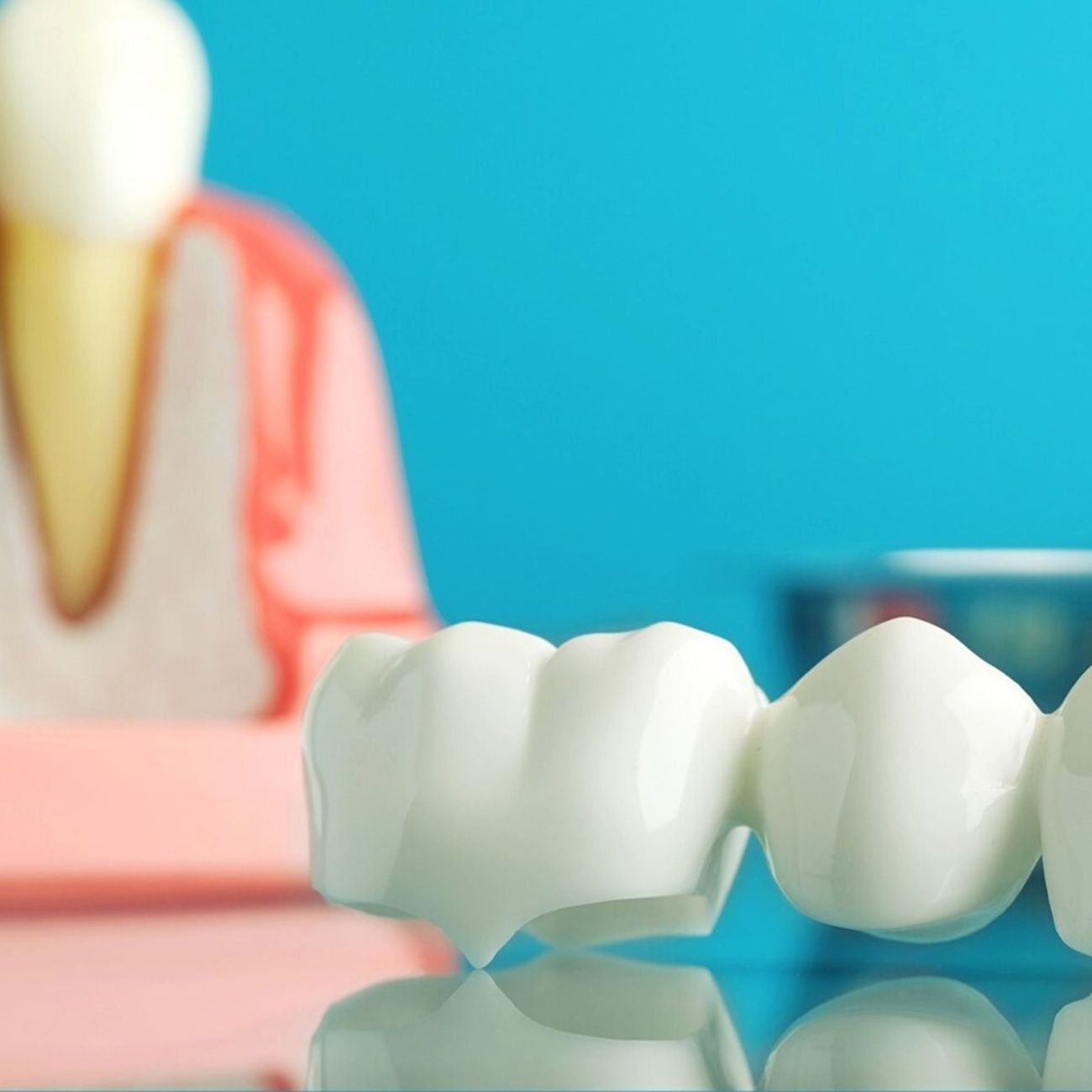
Photo by Arvind Philomin via Pexels
What to do in the first hour
Nothing here is difficult, and doing it properly is most of what makes the repair easy.
- Find it and rinse it under cool water. No scrubbing, no bleach, no boiling.
- Store it dry in a small container. Not in a tissue on the counter. Bridges get thrown out with the tissue more often than anyone would like.
- Do not wear it loose. A bridge that will not stay put can be swallowed or inhaled, and sleeping with a loose one in is the way that happens.
- Rinse your mouth with warm salt water and keep the bare teeth clean. They still need brushing, gently.
- Take a photo of the bridge and the gap before your appointment. It saves explaining.
- Call for the appointment now, even if nothing hurts.
Pharmacy temporary dental cement is acceptable for a few days if the bridge seats fully without any pressure. If it needs pushing, stop. Something is in the way, and forcing it usually means a chipped stump.
Why a bridge comes off after years of holding
A bridge is two or more crowns joined together, with a false tooth spanning the gap between them. It is cemented onto teeth that were shaved down to posts, and it stays on because that cement seal holds. When it comes off, one of a short list of things has happened.
- Decay in one of the supporting teeth. This is the most common reason, and it is the one that changes the plan. The bridge cannot grip a tooth that has softened underneath it.
- Cement washout. Ten or fifteen years of chewing and saliva eventually get under the margin. On a healthy tooth, this is the easy version.
- A fractured supporting tooth. A shaved-down tooth carries a heavy load, and it can split. The American Association of Endodontists has a plain summary of how cracks in teeth behave.
- Gum recession. When the gum drops below the crown edge, exposed root surface decays faster than enamel does.
- Overload. Grinding at night, or a bridge spanning a gap that was always slightly too long for two supports.
This is why we X-ray before we cement anything. A bridge recemented onto a decayed stump comes off again, usually within months, and the tooth is worse when it does.
The version that matters most: when only one end lets go
A bridge that drops out whole is the honest failure. It tells you immediately.
The one to watch for is a bridge where only one supporting tooth releases and the other stays cemented. The bridge is still in your mouth. It feels attached. It rocks very slightly when you chew, food packs under one end, and a bad taste turns up from somewhere you cannot pinpoint. Underneath the loose side, saliva and bacteria now have a warm sealed space and unlimited time. Teeth in that position decay quickly and quietly.
Waiting to see whether a problem settles is usually the more expensive choice, and a partly loose bridge is where that shows most clearly. Left alone for a few months, a recementing appointment turns into a new bridge, and sometimes into deciding whether the tooth underneath can be kept at all. If a bridge you have had for years has started to feel different, that is worth an appointment before it becomes worth an emergency.
Please do not superglue it
I am a dad, so I understand the pull of the tube in the kitchen drawer that has fixed a sandal, a drone propeller and at least one school project. The mouth is the one repair job it should stay out of.
Serious face for a moment. Household superglue is not made for oral tissue, it irritates the gum and the nerve inside a prepared tooth, and it sets in a thick layer inside the fitting surface of the bridge. That layer cannot be fully removed. A bridge that would have gone back on in twenty minutes with proper cement becomes a bridge that no longer fits anything, and then you are paying for a new one. Same for household epoxy, denture adhesive and repair kits sold for dentures rather than crowns.
Temporary dental cement from a pharmacy is the only thing worth trying at home, and only as a few-day bridge to the appointment. The same rule applies when a single crown comes off.
Getting through the days before the appointment
The teeth under a bridge are not whole teeth. They were reduced to posts, and their dentine sits close to the surface, so cold air, cold water and sweet things can all reach it. Sharp sensitivity for a few days is normal and is not a sign of damage.
- Chew on the other side and stay off anything hard, chewy or sticky.
- Skip very cold and very hot drinks until the bridge is back on.
- Brush the bare stumps gently and keep the gap clean. Debris trapped there inflames the gum and makes fitting the bridge harder.
- A sensitivity toothpaste rubbed onto the stumps helps some people within a couple of days.
- Ordinary painkillers are fine if you need them. Our notes on what actually helps tooth pain and on teeth that react to cold cover the details.
Sensitivity that fades over a few days is the expected pattern. A stump that starts throbbing on its own, wakes you at night, or hurts to bite on has a different problem, and that one needs looking at rather than waiting out.
When a bridge comes off on a Friday afternoon in Beit Shemesh
Timing is most of what makes this stressful. A bridge that comes off on a Sunday morning is an inconvenience. The same bridge coming off at one o'clock on a Friday, with a front gap and Shabbat starting, is a different afternoon entirely.
We are at Harav Kook 28/1 in Beit Shemesh, open Sunday to Thursday 8:00 to 20:00 and Friday 9:00 to 17:00, Shabbat for emergencies only. Same-day appointments are possible, which is the part that matters on a Thursday evening or a Friday morning, when the alternative is sitting with a visible gap until Sunday. Dr Joel trained in the United States and treats in Hebrew and English, so you can describe what happened and what the bridge has been doing for the past year without translating it first. There is more on how dental problems that start before Shabbat are handled here, and urgent dental appointments in Beit Shemesh covers what an unscheduled visit involves.
Two situations that are not us. If the bridge came off cleanly, nothing hurts and nothing is swollen, this is an ordinary appointment in ordinary hours. Book it for the morning and go to sleep. And if the bridge went missing while you were eating or asleep and you have since had coughing, wheezing or chest discomfort, go to a hospital emergency room rather than to us. An inhaled bridge is a chest problem, not a dental one, and it needs a chest X-ray.
If your bridge has fallen out or has started to feel loose, bring it in and let us look at the teeth underneath before deciding anything. Urgent Dental Care is at Harav Kook 28/1 in Beit Shemesh. WhatsApp or call 055-985-8845 and we will X-ray the supporting teeth and tell you honestly whether the same bridge goes back on. If a support tooth needs treating first, root canal treatment in Beit Shemesh happens in the same chair.
Further reading with nothing attached to it: the ADA's MouthHealthy on how bridges are built and cared for, and its guide to handling dental emergencies at home.
Common questions
Can a dental bridge that fell out be put back in?
Is a bridge falling out a dental emergency?
Can I glue my bridge back in myself?
Why does the tooth under my bridge hurt now?
What happens if I leave a bridge out for months?
Where can I get a bridge recemented in Beit Shemesh?
Does a bridge coming off mean I need an implant instead?
Still not sure? Message us.
Send Dr. Gabriel Joel, DMD a quick description of what's going on and we'll point you in the right direction.
Message on WhatsAppDentist in Beit Shemesh — our dental clinic