
Mouth Sore That Won't Heal: When to Get It Checked
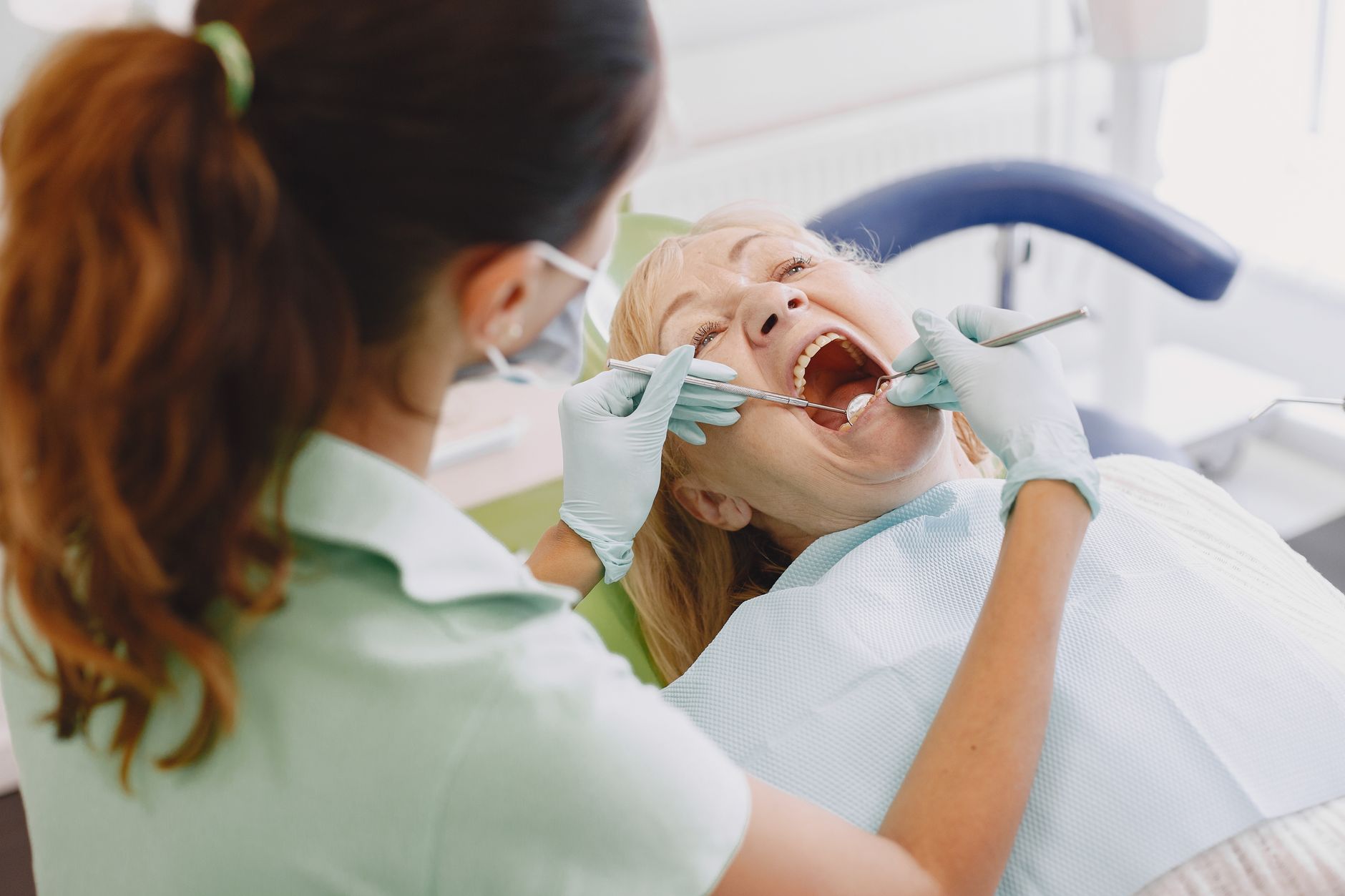
Photo by Gustavo Fring via Pexels
The Three-Week Rule, and Why It Exists
The lining of the mouth is the fastest-healing tissue you own. It turns over in days, which is why a cheek you bit at supper is usually forgotten by the following week. That speed is what makes three weeks a meaningful mark: by then the ordinary repair process has had every chance to finish, and it has not.
The rule is deliberately blunt, and it covers more than ulcers:
- An ulcer or crater that has not closed.
- A white patch that does not wipe away with gauze or a toothbrush.
- A red or speckled patch that stays put.
- A lump or thickening under the lining, including a painless one.
- A corner of the mouth that keeps cracking and re-splitting.
Two things people get backwards. First, pain is not the measure. A canker sore hurts a great deal and is harmless, while a painless sore that quietly persists is the one that gets left for months, and that delay is the actual problem. Second, the clock starts the day you noticed it, and by week five nobody remembers that date accurately. If you are already unsure how long it has been there, treat the uncertainty as the reason to book rather than as a reason to keep watching.
What Usually Causes a Sore That Will Not Heal
Roughly in the order these actually turn up in the chair:
- Something sharp rubbing the same spot. A chipped tooth, a broken filling with a knife edge, the flange of a denture, an orthodontic bracket or a wire end. The sore sits directly against the culprit and reopens for as long as the edge is there. This is the answer by a wide margin, and the repair side of it is covered in our post on repairing a broken tooth.
- A major aphthous ulcer. A large canker sore, over about a centimetre across, can genuinely run three to six weeks and occasionally leaves a small scar. It still gets examined at three weeks rather than assumed. The ordinary kind is dealt with in canker sore treatment.
- A fungal infection. Oral thrush, and the sore cracked corners of the mouth that often come with it, shows up in denture wearers, in people using a steroid inhaler, and in anyone with a persistently dry mouth. It clears quickly once it is named.
- A dental infection venting through the gum. A soft lump on the gum that swells, drains a bad taste and shrinks again is not a sore that will not heal. It is a gum boil, and it is a symptom of the tooth beside it.
- A systemic cause. Low iron, low B12 or folate, coeliac disease, inflammatory bowel disease and Behçet’s all announce themselves in the mouth, sometimes well before anywhere else. The pattern there is repeated crops of ulcers rather than one stubborn sore.
- A medication. Several drug groups cause mouth ulceration or dry mouth as a side effect, so bring your list to the appointment.
- Something that needs a biopsy to name. The smallest group here by some distance, and the reason none of the others are assumed without a look.
The Features That Move a Sore Up the List
None of these mean something is wrong. They mean the sore is worth seeing this week rather than after another fortnight of watching:
- It is painless and has been there for weeks.
- It feels firm at the base, with raised or rolled edges rather than a soft crater.
- A white or red patch that will not wipe off, particularly on the side or underside of the tongue or the floor of the mouth.
- Numbness or tingling in the lip or tongue with no recent dental work to explain it.
- A lump in the neck that is still there after a few weeks.
- A tooth that has gone loose with no gum disease around it.
- It bleeds at the lightest touch, or swallowing has started to feel different.
Smoking, heavy alcohol and chewing tobacco raise the odds, and so does past HPV exposure. People with none of those get checked on exactly the same criteria, because plenty of these lesions turn up in people who have never smoked.
Some of this is not our job. If facial swelling is spreading toward the eye or down into the neck, if swallowing or breathing is getting harder, or if there is a high fever alongside widespread ulceration, that is a hospital emergency room and not an evening spent waiting for a dental appointment. And if the picture is crops of several ulcers at a time with tiredness, weight loss or gut symptoms, start with your family doctor and a blood test. We can look in your mouth. We cannot run your bloods.
What Actually Happens When Someone Looks at It
People put this appointment off because they imagine it is dramatic. It is one of the least dramatic appointments in dentistry.
It opens with three questions: when did you first notice it, has it changed size, and does it hurt. Then a soft tissue examination, which means the tongue lifted and turned to both sides, the floor of the mouth, the cheeks, the lips and the palate, and a hand run along the neck and under the jaw. About five minutes, and nothing goes into the sore.
If a sharp edge is sitting against it, that gets smoothed or repaired at the same visit and you come back in two weeks. The review is the important half. A sore that healed once the cause was removed has answered the question. A sore that did not heal after the cause was removed is referred on to an oral medicine or maxillofacial unit, usually for a biopsy.
A biopsy is a small piece of tissue taken under local anaesthetic. It is a normal diagnostic step, not a verdict, and most come back as something unremarkable. Being referred is not the same as being given bad news, and it is not a reason to cancel.
The philosophy this practice runs on is that waiting to see whether something sorts itself out is usually the more expensive choice. It is more true here than in most places it gets said, because the cheap version of the problem is a few minutes of polishing a sharp edge and the expensive version is the same lesion three months further on.
Getting a Non-Healing Sore Looked At in Beit Shemesh
This is not an emergency, and saying so plainly matters more than the booking does. A sore that has been there a month has already waited a month, and it does not need a call at 11pm. Keep the after-hours line for the spreading swelling and the throbbing tooth, which genuinely cannot wait. A persistent sore needs an ordinary appointment, soon, in daylight.
The shape of the week here is worth knowing when you book. We are open Sunday to Thursday, 8:00 AM to 8:00 PM, and Friday 9:00 AM to 5:00 PM, Shabbat for emergencies only. Notice a sore on Friday morning and the sensible move is a Sunday slot rather than a scramble before the clinic shuts at two. Same-day appointments are possible at our Beit Shemesh clinic when the diary allows, and when the cause turns out to be a sharp tooth edge, that one visit is usually the whole treatment.
There is a genuinely local advantage here. Dr. Joel trained at Case Western Reserve University in the US, made aliyah in 2014, and treats in Hebrew and English. Describing a soft tissue lesion accurately is hard in your first language and harder in your second, and “it is white, it does not wipe off, and it has been there since before the chagim” is a far more useful sentence than an approximate translation of it. From most of Ramat Beit Shemesh we are about two kilometres away, at Harav Kook 28/1. If the sore sits beside a chipped or broken tooth, our cracked tooth repair in Beit Shemesh page covers that side of it.
If a sore in your mouth has passed three weeks, keeps coming back to the same spot, or is painless and firm, call or WhatsApp 055-985-8845 and book a look at it. We are at Harav Kook 28/1 in Beit Shemesh, open Sunday to Thursday 8:00 AM to 8:00 PM and Friday 9:00 AM to 5:00 PM, with emergency treatment outside those hours for the problems that cannot wait. Our emergency dentist in Beit Shemesh page explains which problems those are. If it is day four of a cheek you bit at dinner, book nothing. It will be gone next week.
For independent reading, the ADA’s MouthHealthy has plain-language pages on the different kinds of mouth sores, on canker sores, and on what an oral cancer screening involves.
Common questions
How long should a mouth sore take to heal?
Should I worry more about a mouth sore that does not hurt?
Why does a sore keep coming back in the same spot?
Can a mouth ulcer be a sign of oral cancer?
Should I see a dentist or a family doctor about a sore that will not heal?
Will antibiotics clear up a mouth sore?
What happens if I am referred for a biopsy?
Still not sure? Message us.
Send Dr. Gabriel Joel, DMD a quick description of what's going on and we'll point you in the right direction.
Message on WhatsAppDentist in Beit Shemesh — our dental clinic