
Canker Sore Treatment: What Actually Helps It Heal
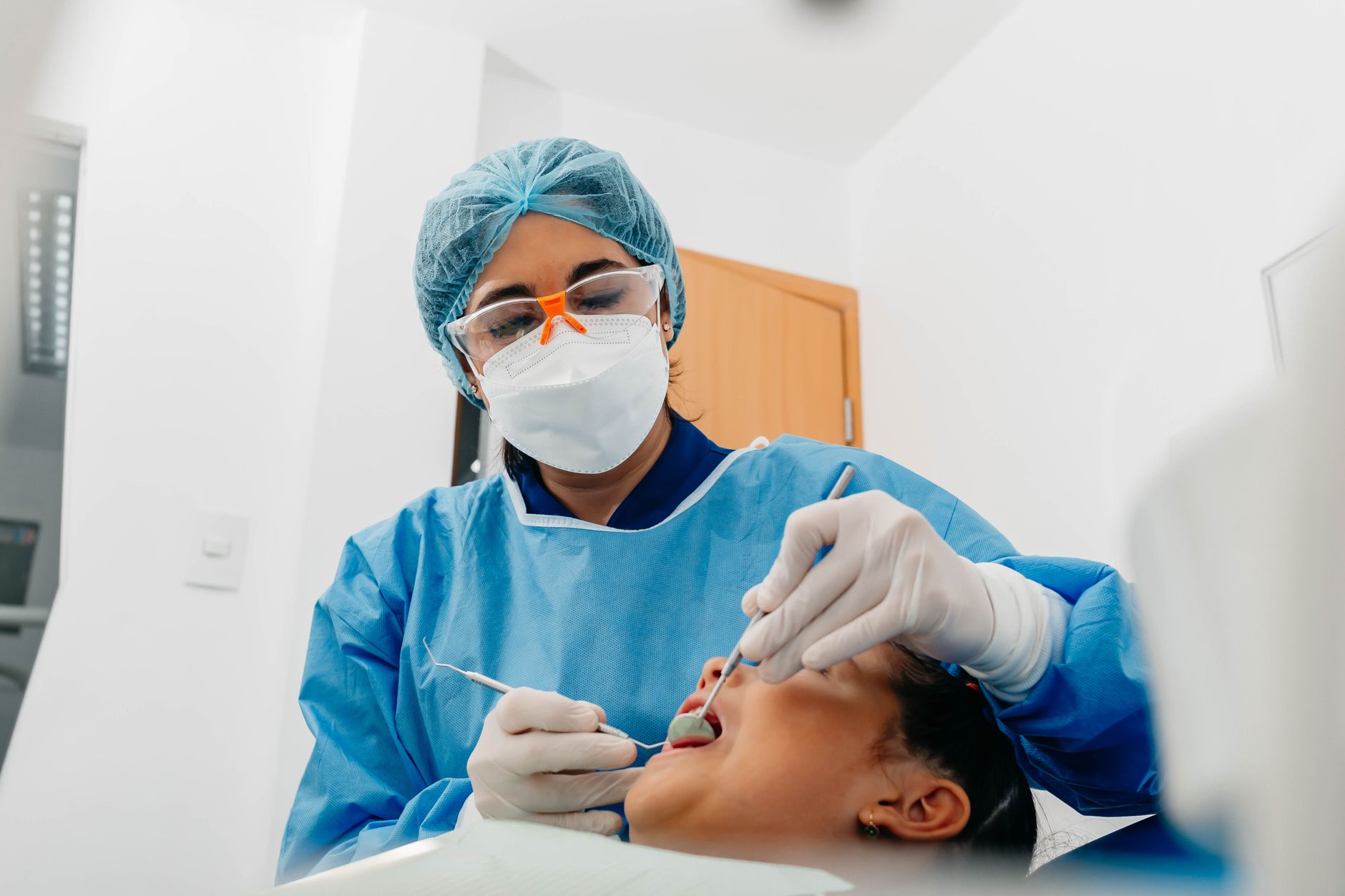
Photo by iam luisao via Pexels
What a Canker Sore Is, and What It Is Not
A canker sore sits on the soft, movable tissue inside the mouth: the inside of the lip or cheek, the sides or underside of the tongue, the floor of the mouth. It is round or oval, has a pale yellow or grey floor with a red halo around it, and hurts far more than something that size has any right to. It is not an infection you caught from anybody, and you cannot pass it on.
The thing people confuse it with is a cold sore, which is a different problem with a different cause:
- Canker sore: inside the mouth, on tissue you can move. Single crater or a few of them. Not contagious.
- Cold sore: on the lip border or the skin just outside it. Starts as a cluster of small blisters that break and crust over. Caused by the herpes simplex virus, and it is contagious while it is weeping.
The ADA covers both, on canker sores and on cold sores, if you want to compare before deciding which you have.
Common triggers, none of which are your fault and most of which are boring: biting the cheek while eating, a toothbrush slip, a stretch of bad sleep or high stress, a hormonal shift, acidic food, a low iron or B12 level, and for some people the foaming agent (sodium lauryl sulfate) in ordinary toothpaste.
What Actually Helps While It Heals
The aim is pain control and not irritating it further. In rough order of how much difference they make:
- A numbing gel from the pharmacy, with benzocaine or lidocaine in it, applied ten minutes before a meal rather than after one. Eating is the part that hurts, so time it for that.
- A protective paste that forms a film over the ulcer. It does not heal anything, it just stops your tongue and your food from finding the sore all day.
- Chlorhexidine mouthwash, for a short run of days. It keeps the ulcer clean and takes some of the soreness out. Do not stay on it for weeks, because it stains teeth.
- Warm salt water rinses. Half a teaspoon in a glass of warm water, swished gently. Cheap and genuinely soothing.
- Paracetamol or ibuprofen, as directed on the packet, if the sore is bad enough to interfere with sleeping or eating.
- Eating around it. Citrus, tomato, vinegar, very salty snacks, crisps and anything with a sharp edge will all set it off. Soft and bland for a week is not exciting, but it works.
- A soft brush, still used. Keep brushing the area gently. Plaque building up around an ulcer makes it sorer, not safer.
If you get them repeatedly, an SLS-free toothpaste is worth a month-long trial. It helps some people a great deal and does nothing at all for others. For an ulcer that is unusually large or is dragging on, a dentist or your family doctor can prescribe a topical steroid, which is the one thing that does shorten the course.
What Does Not Help, and What Makes It Worse
The ulcer heals over the same two weeks whether or not you buy anything, which is a difficult thing to print on a box. Some of the popular remedies actively set you back:
- Holding an aspirin tablet against the sore. Aspirin is an acid. It burns the lining and leaves you with a larger ulcer than the one you started with.
- Neat alcohol, arak, or a strong alcohol-based mouthwash. It stings enough to feel like it is doing something. It is not.
- Rubbing salt directly into it. Diluted in water is soothing. Undiluted is a chemical injury.
- Antibiotics. A canker sore is not a bacterial infection, so an antibiotic does nothing for it. When an antibiotic is and is not the right answer in the mouth is covered in antibiotics for a tooth infection.
- Picking at it, which is how a five-day ulcer becomes a twelve-day one.
When a Mouth Ulcer Is Not a Canker Sore
This is the part that matters, and it is the reason to read past the pain relief. Most sore spots in the mouth are harmless. A few are not, and they are recognisable.
- Any ulcer still there after three weeks. Whatever it looks like, whatever you think caused it, get it examined. A painless ulcer is not the reassuring kind. Canker sores hurt, so a persistent sore that does not hurt is more of a reason to be seen, not less.
- An ulcer that keeps coming back in exactly the same spot. Something is usually rubbing it: a sharp edge on a chipped tooth or an old filling, the flange of a denture, an orthodontic bracket or a wire end. Smoothing the edge is a short appointment, and the ulcer stops returning. Our page on repairing a broken tooth covers the sharp-edge version of this.
- A lump on the gum that swells and shrinks, with a bad taste when it drains. That is not an ulcer. That is a gum boil venting an infected tooth, and it needs the tooth treated. See tooth abscess for what is happening underneath.
- A red, swollen flap of gum over a half-erupted wisdom tooth that is agony to bite on. That is not a canker sore either, and it is dealt with in wisdom tooth pain.
- Repeated crops of many ulcers at once, especially alongside fatigue, weight loss, gut symptoms, or sore joints and eyes. That is a family doctor and a blood test rather than a dentist. Coeliac disease, iron and B12 deficiency, inflammatory bowel disease and Behçet’s all show up in the mouth first, sometimes years first.
Go to a hospital emergency room rather than to us if swelling is spreading across the face or into the neck, if swallowing or breathing is getting difficult, or if there is a high fever with widespread mouth ulceration. A small child whose whole mouth has ulcerated and who has stopped drinking needs a doctor the same day, because dehydration is the real risk there, not the sores.
Getting a Mouth Ulcer Looked At in Beit Shemesh
Honestly, most of the time you do not need us for this. If you have a single painful crater inside your lip and you know you bit it, that is two weeks of nuisance and no appointment. Booking a dentist for an ordinary canker sore on day three is spending money on something that was going to resolve anyway.
Timing is worth knowing, though, because our week here has a particular shape. We are open Sunday to Thursday, 8:00 AM to 8:00 PM, and Friday 9:00 AM to 5:00 PM, Shabbat for emergencies only. An ulcer that flares on Thursday night is not an emergency and will keep comfortably until Sunday with salt water and a numbing gel. That is genuinely different from a swelling or a throbbing tooth on the same Thursday night, which should not wait, and which we do see outside normal hours.
Two practical things. First, the three-week rule only works if you know when the sore started, and nobody remembers accurately three weeks later. Put a note in your phone the day you notice it. Second, if English is your first language, being able to describe the sore precisely is worth more here than people expect. Dr. Joel trained at Case Western Reserve University in the US, made aliyah in 2014, and treats in both Hebrew and English, and “it has been there since before Tisha B’Av and it does not hurt” tells us far more than an approximate translation of it does. When a sharp tooth edge is the cause, same-day appointments are possible at our Beit Shemesh clinic and the fix takes minutes.
If you have a mouth ulcer that has outstayed three weeks, keeps returning to the same spot, or sits next to a tooth that is chipped or sharp, call or WhatsApp 055-985-8845 and we will take a look at it. We are at Harav Kook 28/1 in Beit Shemesh, open Sunday to Thursday 8:00 AM to 8:00 PM and Friday 9:00 AM to 5:00 PM, with emergency treatment outside those hours when something genuinely cannot wait. Our emergency dentist in Beit Shemesh page explains how urgent problems are handled. If it is an ordinary canker sore on day four, save your money and read the pain relief section again.
For independent reading, the ADA’s MouthHealthy has plain-language pages on canker sores and on the different kinds of mouth sores and what causes them.
Common questions
How long does a canker sore take to heal?
What is the fastest way to get rid of a canker sore?
Is a canker sore contagious?
Can I put an aspirin on a canker sore?
When should I see a dentist about a mouth ulcer?
Why do I keep getting canker sores?
Do antibiotics clear up a mouth ulcer?
Still not sure? Message us.
Send Dr. Gabriel Joel, DMD a quick description of what's going on and we'll point you in the right direction.
Message on WhatsAppDentist in Beit Shemesh — our dental clinic