
Dental Crown: What It Is, When You Need One, and Care
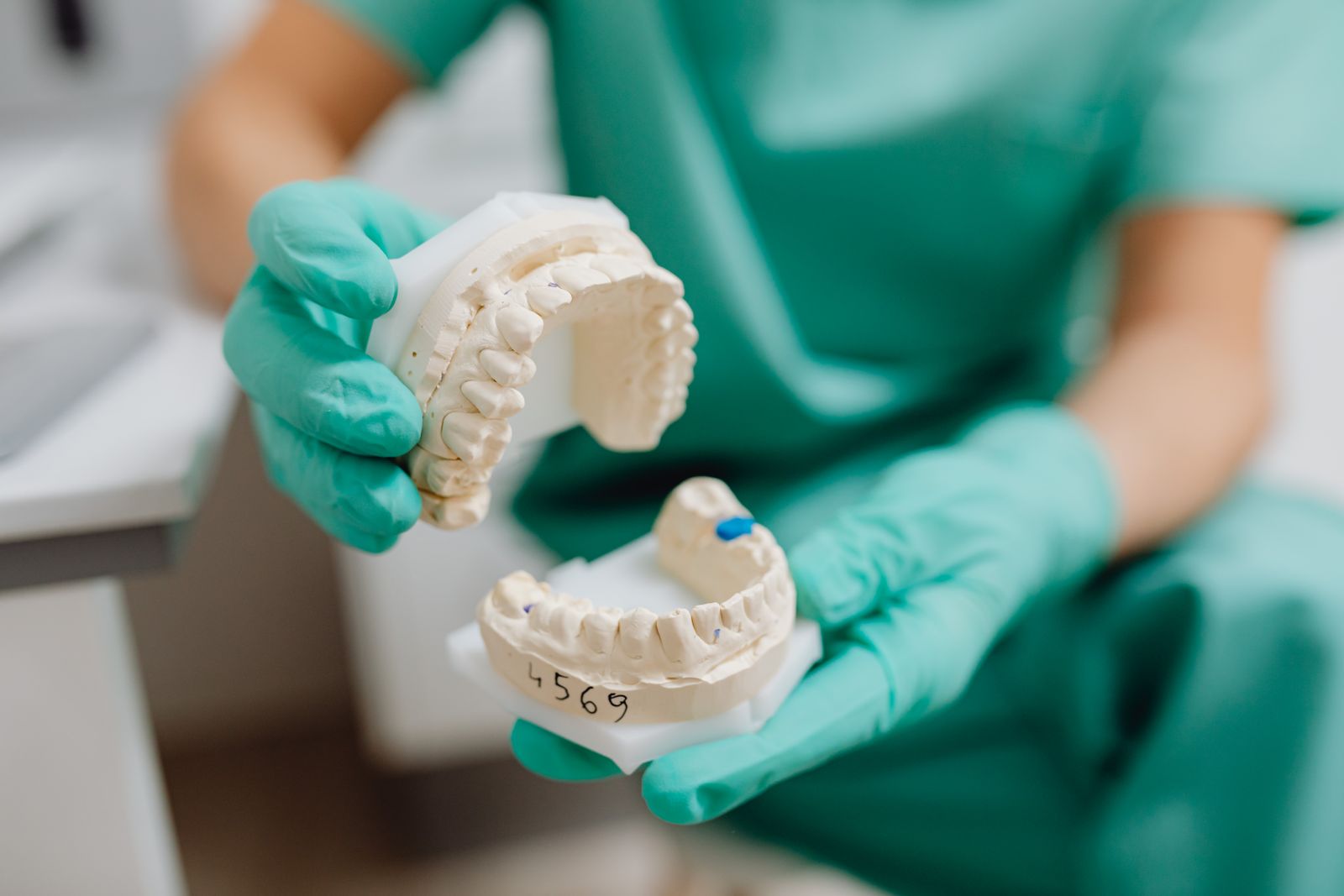
Photo by Kaboompics.com via Pexels
What a Dental Crown Actually Does
Think of a crown as a jacket for a tooth. Where a filling packs material into a hole inside the tooth, a crown wraps over the top and sides and holds the whole thing together. That matters once a tooth has lost enough structure that a filling would keep breaking, or once it's cracked and needs to be bound so the crack can't spread.
A crown restores the tooth's shape so it meets its neighbours and bites cleanly, and it lets the tooth take the full force of chewing again. It also seals what's underneath. On a tooth that's had a root canal, that seal is part of the job: it keeps bacteria out so the treatment holds. The crown itself has no nerve, but the root under it is still yours, and the point of the crown is to let you keep that root working for years.
When You Actually Need a Crown
A crown is the right fix when there isn't enough solid tooth left for a filling to hold, or when the tooth needs protecting from breaking. The common reasons:
- After a root canal on a back tooth. A treated molar or premolar becomes more brittle and takes heavy chewing load, so it's usually crowned to stop it splitting. Why a crown goes on after a root canal covers this in full.
- A large filling with little tooth left. When a filling would make up more of the tooth than the tooth itself, it won't last, and a crown is the sturdier answer.
- A cracked tooth. A crown holds a cracked tooth together so the crack can't run deeper. What a cracked tooth means explains when that works and when it doesn't.
- A broken or badly worn tooth. A tooth broken by trauma or ground down over years often needs a crown to rebuild it; how a broken tooth gets repaired walks through the options.
Just as important is when you don't need one. A small or medium cavity doesn't need a crown; it needs a filling, which keeps more of your own tooth. A crown is a bigger, more expensive restoration, and a good dentist reaches for one only when a filling genuinely won't hold. If someone proposes crowning a tooth a filling would fix, it's fair to ask why, and to see the reasoning on an X-ray.
Types of Crown, and Which One You Get
Crowns are grouped by what they're made of, and the trade-off is roughly appearance against strength:
- All-ceramic (porcelain) crowns. The most natural-looking, so they're the usual choice for front teeth and any tooth that shows. Modern ceramics like zirconia are strong enough for back teeth too, which is why they've become the default for most crowns.
- Porcelain-fused-to-metal (PFM). A metal core for strength with porcelain baked over it for looks. Long-established and hard-wearing, though a thin dark line can show at the gum over the years.
- Gold and metal-alloy crowns. The kindest to the teeth they bite against and extremely durable, but the colour means they're used on out-of-sight back teeth, and less often now than they once were.
Which one suits your tooth depends on where it sits in the mouth, how much bite force it takes, and how much it shows when you smile. That's decided looking at the tooth, not in advance, and it's worth having the dentist explain the reasoning rather than defaulting to the priciest option.
What Getting a Crown Is Like
The traditional way takes two visits. At the first, the dentist numbs the tooth, shapes it down so the crown has room to fit over it, and takes an impression or a digital scan. That goes to a lab that makes the crown to match your bite and tooth colour, and you leave with a temporary crown protecting the tooth in the meantime. A couple of weeks later the temporary comes off and the permanent crown is cemented on and adjusted until the bite feels right.
Some clinics offer same-day crowns milled from a digital scan while you wait, which skips the temporary and the second visit. Either way, the tooth is numbed for the preparation, so you feel pressure rather than sharp pain. A little sensitivity to cold or biting for a few days after each stage is normal and settles. If the bite feels high or the tooth stays sore once the crown is on, that's a quick adjustment, not something to live with.
How Long a Crown Lasts, and How to Look After It
A well-made crown that fits properly lasts many years, and plenty go a decade or two. What decides the lifespan isn't the crown so much as the tooth and gum under it. The crown can't decay, but the join where it meets your natural tooth can, so a new cavity can start at the edge if plaque builds up there.
Looking after a crown is the same as looking after any tooth: brush twice a day, floss around it to keep the margin clean, and don't use it to crack ice or open packaging. Check-ups matter because a small problem at a crown's edge is easy to catch early and expensive to ignore. Waiting to see whether a niggle at a crowned tooth settles is usually the more expensive choice, because by the time it aches the decay or crack underneath has often had time to spread. On a root-canal-treated tooth in particular, leaving it uncrowned or letting a crown fail risks the tooth cracking beyond saving, which is a worse and costlier outcome than the crown.
When to Come In
A crown that's come loose or fallen off usually isn't painful, but the tooth underneath is exposed and vulnerable, so it's worth being seen fairly quickly, ideally with the crown kept safe so it can often be recemented. A chipped crown, or a crowned tooth that's suddenly sensitive or aching, is also worth a look, since pain from a crowned tooth usually means something is going on underneath rather than with the crown itself.
What isn't a dental appointment at all: swelling that's spreading toward your eye or down your neck, a fever alongside facial swelling, or any trouble breathing or swallowing. That's a hospital emergency room, not a dental chair. Go straight to the ER. For a lost crown, a cracked tooth, or a crowned tooth in pain, though, that's exactly what we see people for.
If a crown has come off, a tooth has broken, or you've been told a tooth needs a crown and want a straight answer, get it looked at. Call or message us on WhatsApp at 055-985-8845. We're open Sunday to Thursday 8:00 AM to 8:00 PM and Friday 9:00 AM to 5:00 PM, with after-hours emergency treatment outside those hours, and we handle emergency dental care and root canal treatment in Ramat Beit Shemesh when a tooth needs a crown to follow. We'll show you on the X-ray what the tooth needs and tell you honestly whether a crown is the right call.
For background from sources with nothing to sell, the ADA's MouthHealthy explains what dental crowns are and how they're used, and the American Association of Endodontists covers how a treated tooth is restored and cared for.
Common questions
What is a dental crown?
When do I need a crown instead of a filling?
How long does a dental crown last?
What are the different types of dental crown?
My crown fell off. What should I do?
Can a tooth with a crown still get a cavity or hurt?
Still not sure? Message us.
Send Dr. Gabriel Joel, DMD a quick description of what's going on and we'll point you in the right direction.
Message on WhatsAppDentist in Beit Shemesh — our dental clinic