
Do We Treat Children for Dental Emergencies? Yes, We Do
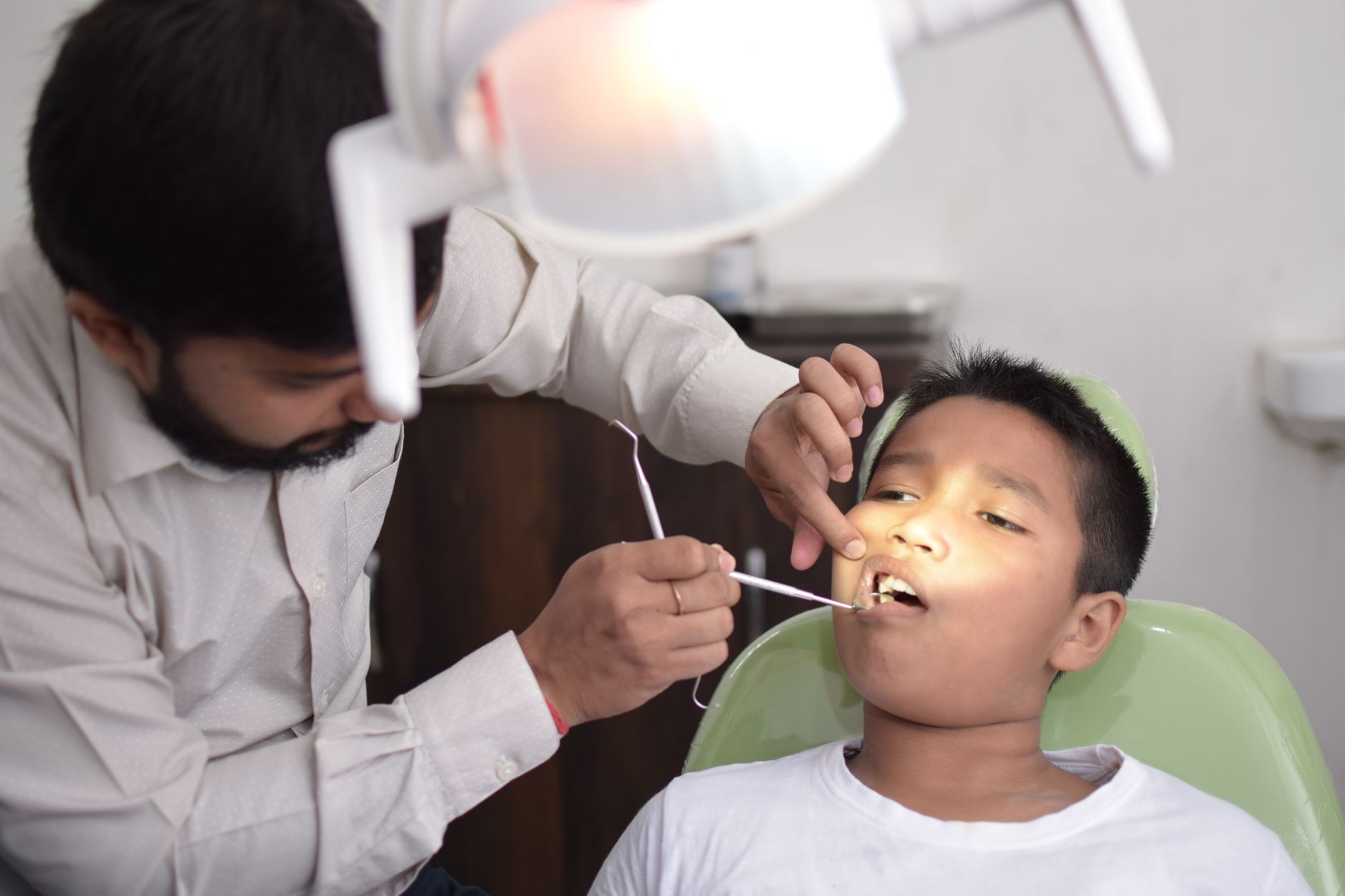
Photo by Lakhinandan Borah via Pexels
What Counts as a Children's Dental Emergency
With children, the thing to watch is whether the problem is spreading or getting worse, not how much noise it's making. See a dentist the same day if your child has:
- A knocked-out or pushed-out adult (permanent) tooth. Time really matters here, so read how to save a knocked-out tooth while you arrange to be seen.
- Swelling of the gum, cheek, or jaw, especially if it's growing. Our guide to facial swelling from a tooth infection explains why this one jumps the queue.
- Pain bad enough to disrupt sleep or eating, or a toothache that painkillers barely touch. Our page on a child's toothache at night covers the 2am version.
- A tooth broken in a fall with a sharp edge or an exposed centre. Our guide to a broken front tooth walks through what can be saved.
- Bleeding from the mouth that won't settle after a knock, or a bad taste leaking from a tooth.
Plenty of things can wait for a routine visit, and we'd rather tell you that than book a stressed child in for tonight. A tiny chip with no pain, a baby tooth that's wobbly because it's naturally on its way out, or a tooth that gives one quick twinge to cold and settles are usually fine to see in the next week or two. Our guide to telling a toothache from a dental emergency walks through where the line sits.
What to Do in the First Few Minutes
While you arrange to be seen, a few things genuinely help. For pain, children's paracetamol or ibuprofen at the weight-appropriate dose on the packet is the right tool, and a cold compress held against the outside of the cheek eases swelling. Never give a child aspirin for a toothache; in children it carries a small but serious risk, so keep to the two above. Our guide to painkillers for a toothache covers the detail for older kids and teens.
Two situations need something more specific, and the difference between them is the single most important thing on this page:
- A knocked-out adult tooth has its best chance if it goes back in quickly. Hold it by the crown, not the root, rinse it gently if it's dirty without scrubbing, and either slip it back into the socket or keep it in milk on the way in. The first ten minutes often decide whether the tooth survives.
- A knocked-out baby tooth is the opposite. Do not try to push a baby tooth back into the socket. Reimplanting it can damage the developing adult tooth sitting underneath. Keep your child comfortable, save the tooth in milk if you want to bring it, and call us so we can check nothing else was injured.
For a broken tooth, save any fragment in milk and cover a sharp edge with a little sugar-free gum or dental wax so it stops catching the tongue. Skip the folk remedies: don't hold aspirin against the gum, and don't reach for leftover antibiotics, which won't clear an infection sealed inside a tooth and can mask it while it worsens.
Why Baby Teeth and Adult Teeth Are Handled Differently
The reason a knocked-out baby tooth is treated so differently comes down to what's above and below the gum. A baby tooth sits directly over the developing permanent tooth, and forcing it back in can knock that permanent tooth off course. A permanent tooth, once it's gone, isn't replaced by the body, so getting it back in the socket fast is the priority.
That doesn't mean a baby-tooth injury is nothing. A hard knock can bruise the tooth, push it out of line, or crack it below the gum, and it's worth a look to rule out damage to the tooth underneath. But the panic-level, get-it-back-in-now response is for adult teeth. If you're not sure which your child has knocked out, call and describe it, and we'll tell you which situation you're in.
When It's a Hospital, Not a Dental Clinic
A few situations aren't a dental appointment at all, and a child is exactly when you don't want to guess. Go straight to a hospital emergency room, not a clinic, if your child has:
- Swelling spreading up toward the eye or down into the neck, or any trouble breathing or swallowing.
- A knock to the head alongside the mouth injury, with drowsiness, vomiting, or a loss of consciousness. That's a head injury being treated first, not a tooth.
- A deep cut to the lip, tongue, or face that's bleeding heavily and won't stop, or a jaw that may be broken.
- A high fever with chills together with a swollen, painful tooth.
These are uncommon, but they're the reason a child's facial swelling or head knock isn't something to sit on overnight and hope it settles. A dental chair is the wrong place for any of them.
Getting a Frightened Child Through It
A dental emergency is a bad first impression of a dentist, and a scared child in pain is harder to help than a scared adult. We go slower, explain what a tool does before it goes near anyone, and let a parent stay in the room. The aim of the visit is to sort the emergency and, just as much, to not turn one bad night into a lifelong fear of the chair.
If your child is anxious even outside of emergencies, that's worth knowing before you come, and it's fine to say so on the phone. Being seen in English helps here too, because a frightened seven-year-old doesn't need a parent translating dental terms in the middle of it.
If your child has a tooth that's been knocked out, broken, or is hurting badly, call or WhatsApp us at 055-985-8845 and tell us what happened and how they're doing. We'll tell you how soon they need to be seen, give you the price for their case before anything starts, and if it can safely wait, we'll say so. We're in Ramat Beit Shemesh, open Sunday to Thursday 8:00 AM to 8:00 PM and Friday 9:00 AM to 5:00 PM, with after-hours emergency treatment outside those hours. Our emergency dentist and same-day treatment pages explain how urgent visits work.
For guidance from sources with nothing to sell, the ADA's MouthHealthy explains what to do about a toothache and how to recognise a dental abscess, and the American Association of Endodontists lists the symptoms that signal an inflamed or injured nerve.
Common questions
Do you treat children for dental emergencies?
What should I do if my child knocks out an adult tooth?
My child's baby tooth was knocked out — should I put it back in?
What painkiller can I give a child with a toothache?
When is a child's dental problem a hospital emergency?
Can you see my child the same day?
Do you treat children who are frightened of the dentist?
Still not sure? Message us.
Send Dr. Gabriel Joel, DMD a quick description of what's going on and we'll point you in the right direction.
Message on WhatsAppDentist in Beit Shemesh — our dental clinic