
Child's Toothache: How to Tell If It's a Real Emergency
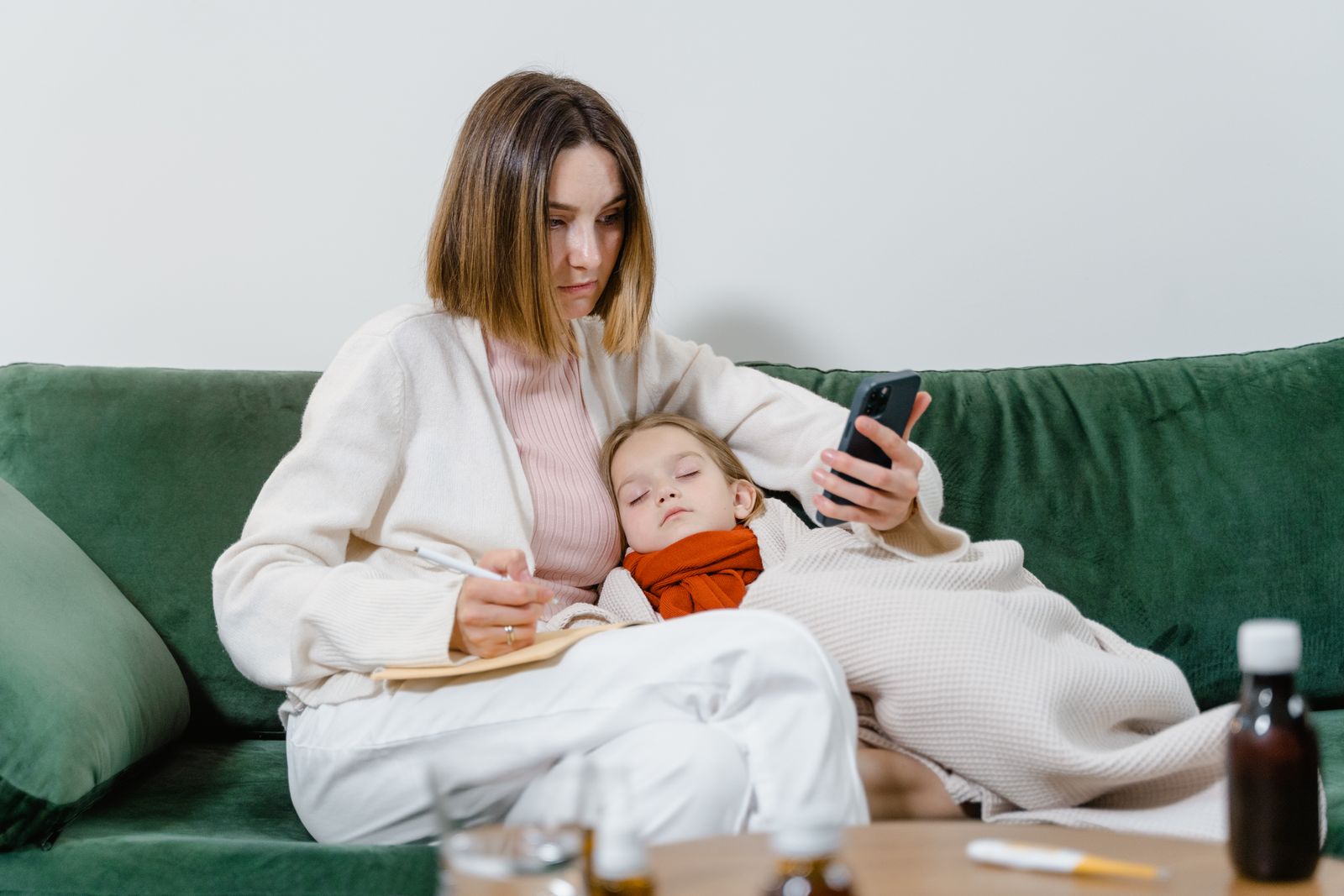
Photo by Tima Miroshnichenko via Pexels
Signs a Child's Toothache Needs Seeing Today
These are the ones that do not wait for a convenient morning.
- Swelling of the face, cheek, jaw or under the eye. It means infection has moved out of the tooth into the tissue around it.
- Fever alongside the tooth pain, particularly with swelling. A cavity does not cause a temperature. An infection does.
- Trouble swallowing, breathing, or opening the mouth. That belongs in an emergency room, not a dental chair.
- A child who is drowsy, floppy or clearly unwell in a way that goes past being in pain.
- Pain a correct dose of children's paracetamol or ibuprofen does not touch, or that wakes them repeatedly through the night.
- A permanent tooth knocked out or shoved out of position after a fall. Time matters here. Keep the tooth in milk and call straight away.
- Bleeding after a mouth injury that does not stop with ten minutes of firm pressure on clean gauze.
Infection travels faster through a small body than an adult one, so swelling in a child gets less benefit of the doubt. If it is spreading, closing an eye or reaching down the neck, go to a hospital rather than to us. Where a dental infection becomes a hospital emergency sets out where that line sits.
One thing people get wrong: a baby tooth knocked clean out must never be pushed back into the socket, because it can damage the adult tooth forming above it. A knocked-out baby tooth explains what to do instead.
What Can Usually Wait Until Morning
Just as useful is knowing when you can put the phone down and go back to bed.
- Pain that settles within an hour of the right dose of children's paracetamol or ibuprofen.
- A sharp twinge to cold, sweet or ice cream that fades within seconds of the trigger going away.
- A wobbly baby tooth that is tender for a day or two before it comes out.
- Sore, puffy gum over a new molar coming through, around age six and again around twelve.
- An ache that stops the moment you floss a piece of food out from between two teeth.
None of these are nothing. They all still need a dentist to look, because a cavity found small is a filling and the same cavity found late is a long evening for both of you. They just do not need finding at 2am. Getting a child through a toothache at night covers what actually helps until then, including the two things to avoid: never give aspirin to anyone under 16, and skip the numbing gels in young children.
When Your Child Is Too Young to Explain It
A four-year-old will tell you their tooth hurts, tell you five minutes later that it does not, and then eat a biscuit carefully on the other side of their mouth. Watch what they do rather than what they say.
- Chewing only on one side, or refusing food they normally like.
- Waking more than once a night, several nights running.
- Holding or pressing the cheek, or pulling at the ear on the same side.
- A bad smell or taste that seems to come from one spot.
- A small pimple-like bump on the gum above a tooth, which can show up with or without pain.
Parents apologise to us fairly often for bringing in a child who turns out to be fine. Nobody needs to. Telling a sore gum from an abscess in a child who will not open their mouth is our job, and getting it wrong in the direction of caution costs you a morning.
Thursday Night and Friday Afternoon in Beit Shemesh
Where you live changes the maths. We are open Sunday to Thursday 8:00 to 20:00 and Friday 9:00 to 17:00, Shabbat for emergencies only. A tooth that starts complaining on a Tuesday and one that starts on a Thursday evening are not the same problem, even with identical symptoms. The Thursday one has a much longer stretch ahead of it.
So the practical advice for families here: if your child's tooth has been niggling all week, get it looked at on the Thursday rather than hoping it holds until Sunday. Same-day appointments are usually possible at the Beit Shemesh clinic, and emergency treatment is available outside those hours for the things that genuinely cannot wait. We treat in Hebrew and English, which helps when you are already relaying a six-year-old's description of pain and would rather not translate it twice. Details are on the emergency dentist page for Beit Shemesh.
If the Pain Stopped on Its Own, Do Not Relax Yet
This is the trap. The child sleeps, wakes up cheerful, eats breakfast, and the appointment never gets made.
Pain stopping does not mean the problem stopped. When decay reaches the nerve inside a tooth and the nerve dies, the pain switches off and the infection carries on quietly underneath. That is why swelling sometimes turns up days after the toothache went away, and why a swollen face from a tooth infection so often follows a week of "it is fine now". With teeth, waiting to see whether it settles is usually the more expensive choice.
If your child has toothache tonight and you are not sure how serious it is, describe the symptoms to us and we will tell you whether it needs seeing today or can wait. Call or WhatsApp 055-985-8845. We are at Harav Kook 28/1 in Beit Shemesh, open Sunday to Thursday 8:00 AM to 8:00 PM and Friday 9:00 AM to 5:00 PM, Shabbat for emergencies only, with emergency treatment available outside those hours. If what you describe belongs in a hospital, we will say so and send you there instead.
For sources with nothing to sell you, the ADA's MouthHealthy covers dental emergencies and what to do about a toothache, and the American Association of Endodontists explains what to do after a tooth injury.
Common questions
How do I know if my child's toothache is serious?
Should I take my child to the emergency room for a toothache?
Can a tooth problem give my child a fever?
My child had toothache and now it has stopped. Do they still need to be seen?
My child has toothache on a Friday afternoon in Beit Shemesh. What should I do?
How can I tell if a toddler has toothache?
Is a swollen cheek from a tooth an emergency in a child?
Still not sure? Message us.
Send Dr. Gabriel Joel, DMD a quick description of what's going on and we'll point you in the right direction.
Message on WhatsAppDentist in Beit Shemesh — our dental clinic