
Tooth and Gum Infection: Symptoms You Shouldn't Ignore
Photo by Arvind Philomin via Pexels
The symptoms that point to a real infection, not just sensitivity
Mild sensitivity that comes and goes usually isn't an infection. The signs below, on the other hand, usually point to something that needs an exam:
- Throbbing pain that gets worse at night or lying down
- Pain that radiates to the ear, jaw, or neck rather than staying in one tooth
- Swelling in the cheek, jaw, or gums
- Strong sensitivity to pressure or biting, even without hot or cold food
- A bad taste or smell that doesn't go away with brushing
- Swollen lymph nodes in the neck or under the jaw
- A mild fever alongside the pain
- Difficulty fully opening your mouth or swallowing comfortably
The symptom people miss: a small bump on the gum
A small, pimple-like bump on the gum near the sore tooth — sometimes called a parulis — is one of the clearest signs of an abscess, and one of the easiest to dismiss as nothing. It can drain on its own from time to time, which makes the pain briefly let up. That's not the infection clearing up. It's a valve opening. The infection underneath is still there, and it still needs treatment.
Infection in a crowned tooth, or one that's had a root canal
A crown or a root canal doesn't make a tooth immune to infection. Infection can develop under a crown if the old cement seal has loosened, or at the root tip of a tooth that's had a root canal if some of the original infection remained. That doesn't mean the earlier treatment failed. It means it needs to be checked. If the pain is localized to one specific tooth that's already been treated, rather than across your whole mouth, that's a reason to call rather than assume it'll pass. Root canal vs. extraction covers what happens when the infection does come back and what the options are from there.
Photo by Laura Beauty Designer | Brasil via Pexels
Gum infection: pain and swelling that aren't always gum disease
Gums that bleed lightly when you brush are usually a sign of general gum inflammation, which is treated with regular cleanings. Swelling and pain localized around one tooth, on the other hand, tend to point to a local infection that needs an exam, not just better brushing. That difference determines whether the next step is a routine hygiene visit or an urgent one.
How we actually diagnose it
Diagnosis is an exam plus an X-ray, not guesswork from a description over the phone. The X-ray shows whether the infection has reached the bone at the root tip, how far it's spread, and whether the tooth is realistically savable. That's also what tells us whether you're looking at a root canal, a filling, or something else entirely — see root canal vs. extraction for how that decision actually gets made.
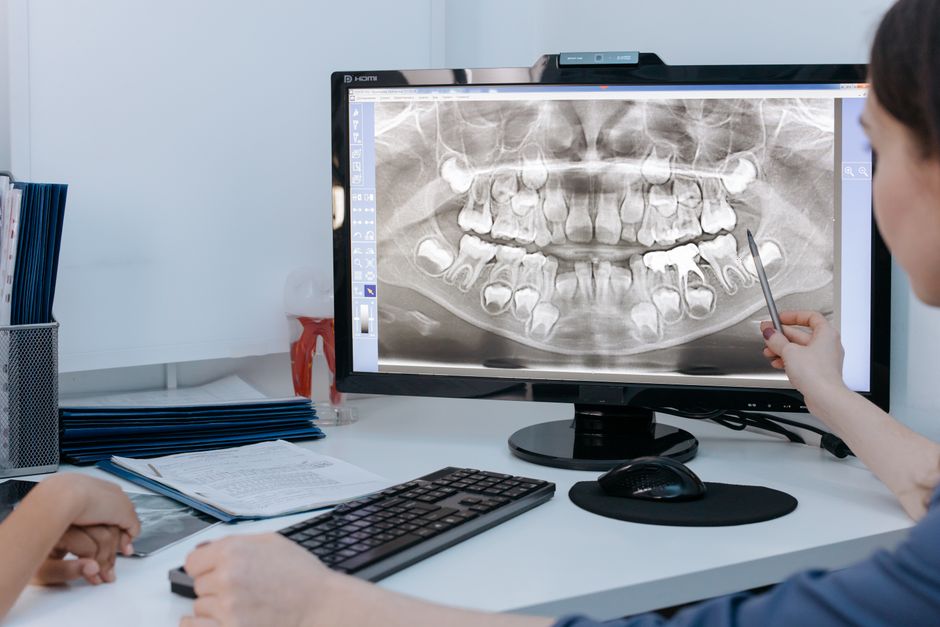
Photo by cottonbro studio via Pexels
Can it just go away on its own?
Usually not. A true infection is bacteria that have gotten past the point your immune system can fully clear on its own. Waiting to see if it clears up is usually the more expensive choice, not the more cautious one — a problem that's a straightforward fix today tends to need more extensive treatment the longer it's left, and it can spread beyond the tooth in the meantime.
When it's urgent, and when a routine appointment is fine
If you have visible facial swelling, a fever, or pain that's getting worse by the hour, see toothache vs. dental emergency to work out where you stand, or just call. If the swelling is spreading quickly toward the eye or neck, or you're having trouble swallowing or breathing, that's a case for the ER, not a dentist; see what to do in the first 10 minutes of a dental emergency.
Same-day appointments and care beyond regular hours exist for exactly this kind of case, and root canal treatment is handled in-house if that turns out to be what the tooth needs. If you're not sure whether this is a real infection or sensitivity that'll pass, call or message us on WhatsApp at 055-985-8845 and we'll tell you straight.
The ADA's MouthHealthy has a detailed explanation of dental emergencies, and the American Association of Endodontists has more information on its patient information page about infections in the tooth's nerve. If the infection is related to an impacted wisdom tooth, the American Association of Oral and Maxillofacial Surgeons publishes separate guidance for that.
Common questions
Can a tooth infection go away on its own?
What does a tooth infection actually look like?
How is a tooth infection diagnosed?
Does infection in a crowned tooth mean the crown failed?
Is a fever alongside the infection always a bad sign?
Can I just take antibiotics without coming in?
What's the difference between regular gum inflammation and a local infection?
When does a tooth infection become an ER case?
Still not sure? Message us.
Send Dr. Gabriel Joel, DMD a quick description of what's going on and we'll point you in the right direction.
Message on WhatsAppDentist in Beit Shemesh — our dental clinic